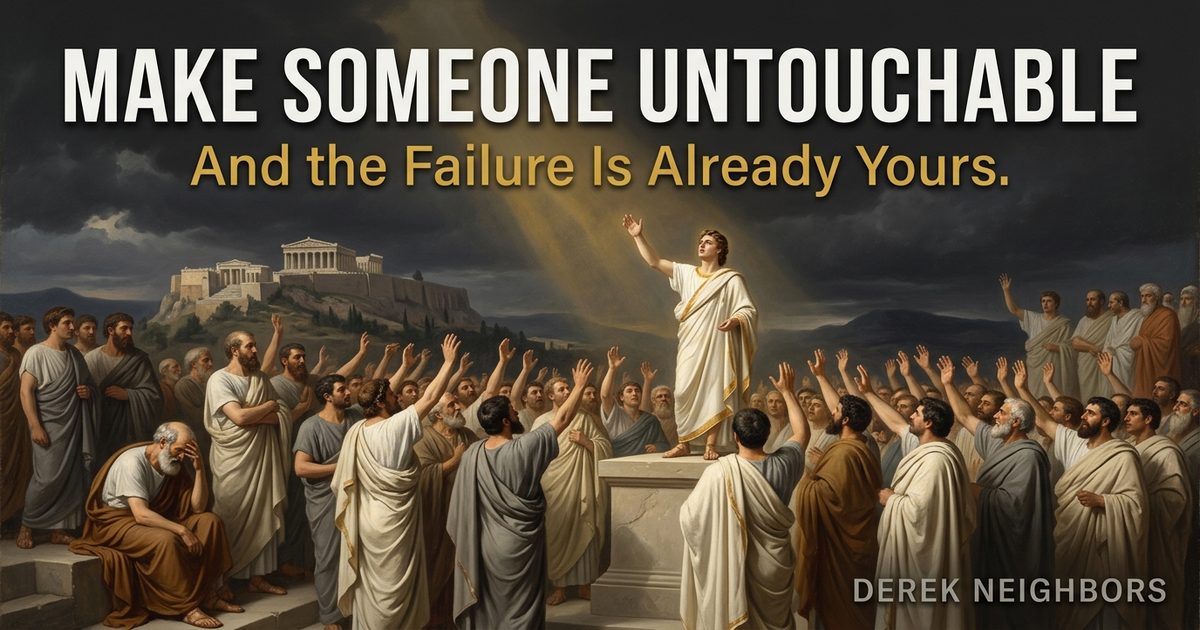
Aidos (αἰδώς): Meaning, Definition & Modern Application
eye-DOSE
The sense of shame, reverence, and moral self-awareness that restrains one from dishonorable action. Aidos is the internal guardian that recognizes what is fitting and shrinks from transgression before others and oneself.
Etymology
Derived from the Greek root aid-, meaning to feel shame or reverence. Related to aideomai (to feel awe or respect) and connected to aischyne (disgrace). In Homeric usage, aidos encompassed both shame before others and reverence toward the gods, serving as a fundamental regulator of social and moral behavior in ancient Greek culture.
Deep Analysis
In Plato’s Protagoras, the sophist tells a creation myth where Zeus sends aidos and dike (justice) to humanity so that cities might survive. Without these qualities, humans destroyed each other despite possessing technical skill. This framing reveals something essential: aidos is not merely personal virtue but civilizational infrastructure. It creates the conditions under which cooperation becomes possible.
Aristotle’s treatment in the Nicomachean Ethics (Book IV) presents a more complex picture. He classifies aidos not as a virtue proper but as a pathos, a feeling that resembles virtue. The truly virtuous person, he argues, would have no need of shame because they would not be disposed toward shameful actions. Yet Aristotle acknowledges that for developing characters, aidos serves a crucial educational function. It operates as scaffolding that supports moral development until virtue becomes habitual.
This creates a productive tension. Is aidos a sign of incomplete virtue or a permanent feature of ethical life? The Stoics largely followed Aristotle’s skepticism, viewing shame as a disturbing passion to be transcended. But this may underestimate the concept’s sophistication. Even the wise person operates within a community of standards. The reverence dimension of aidos, the aspect that honors what deserves honor, seems compatible with complete virtue.
Homer’s usage illuminates dimensions the philosophers sometimes obscure. In the Iliad, aidos operates between warriors, creating mutual recognition of worth. When Hector feels aidos before his fellow Trojans, he is moved to fight rather than retreat sensibly. This reveals the concept’s danger: aidos can bind us to corrupted social codes. The warriors at Troy slaughter each other partly because shame before their peers outweighs prudent withdrawal.
The connection to hubris deserves careful attention. Where aidos restrains, hubris transgresses. The hubristic person lacks the internal guardian that would make them shrink from excess. They treat others as means, violate boundaries, and claim more than their share. Aidos functions as hubris’s antidote, the quality that keeps ambition within fitting limits.
Yet aidos requires the right reference group. Shame before fools constrains wrongly. The person who feels aidos before a corrupt culture will be deformed by their sensitivity. This is why Aristotle emphasizes that proper shame responds to genuinely shameful things, not merely to whatever one’s society happens to condemn. The development of aidos must therefore proceed alongside the development of judgment about what actually merits shame.
The relationship between aidos and sophrosyne (temperance) illuminates both concepts. Sophrosyne involves moderation and self-control from within. Aidos adds an interpersonal dimension, the awareness that one exists before witnesses, whether human, divine, or the internalized presence of those one respects. A person might exercise sophrosyne from mere prudence, calculating that moderation serves their interests. Aidos introduces something different: the felt pull of honor and the visceral recoil from disgrace.
For practical ethics, the concept suggests that moral development requires community. The autonomous individual, constructing values from scratch, lacks the materials for aidos. This challenges modern ethical individualism. Perhaps we need traditions and elders not because they possess infallible wisdom but because they provide the relational matrix within which shame and honor become meaningful.
The Greeks understood that humans are not primarily rational calculators but creatures shaped by feeling. Aidos educates feeling before reason fully develops. By the time we can articulate why certain actions are wrong, the wise person has already felt their wrongness and turned away. This affective training precedes and enables philosophical understanding.
Modern Application
You develop aidos when you cultivate sensitivity to how your actions reflect on your character, not merely on your reputation. This means pausing before decisions to ask whether you could defend your choice to someone you deeply respect. Building this inner guardian strengthens your integrity by making ethical violations feel viscerally wrong before you commit them.
Historical Examples
Socrates’ behavior at his trial, recorded in Plato’s Apology, demonstrates aidos operating against corrupted social pressure. When offered the chance to propose a lighter sentence by expressing conventional remorse, Socrates refused. His sense of shame answered to philosophical integrity rather than Athenian expectations. He told the jury he would feel genuine shame if he abandoned his mission of examination simply to preserve his life. Here, aidos binds him to a higher standard even as the city demands capitulation.
Thucydides recounts how the Spartan general Brasidas exemplified aidos before his soldiers during the campaign in Thrace. When his troops grew demoralized after setbacks, Brasidas publicly took responsibility for tactical errors and submitted himself to the same hardships he required of his men. According to Thucydides (History, 5.9-11), this willingness to feel shame before subordinates rather than deflecting blame restored their confidence. His aidos demonstrated that he held himself to the standards he enforced on others.
Plutarch describes in his Life of Cato the Younger how Cato’s rigid sense of aidos shaped his political career. When offered bribes that other senators accepted routinely, Cato experienced visceral revulsion. He could not merely calculate that corruption was imprudent; he felt its wrongness before the imagined witness of his ancestors and the republic’s founders. This quality made him politically inflexible but morally incorruptible. Even his enemies conceded that Cato’s sense of shame rendered him impossible to buy. His aidos became both his limitation and his power.
How to Practice Aidos
Begin each morning by naming one person whose judgment you respect deeply. Carry their presence with you as an internal witness throughout the day.
Before any significant decision, pause and ask: ‘Could I explain this action to my mentor without flinching?’ Notice the physical sensation that arises when you consider actions that feel unseemly.
Track your ‘flinch moments’ in a journal. Each evening, record instances where you felt the pull toward something questionable and either yielded or resisted. Note what triggered the feeling and how you responded.
Practice the exposure test weekly. Choose one area where you operate with less integrity in private than public. Commit to behaving identically in both contexts for seven days.
Seek feedback from a trusted colleague by asking: ‘What blind spots do you see in my conduct?’ Aidos requires external mirrors to develop properly.
Review your commitments monthly. Identify promises you have let slide because no one is watching. Fulfill them without announcement. This trains your sense of shame to answer to standards rather than audiences.
Application Examples
A sales director discovers their team has been using misleading metrics in client presentations. The numbers are technically accurate but framed to obscure underperformance. No client has complained, and competitors use similar practices.
Aidos asks not whether you can get away with it but whether you could defend the practice to someone whose judgment you honor. The flinch you feel when imagining that conversation is your moral guardian speaking.
You notice yourself speaking dismissively about a colleague when they are not present, saying things you would never say directly to them. Your friends laugh, but afterward you feel a slight discomfort you cannot name.
That discomfort is aidos operating properly. It signals the gap between your public persona and private conduct, calling you toward consistency rather than compartmentalization.
A newly promoted VP inherits a team with a culture of cutting corners on quality. The shortcuts have become normalized, and pushing back will make the VP unpopular. Previous leadership accepted these practices.
Aidos prevents you from adopting corruption simply because predecessors did. Your sense of shame should answer to your standards, not inherited dysfunction. Leadership means re-establishing what deserves reverence.
Your teenager catches you violating a rule you enforce strictly on them. You could justify the exception with your adult status, but you notice yourself wanting to explain away the inconsistency rather than own it.
Aidos operates regardless of whether the witness has authority over you. The shame before your child’s eyes reveals that you have betrayed a standard you claimed to hold. Their presence calls you back to integrity.
Common Misconceptions
Many assume aidos is simply fear of getting caught, a calculation about reputation rather than a genuine moral sense. This confuses shame with embarrassment. True aidos responds to actual transgression, not mere exposure. A person with developed aidos would feel shame even if certain they would never be discovered.
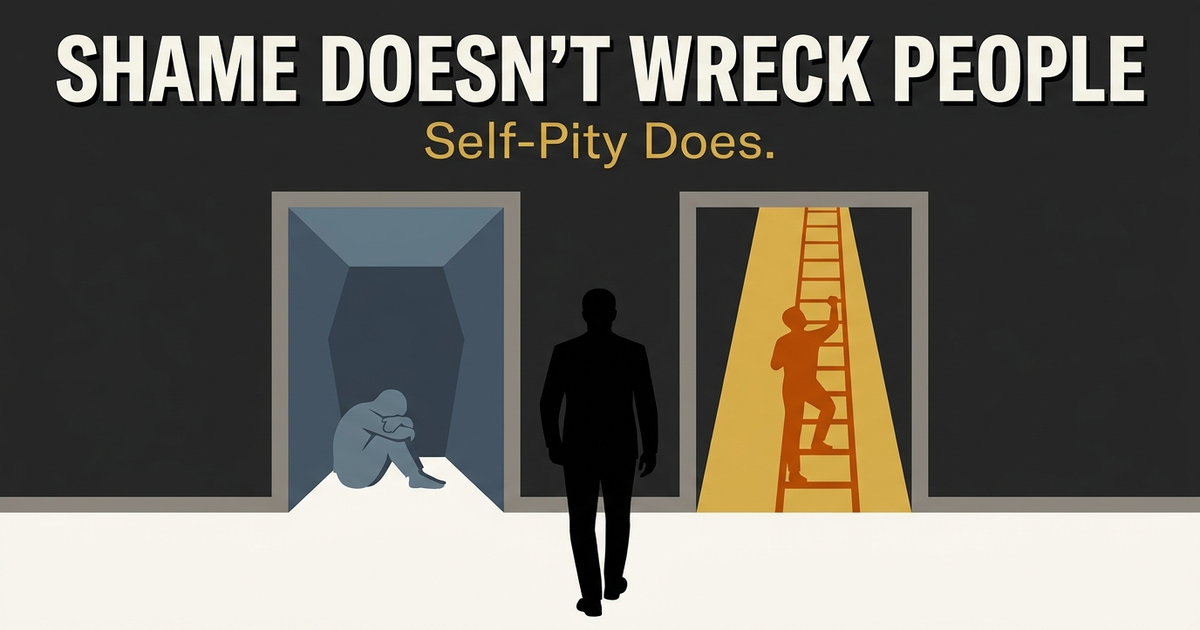
Another error treats all shame as psychologically harmful, something to overcome through unconditional self-acceptance. While toxic shame attached to neutral characteristics deserves rejection, aidos properly directed at genuinely dishonorable action serves an essential function. Eliminating all capacity for shame leaves you without the internal guardian that catches you before wrongdoing.
Some confuse aidos with social conformity, assuming it means submitting to whatever standards one’s community happens to enforce. But the Greeks recognized that aidos must answer to what is genuinely shameful, not merely what others condemn. The person who feels shame before a corrupt culture has misdirected aidos. Proper development requires judgment about which standards deserve your reverence.
I spent years in agile coaching trying to get teams to be honest about their failures in retrospectives. What I eventually realized is that you cannot create candor through process. You have to create the conditions where people feel the pull of something worth honoring.
The breakthrough came when I started asking teams to name someone they respected deeply, then imagine that person observing their sprint review. Not as a threat but as an invitation: ‘What would you want them to see?’ Suddenly, conversations shifted. People stopped gaming metrics and started talking about real obstacles. The presence of an imagined worthy witness activated something rational argument never could.
I have seen the same dynamic in my own leadership. There was a period when I accepted mediocre work from a struggling team member because having difficult conversations felt uncomfortable. I told myself I was being compassionate. But when I imagined explaining my management to a mentor I respect, I felt the specific discomfort of aidos. I was not being compassionate. I was being cowardly.
The most important thing I have learned is that aidos requires cultivation. Modern culture erodes our sense of shame, and sometimes that is healthy when shame attaches to the wrong things. But wholesale rejection leaves us without the internal guardian that catches us before transgression. I now actively seek out relationships with people whose judgment I trust and whose standards challenge mine. Their imagined presence in my decisions has prevented more ethical failures than any code of conduct ever could.
The teams I work with that truly excel share this quality. They have developed collective aidos, a shared sense of what they would be ashamed to put their names on. That shared standard becomes more powerful than any external accountability mechanism.
Frequently Asked Questions
What is aidos in Greek philosophy?
Aidos is the Greek concept of shame, reverence, and moral self-consciousness that prevents dishonorable action. Unlike guilt (which follows wrongdoing), aidos operates beforehand as an internal restraint. It combines sensitivity to social standards with genuine respect for what is noble and fitting.
How is aidos different from guilt or embarrassment?
Aidos is prospective, preventing wrong action before it occurs, while guilt is retrospective. Embarrassment concerns social awkwardness, but aidos concerns moral transgression. Aidos also includes positive reverence for what deserves honor, not merely fear of censure.
How can I develop a healthy sense of aidos?
Develop aidos by identifying people whose judgment you genuinely respect and imagining their presence during decisions. Practice consistency between public and private behavior. Cultivate sensitivity to what is fitting in each situation through reflection on your flinch moments, those instinctive recoils from unseemly options.