Metanoia vs Prolepsis: Key Differences in Greek Philosophy
Growth operates through two fundamentally different cognitive movements, and understanding which one you need at any given moment can mean the difference between genuine transformation and comfortable stagnation. Metanoia is the radical change of mind, the moment when your existing framework breaks and you recognize that the way you have been thinking, deciding, and orienting yourself is fundamentally inadequate. It is not a minor adjustment. It is the collapse and rebuilding of your interpretive structure. Prolepsis, as the Stoics developed the concept, refers to the natural preconceptions and anticipatory frameworks that shape how you perceive the world before conscious analysis begins. Prolepsis is the innate cognitive template that allows you to recognize justice when you encounter it, to sense beauty before you can define it, and to anticipate what comes next based on patterns you have absorbed. Epicurus treated prolepsis as a criterion of truth, arguing that these preconceptions, formed from repeated experience, provide the foundation for all judgment. The two concepts operate in opposite directions but serve the same purpose: accurate engagement with reality. Prolepsis provides the starting framework. It is the set of preconceptions you bring to every experience, the pattern-recognition that allows you to make sense of the world without starting from scratch each time you encounter something new. Without prolepsis, every experience would be unintelligible, because you would have no framework for interpreting it. Metanoia provides the corrective. When your preconceptions fail, when reality presents something that your existing framework cannot accommodate, metanoia is the painful but necessary process of breaking down the old structure and rebuilding from a new foundation. Without metanoia, your proleptic framework becomes a prison, filtering out everything that challenges its assumptions. The relationship between them reveals something important about how genuine understanding develops. You start with prolepsis, the intuitive framework that lets you engage with the world. You operate within that framework until you encounter experiences that expose its limitations. At that point, you face a choice. You can defend the existing framework by ignoring or explaining away the disconfirming evidence. Or you can undergo metanoia, allowing the framework to break so that a new and more adequate one can form. The new framework itself becomes a proleptic starting point for future engagement, and the cycle continues. Most people resist metanoia because the process is genuinely painful. Your existing preconceptions feel like reality itself. When they break, the experience is not intellectual disagreement but something closer to existential disorientation. This is why metanoia in the early Christian tradition was associated with repentance and conversion: it involves a turning of the whole person, not merely a revision of beliefs.
Definitions
Metanoia
(μετάνοια)
meh-TAH-noy-ah
A fundamental transformation of mind and heart—not mere regret, but a complete turning around of one’s understanding, perception, and way of being. In ancient Greek thought, it signifies the moment when scales fall from the eyes and one sees reality with new clarity.
Prolepsis
(πρόληψις)
proh-LAYP-sis
Anticipation or preconception—the mental act of rehearsing future scenarios before they occur. The Stoics practiced prolepsis as preparation for challenges, building the capacity to hold future possibilities as present realities.
Key Differences
| Aspect | Metanoia | Prolepsis |
|---|---|---|
| Direction | Metanoia looks backward, recognizing that previous understanding was inadequate, and reorients toward a fundamentally different framework. | Prolepsis looks forward, providing anticipatory patterns and preconceptions that shape how you will perceive and interpret upcoming experience. |
| Nature | Metanoia is disruptive and transformative. It breaks existing cognitive structures and rebuilds them from a new foundation. | Prolepsis is natural and foundational. It provides the innate or deeply absorbed patterns that allow you to engage with experience at all. |
| Trigger | Metanoia is triggered by crisis, failure, or revelation, moments when your existing framework demonstrably fails to account for reality. | Prolepsis is not triggered but operates continuously as the background framework through which all experience is filtered and interpreted. |
| Emotional Quality | Metanoia is often painful, involving the loss of certainty, the dissolution of familiar structures, and the vulnerability of rebuilding from a new starting point. | Prolepsis is often intuitive and prereflective. It operates below the level of conscious analysis, providing a sense of recognition rather than the shock of discovery. |
| Relationship to Existing Beliefs | Metanoia destroys and rebuilds your belief structure. It requires letting go of frameworks that have become inadequate, even if they once served well. | Prolepsis provides the foundation on which beliefs are built. It is the starting point of cognition, the set of preconceptions that make all further thinking possible. |
Direction
Metanoia looks backward, recognizing that previous understanding was inadequate, and reorients toward a fundamentally different framework.
Prolepsis looks forward, providing anticipatory patterns and preconceptions that shape how you will perceive and interpret upcoming experience.
Nature
Metanoia is disruptive and transformative. It breaks existing cognitive structures and rebuilds them from a new foundation.
Prolepsis is natural and foundational. It provides the innate or deeply absorbed patterns that allow you to engage with experience at all.
Trigger
Metanoia is triggered by crisis, failure, or revelation, moments when your existing framework demonstrably fails to account for reality.
Prolepsis is not triggered but operates continuously as the background framework through which all experience is filtered and interpreted.
Emotional Quality
Metanoia is often painful, involving the loss of certainty, the dissolution of familiar structures, and the vulnerability of rebuilding from a new starting point.
Prolepsis is often intuitive and prereflective. It operates below the level of conscious analysis, providing a sense of recognition rather than the shock of discovery.
Relationship to Existing Beliefs
Metanoia destroys and rebuilds your belief structure. It requires letting go of frameworks that have become inadequate, even if they once served well.
Prolepsis provides the foundation on which beliefs are built. It is the starting point of cognition, the set of preconceptions that make all further thinking possible.
When to Apply Each Concept
When to Choose Metanoia
Recognize the need for metanoia when you notice persistent failure that your current framework cannot explain, when you keep encountering the same problems despite trying different solutions, or when a significant experience has shaken assumptions you took for granted. Metanoia is the appropriate response when the framework itself is the problem, not the details within it.
When to Choose Prolepsis
Trust prolepsis when your intuitive sense of a situation provides useful guidance, when pattern recognition serves you well, and when your preconceptions have been tested enough to deserve provisional confidence. Prolepsis is valuable as a starting point, but it must be held with the awareness that any preconception might eventually require the corrective of metanoia.
Frequently Asked Questions
What is the difference between metanoia and prolepsis?
Metanoia is a fundamental change of mind, a transformative reorientation that occurs when your existing framework proves inadequate. Prolepsis is the natural preconception or anticipatory framework that shapes how you perceive the world before conscious analysis begins. Metanoia breaks and rebuilds cognitive structures. Prolepsis provides the structures that metanoia eventually breaks.
What is metanoia in Greek philosophy?
Metanoia literally means a change of mind or afterthought. In Greek philosophy, it refers to a profound transformation of understanding, not a minor revision but a fundamental reorientation of how a person perceives, thinks, and acts. In the early Christian tradition, it became associated with repentance and conversion, capturing the existential depth of turning away from one way of living toward an entirely different one.
What is prolepsis in Stoic philosophy?
In Stoic philosophy, prolepsis refers to natural preconceptions, the innate or early-formed cognitive frameworks that allow humans to recognize and categorize experience. Epicurus considered prolepsis a criterion of truth formed through repeated sense impressions. The Stoics treated prolepsis as the common notions shared by all rational beings, providing the foundation for moral and logical reasoning.
How do metanoia and prolepsis relate to personal growth?
Growth requires both. Prolepsis provides the starting frameworks that let you engage productively with the world. Metanoia provides the corrective when those frameworks become inadequate. A person who never experiences metanoia is trapped within their initial preconceptions. A person with no stable prolepsis has no foundation from which to operate. Genuine development alternates between periods of operating within a framework and periods of transforming it.
Articles Exploring Metanoia or Prolepsis (34)
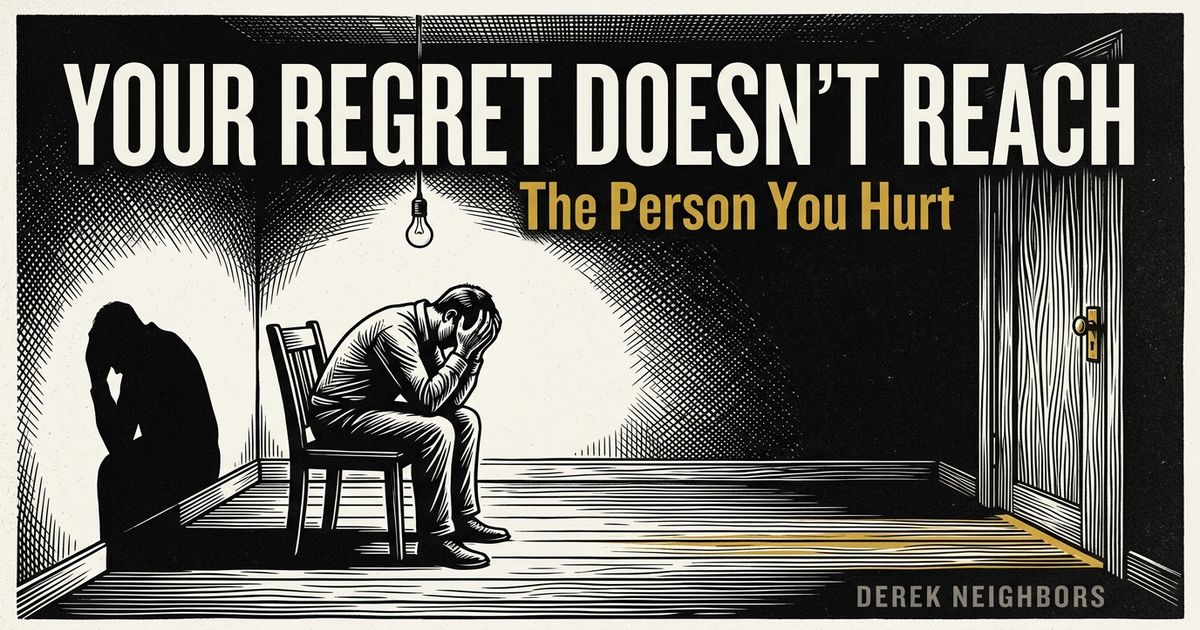
Your Regret Doesn't Reach the Person You Hurt
You said the thing in the meeting, you knew it on the drive home, and you replayed it for a month. The person you hurt never heard a word. Regret stays inside the one who made the mistake, while remorse goes looking for the one who got hurt. Aristotle said bad people are full of regret, and he did not mean it as a compliment. Here is how to tell which one you are doing, and how to make amends without turning the apology into one more thing they have to carry.
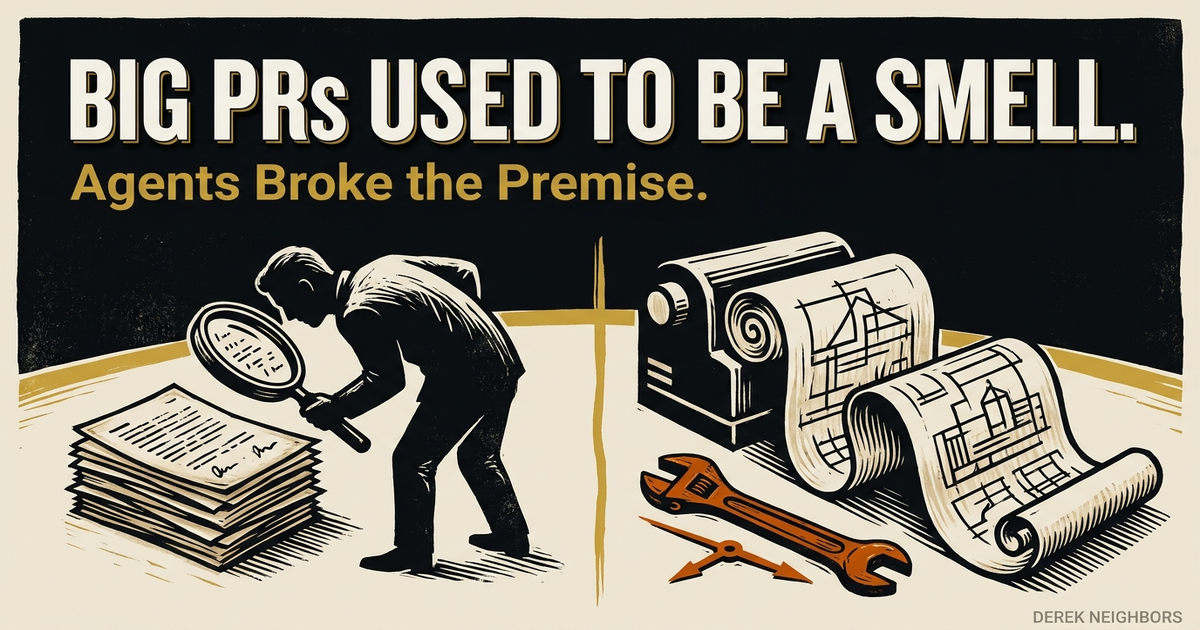
Big PRs Used to Be a Smell. Agents Broke the Premise.
A craftsman friend recoils at huge agent PRs. The disgust is real. The absolute rule is not. Small PRs protected human memory and slow forensics. Agents change both. Keep atomic commits and fast recovery. Stop worshiping line count as excellence.
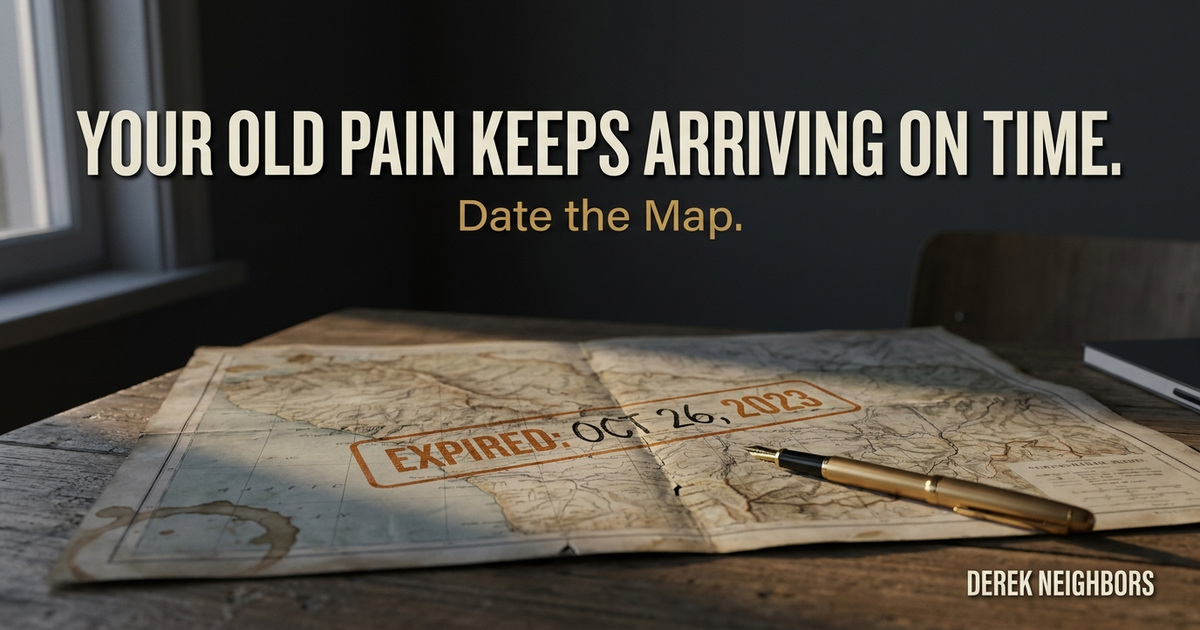
Your Old Pain Keeps Arriving On Time. Date the Map.
Korzybski said the map is not the territory. The harder problem is the undated map: a reaction that was right once and still fires on a present that has changed. Date the impression before you grant it authority.
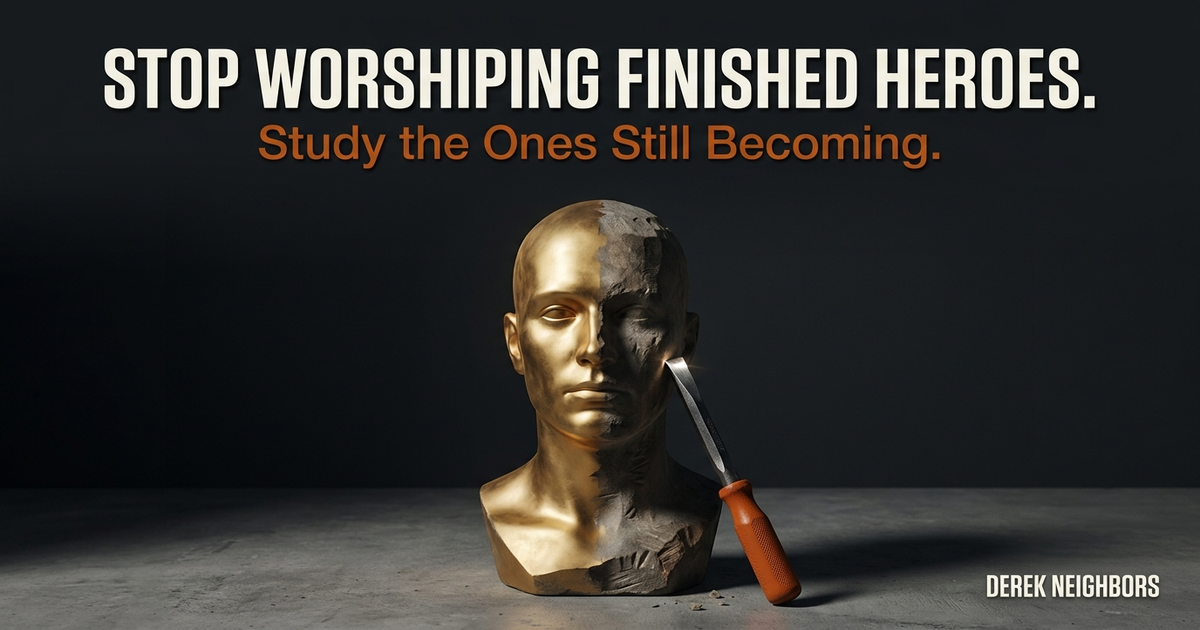
Stop Worshiping Finished Heroes. Study the Ones Still Becoming.
Polished heroes erase the path. Study the unfinished ones whose bad days are still visible, and you get permission to keep swinging instead of waiting to feel finished.
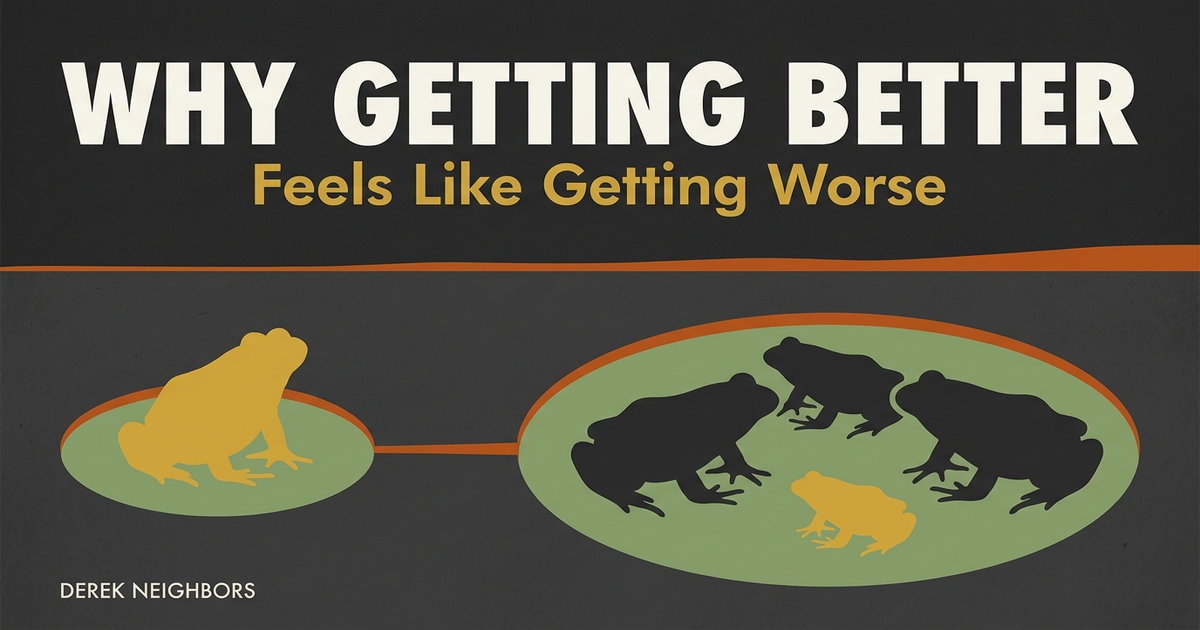
Why Getting Better Feels Like Getting Worse
You joined the harder room and suddenly feel slower, smaller, less impressive. Most people read that collapse as proof they got worse. James Davis showed in 1966 that aspiration tracks local rank more than absolute ability. Growth that changes the comparison set re-ranks you before it rewards you. Staying biggest frog in a pond that stopped teaching is the quietest form of quitting.
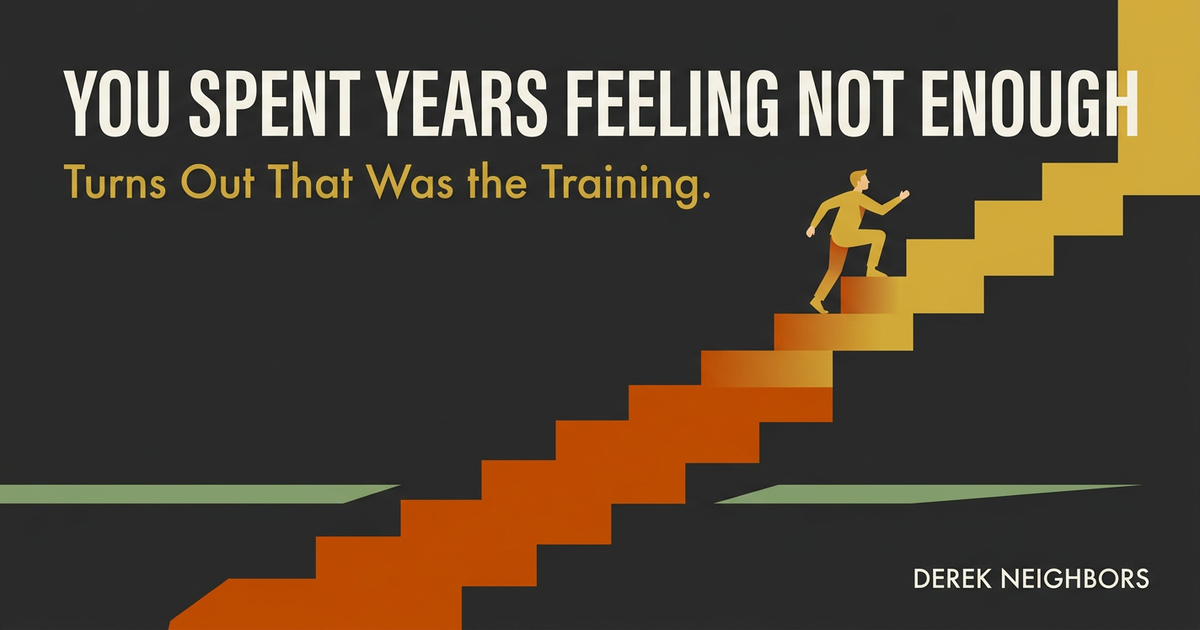
You Spent Years Feeling Not Enough. Turns Out That Was the Training.
There is a low hum a lot of people grow up with: the sense that you are a little behind, a little short, that everyone else got a manual you missed. Most spend decades trying to silence it. Some go dead. Some go bitter. But that ache was never measuring your worth. It was pointing. The years of feeling not enough were formation, training you in the one thing comfort can never teach, the refusal to settle. The work of adulthood is not curing the engine that lack built. It is aiming it without the self-contempt it once carried.
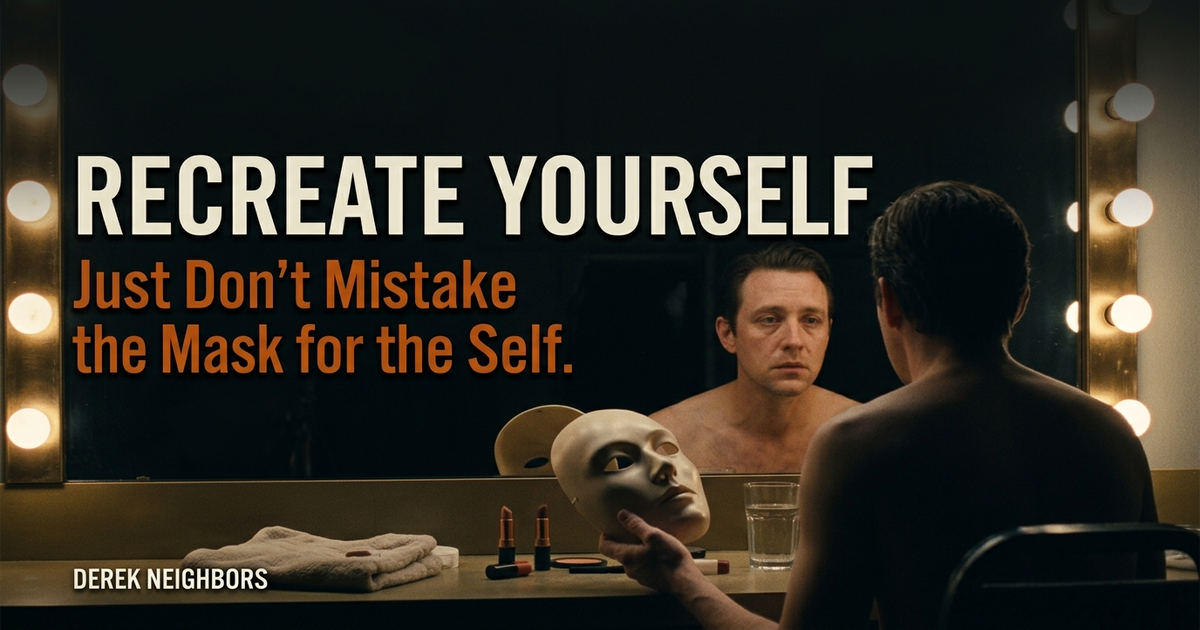
Recreate Yourself. Just Don't Mistake the Mask for the Self.
Law 25 of the 48 Laws of Power tells you to recreate yourself by seizing control of your image, becoming a memorable, protean figure who never bores the audience. The Greeks had a word for the thing you put on to face a crowd: prosopon, the mask an actor wore on stage. Greene's reinvention is mask-work, and a mask worn long enough fuses to the face. There is a real kind of self-recreation, but it runs the other direction. You forge the substance and let the appearance follow.
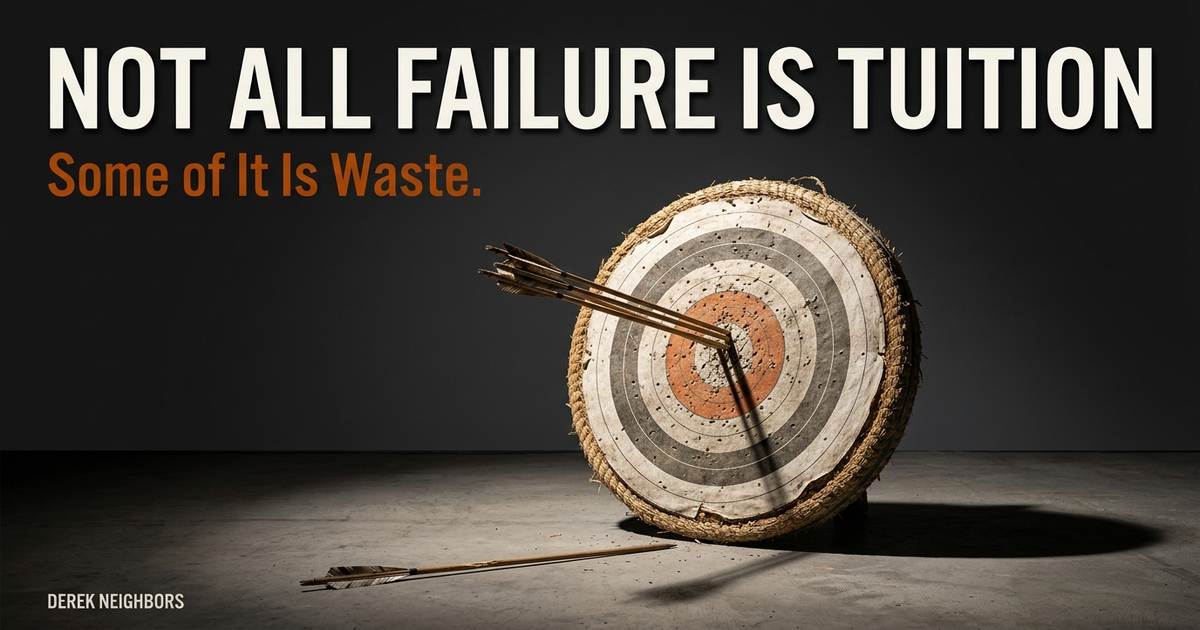
Not All Failure Is Tuition. Some of It Is Waste.
The culture says failure is the best teacher. Most of the time that is a receipt people print to avoid paying for the loss. There are two kinds of miss. The good miss is an honest aim that fell short, and it is the most expensive education available. The bad miss is neglect, drift, or a shot you never really took, and it teaches nothing because there was nothing in it to learn from. The Greeks had one word for both, hamartia, missing the mark, and the whole craft of getting better is learning to tell them apart.
The Plumber Will Outlast the Programmer. History Already Proved It.
Every technological revolution from steam to computing followed the same playbook. AI follows it too, with a cruel twist: the people doing execution-level knowledge work get displaced while skilled trades thrive.

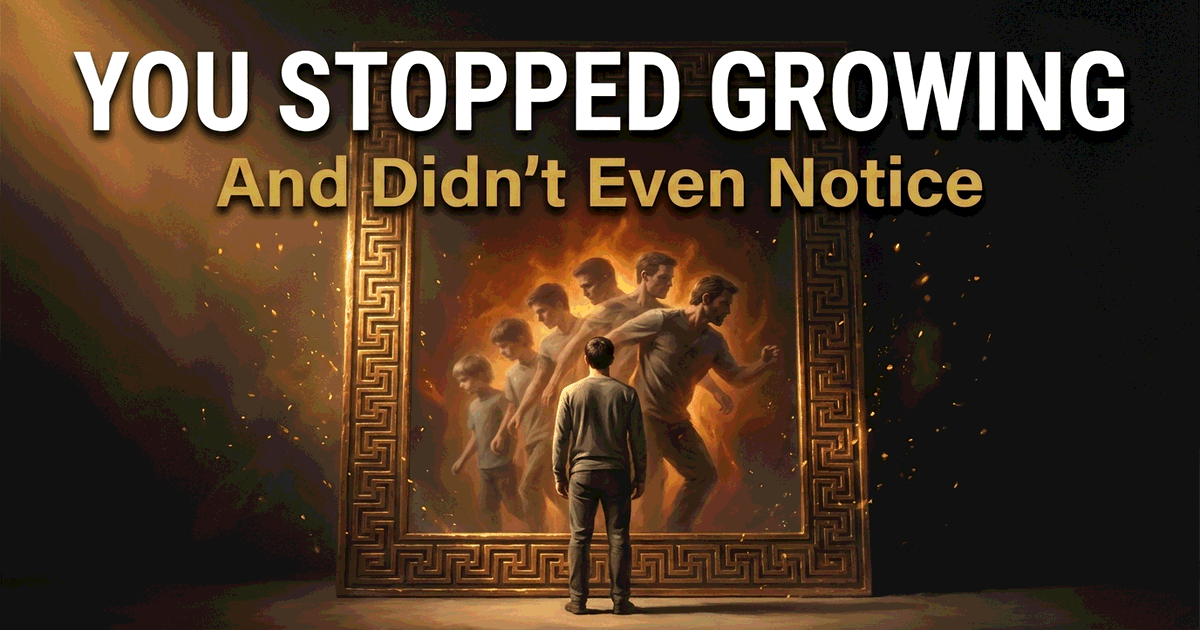
You Stopped Growing and Didn't Even Notice
You can look back ten years and barely recognize who you were. You can acknowledge enormous personal transformation. And yet, right now, you believe you're basically done becoming. Psychology calls this the end of history illusion. The Greeks called it the opposite of flourishing.
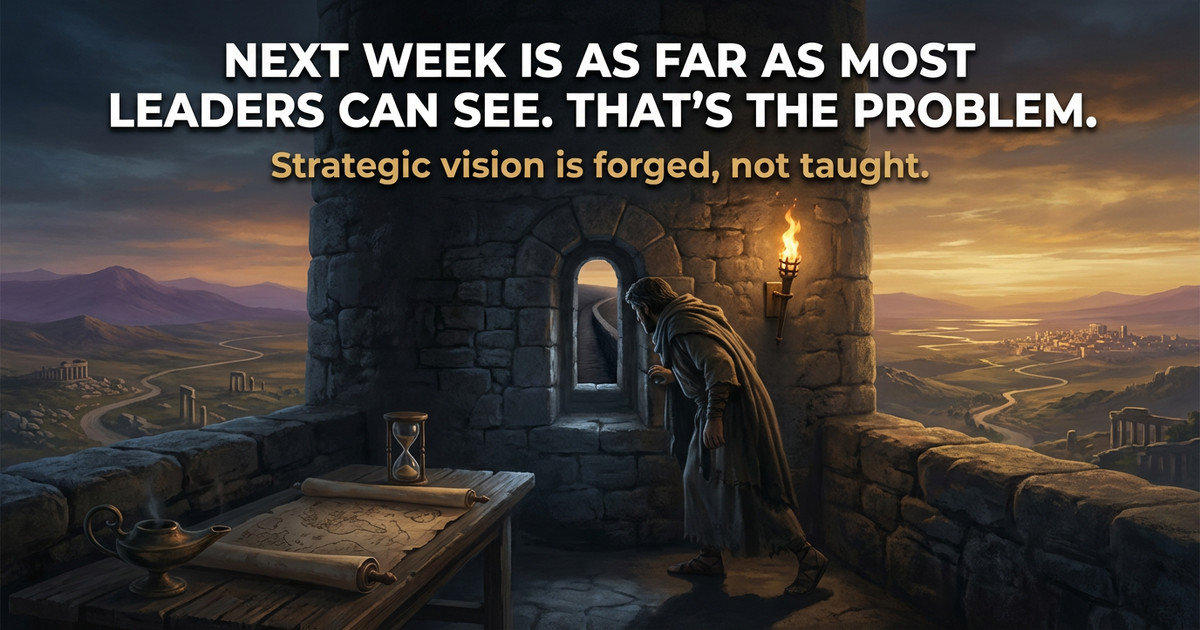
Next Week Is As Far As Most Leaders Can See. That's the Problem.
The inability to see beyond immediate tasks isn't a skill gap. It's a character limitation. Strategic vision is a cultivated virtue, not an innate talent. Small picture thinking is underdeveloped character.
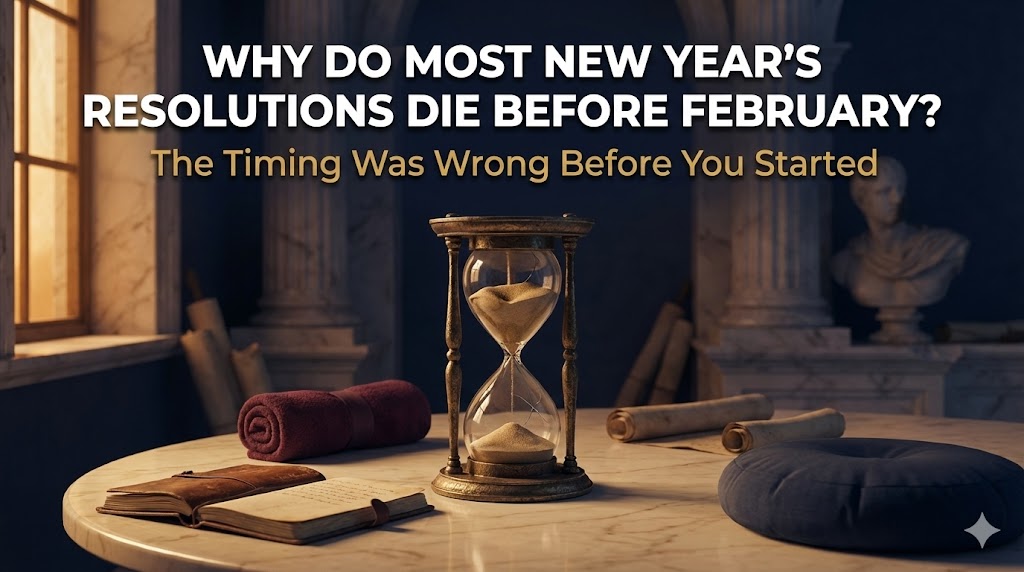
Why Do Most New Year's Resolutions Die Before February?
I watched a man fail his resolution in an ice cream shop parking lot. Not because he ate ice cream. Because he was already negotiating with Monday. The timing was wrong before he started.
The Best Thing That Ever Happened to You Was Hitting Bottom
I thought I might need the ER after my first CrossFit workout. Turns out I'd just forgotten what building muscle felt like. That's how bad it had gotten. It was the best thing that ever happened to me.
Good Vibes Only Will Keep You Weak Forever
Good vibes only doesn't protect you from negativity. It protects you from growth. Every time you positive-think your way past difficult emotions, you're training yourself to be weaker.
Akrasia: Why You Sabotage What You Know Is Right
You know exactly what you should do. You've known for months. So why aren't you doing it? The ancient Greeks had a word for this: akrasia, acting against your better judgment. And they understood it's the ultimate killer of excellence.
AI-First Leadership: Guiding Organizational Transformation
Most leaders want AI transformation results without undergoing the leadership metamorphosis it requires. Here's what AI-first leadership actually demands.
AI First Culture: Organizational and Process Transformation
Culture doesn't just eat strategy for breakfast. Culture will devour your AI transformation, shit out the bones, and ask for seconds.
AI First: The Identity Revolution
The real AI revolution isn't about the technology. It's about who you become when you stop fighting it and start forging yourself in its fire.
Stop Serving From Weakness: Why Most Servant Leaders Fail
Most 'servant leaders' are just weak managers who've convinced themselves that avoiding difficult decisions is virtuous. Real servant leadership requires character strength.
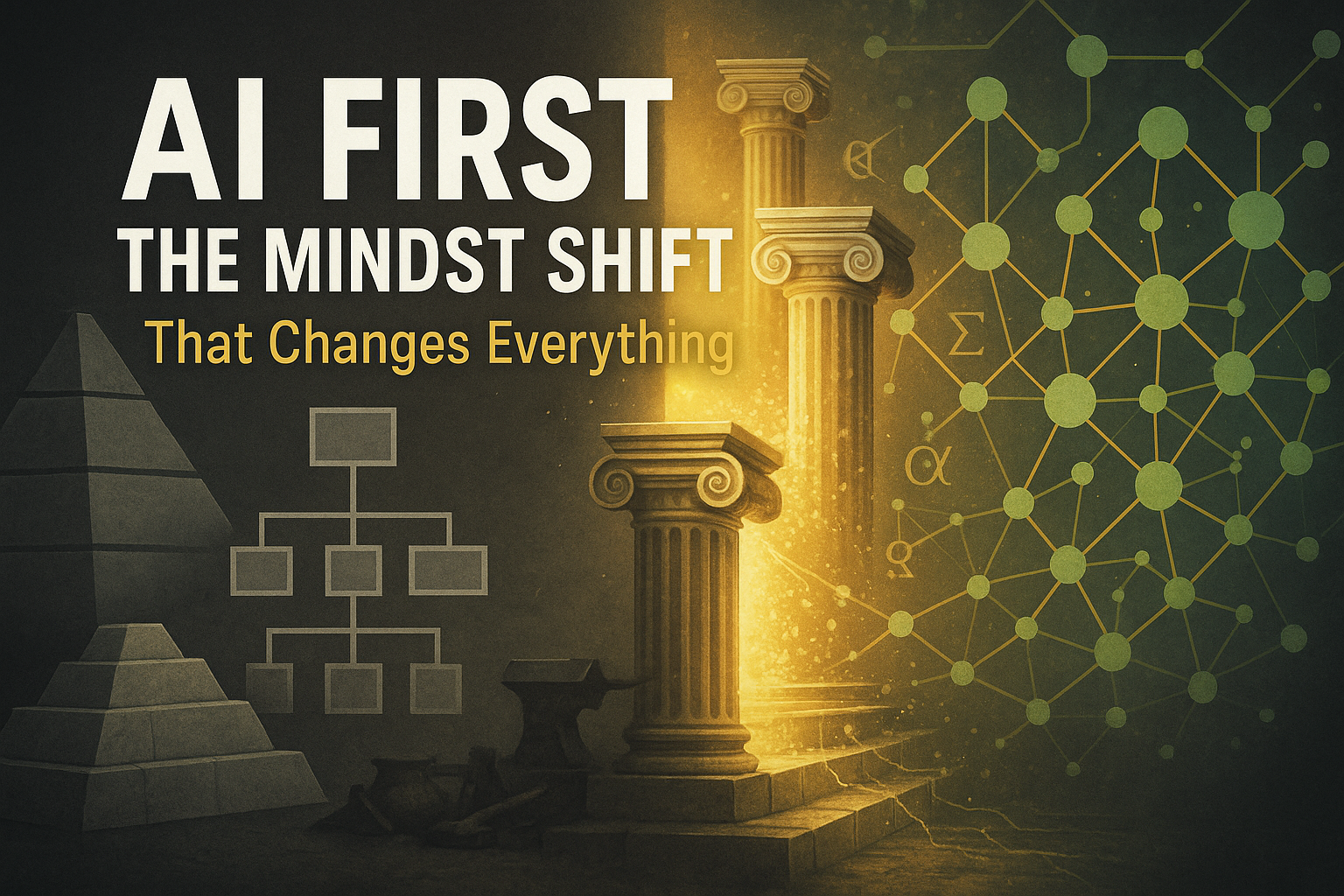
AI First: The Mindset Shift That Changes Everything
The fundamental mindset architecture that separates AI leaders from AI laggards. Three core shifts with practical implementation frameworks grounded in ancient wisdom.
The Reflection Stage: Where Wisdom Begins and Excuses Die
Prosoche, the Stoic practice of disciplined reflection—transforms raw experience into actionable wisdom. Part 7 of The Greatness Flywheel series shows how systematic reflection accelerates excellence by preventing repeated mistakes and compounding learning.
The Brutal Honesty Test: Do You Really Want What You Say You Want?
Most people torture themselves pursuing goals they don't actually want. The framework for distinguishing authentic desire from sophisticated self-torture.

The Philosopher King: Ancient Wisdom for Modern Leadership Integration
Plato's most radical leadership idea wasn't about power or position, it was about character. The philosopher king represents the ultimate integration of wisdom, excellence, courage, and transformation. Here's how to stop managing systems and start transforming people.
Metanoia: The Transformation Mindset for Leaders
The Greeks understood that lasting change requires complete transformation of mind, heart, and character. Most organizational change fails because leaders try to change everything except themselves. Here's the ancient solution.
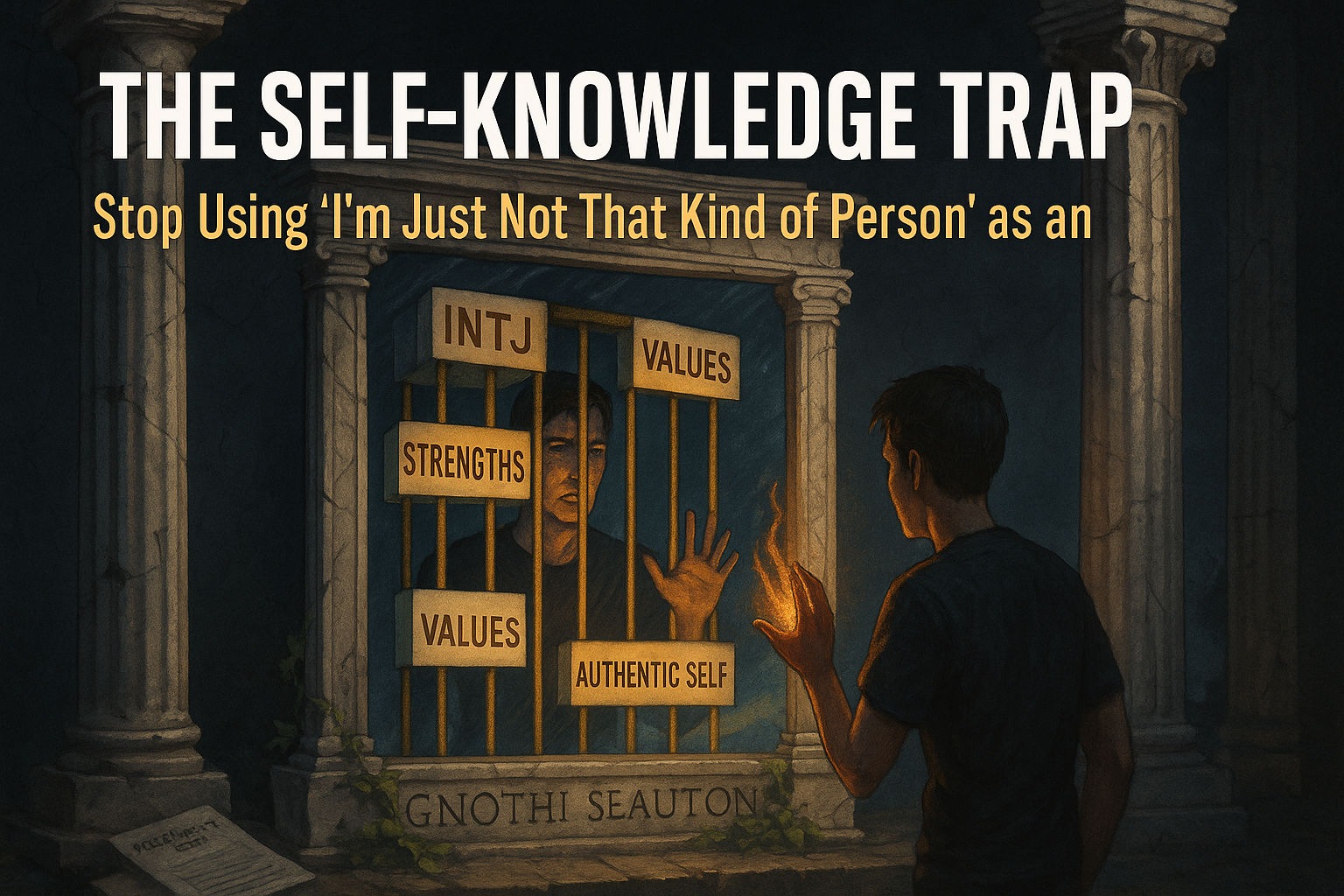
The Self-Knowledge Trap: Stop Using 'I'm Just Not That Kind of Person' as an Excuse
We turn personality tests and strengths into excuses for staying small. 'I'm just not that kind of person' sounds authentic but kills growth. Here's how to stop bullshitting yourself.
Stop Changing Your Tactics and Deal With Your Shit
You're not struggling with willpower. You're not lacking the right system. You're protecting the disease by treating the symptoms.
The Art of Running Away: When Flight is Wisdom and When It's Weakness
How to tell when leaving is strategic wisdom versus fear-based avoidance. The uncomfortable truth about when running away is the courageous choice.
The Resistance Diagnostic: Is This Teaching Me or Am I Just Running Away?
How to tell when resistance is teaching you versus when you're using your intelligence to avoid what needs to be done. The uncomfortable truth about sophisticated avoidance.
The Optimization Trap: Authentic Self-Knowledge vs. Sophisticated Avoidance
How intelligent people use optimization as sophisticated avoidance, creating elaborate systems to avoid simple transformations. Includes the 5-question diagnostic framework.
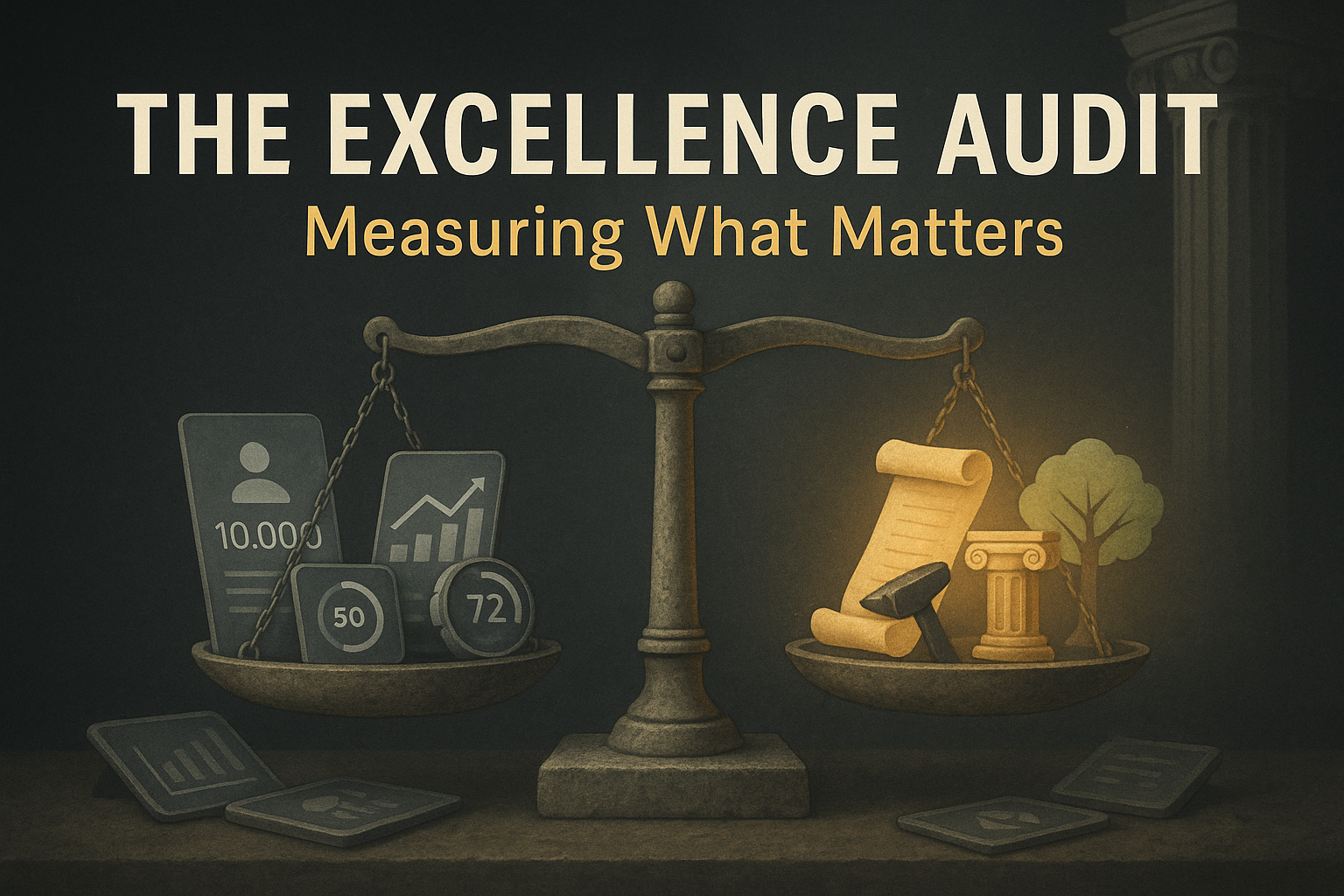
The Excellence Audit: Measuring What Matters
Most people track what's easy to measure rather than what actually drives excellence. Learn how to audit your metrics and ensure you're measuring character development, not just performance theater.
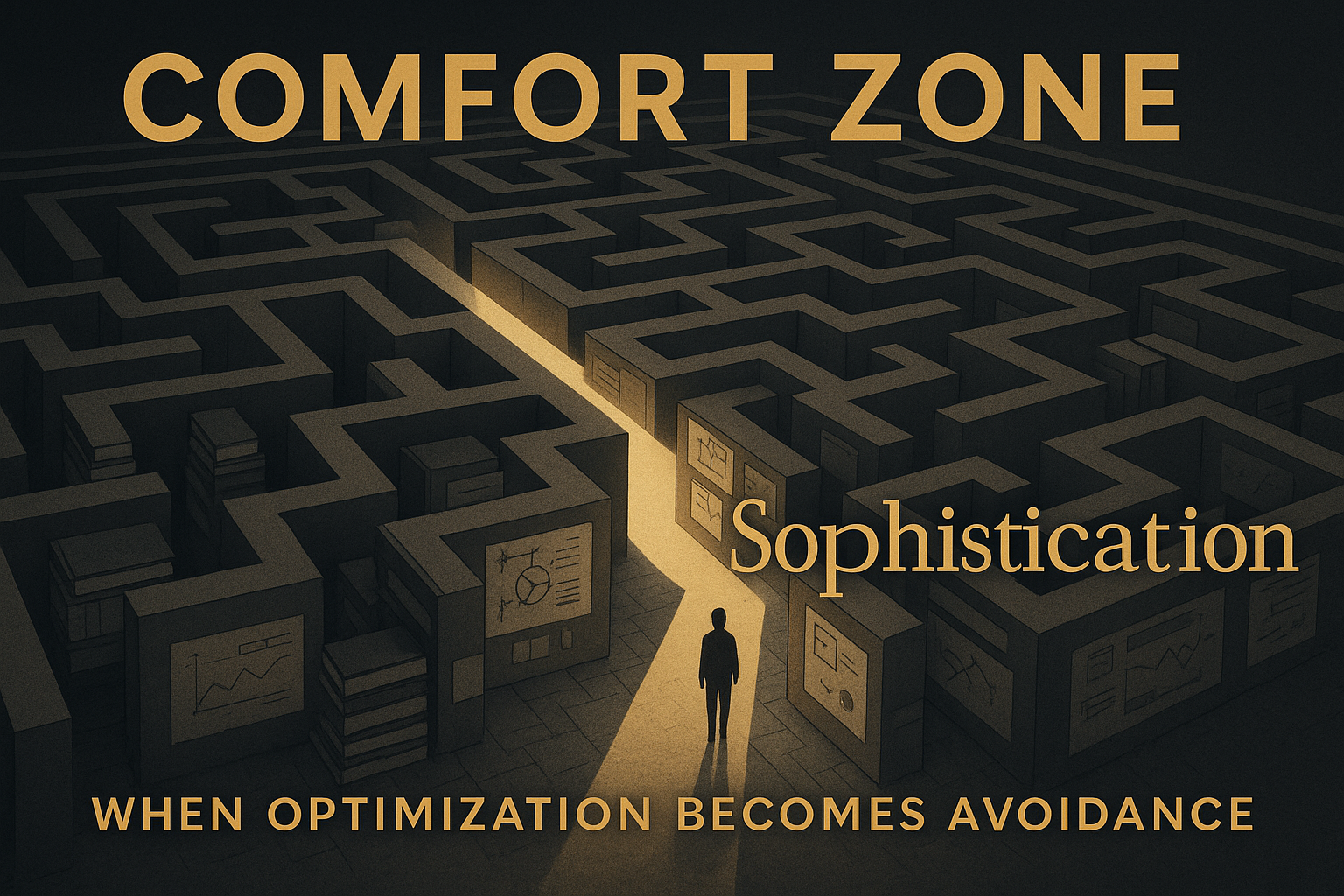
The Comfort Zone Sophistication: When Optimization Becomes Elaborate Avoidance
Intelligence can become a barrier to growth when it creates sophisticated comfort zones. Here's how to recognize when your optimization becomes elaborate avoidance, and what to do about it.
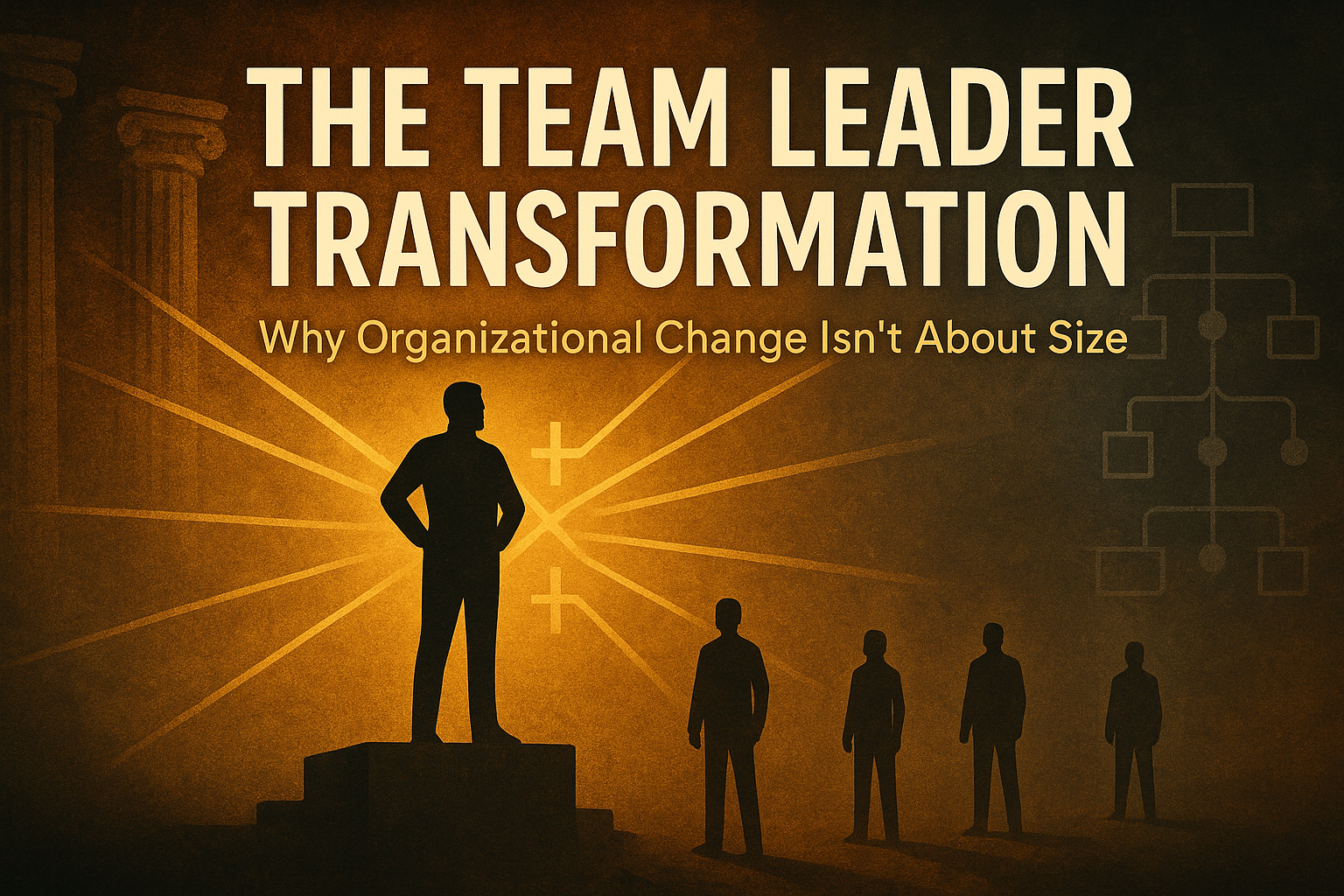
The Team Leader Transformation: Why Organizational Change Isn't About Size
Companies obsess over team size while ignoring the fundamental truth: transformation happens at the leader level, not the team level. Size is a symptom, leadership is the cause.
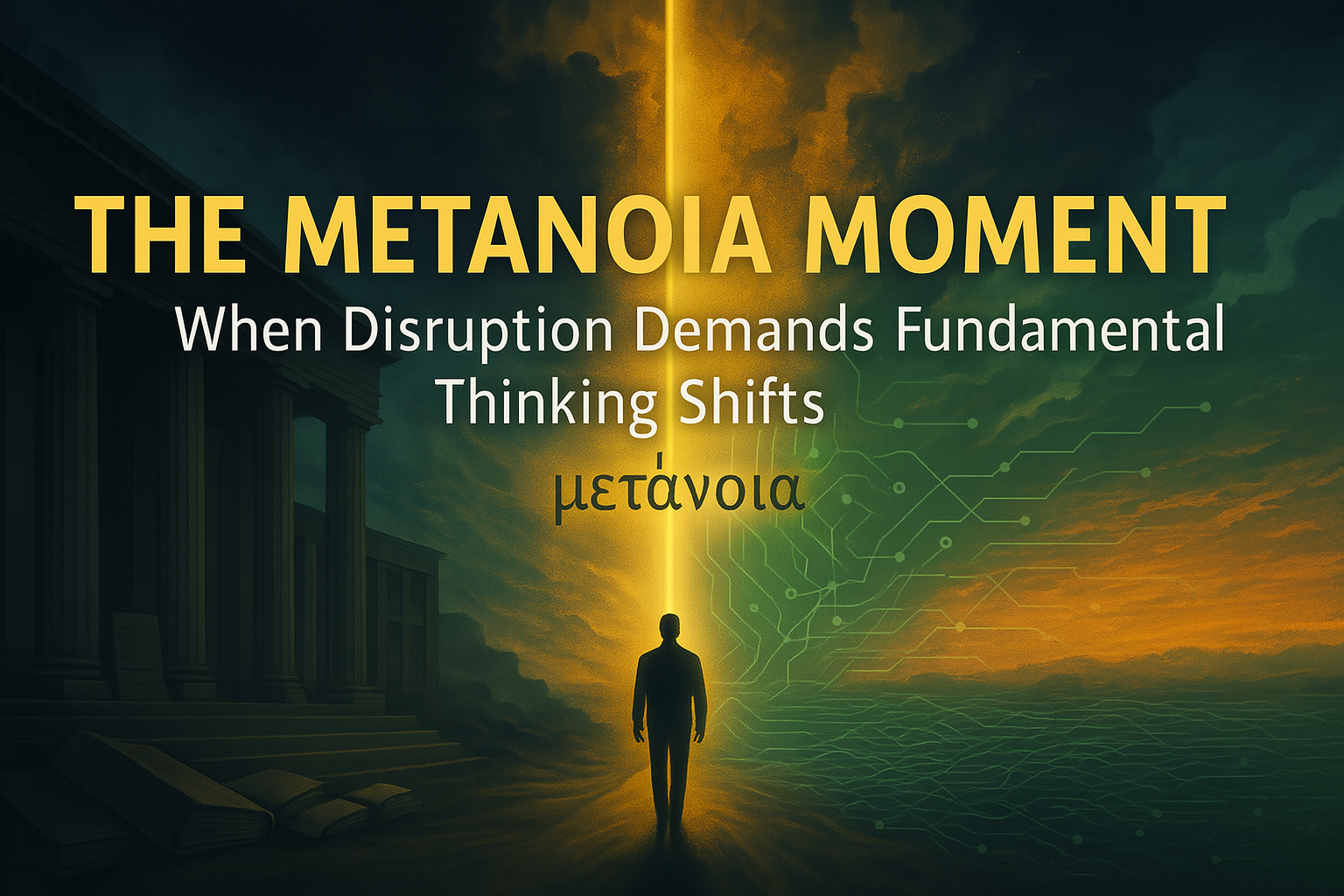
The Metanoia Moment: When Disruption Demands Fundamental Thinking Shifts
The phone book to Google transition was about efficiency. The Google to ChatGPT shift is about quality of understanding. That's the difference between incremental improvement and categorical transformation, and it requires metanoia.
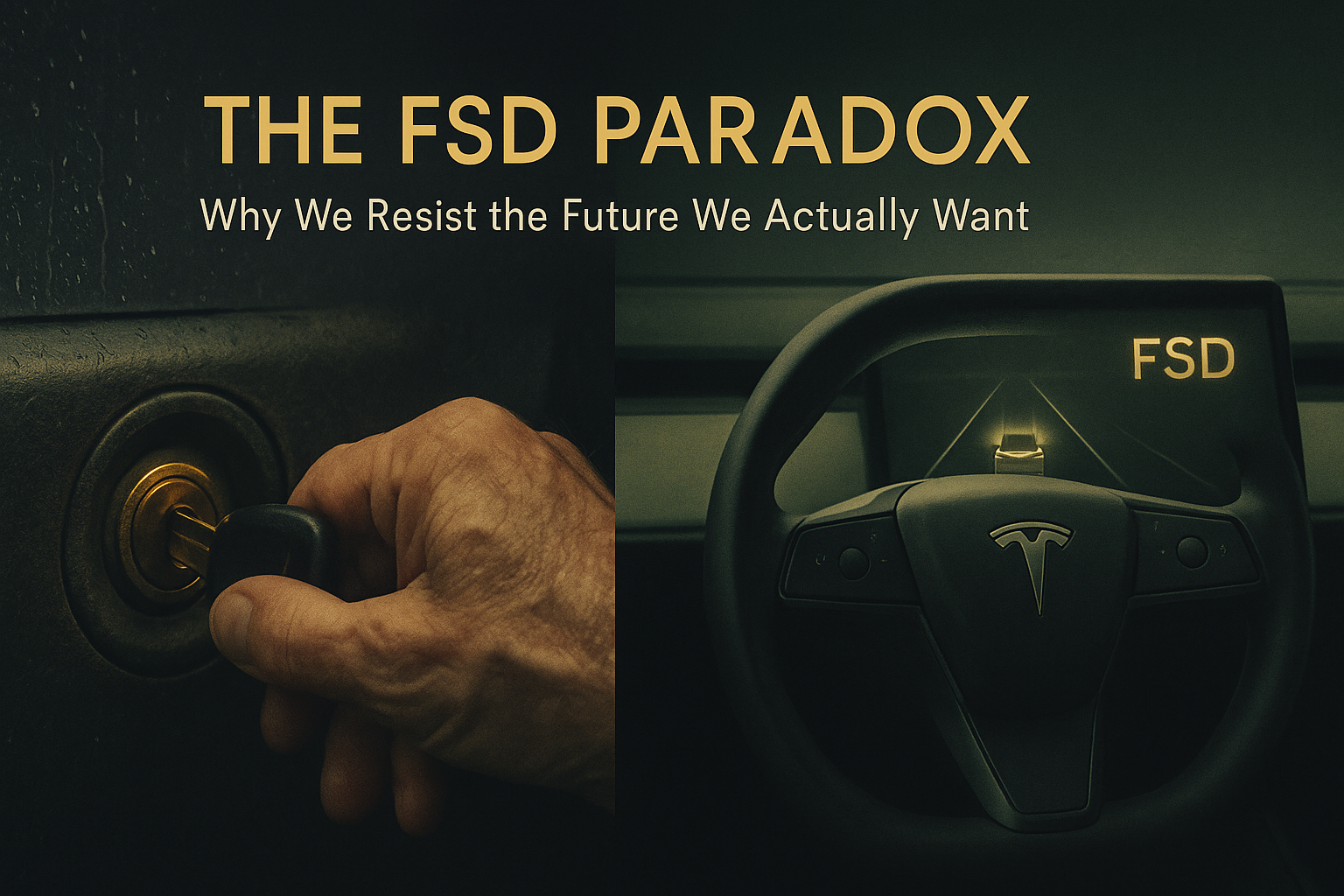
The FSD Paradox: Why We Resist the Future We Actually Want
I'm a motorsports enthusiast who loves manual transmissions. So why do I hate driving rental cars now? The rental car experience taught me something uncomfortable about human nature, and why we resist the very technologies that would improve our lives.