Techne vs Episteme: Key Differences in Greek Philosophy
Techne and episteme both involve systematic understanding, but they differ in what that understanding produces. Techne knowledge builds and creates. Episteme knowledge explains and demonstrates. If you want to make something, you need techne. If you want to understand why something works, you need episteme. The modern world often collapses this distinction, which leads to theorists who cannot build and builders who cannot explain why their methods work.
Definitions
Techne
(τέχνη)
TEKH-nay
The systematic knowledge and skill required to produce something well—craft, art, or applied expertise. For Aristotle, techne bridges theoretical knowledge and practical action, representing the reasoned capacity to make or create according to true understanding.
Episteme
(ἐπιστήμη)
eh-pis-TAY-may
Scientific or systematic knowledge—understanding that grasps not merely that something is true, but why it must be so. For Aristotle, episteme represents demonstrable knowledge of causes and principles, distinguished from mere opinion (doxa) or practical skill (techne).
Key Differences
| Aspect | Techne | Episteme |
|---|---|---|
| Purpose | Techne aims at production. Its purpose is to create, build, or bring something into existence that would not exist without skilled intervention. | Episteme aims at understanding. Its purpose is to know why things are necessarily the way they are through demonstrative reasoning. |
| Object | Techne concerns things that could be otherwise. The craftsperson makes choices about design, material, and method that shape the outcome. | Episteme concerns things that cannot be otherwise. Scientific knowledge deals with necessary truths about the structure of reality. |
| Success Criterion | Techne is judged by the quality of what it produces. A good techne produces excellent artifacts, whether buildings, speeches, or software. | Episteme is judged by the truth and demonstrability of its conclusions. Good episteme produces knowledge that withstands logical scrutiny. |
| Learning Path | Techne is learned through apprenticeship, practice, and iterative creation. You develop craft by making things and improving through feedback. | Episteme is learned through study, logical analysis, and systematic inquiry. You develop scientific knowledge through reasoning from established principles. |
Purpose
Techne aims at production. Its purpose is to create, build, or bring something into existence that would not exist without skilled intervention.
Episteme aims at understanding. Its purpose is to know why things are necessarily the way they are through demonstrative reasoning.
Object
Techne concerns things that could be otherwise. The craftsperson makes choices about design, material, and method that shape the outcome.
Episteme concerns things that cannot be otherwise. Scientific knowledge deals with necessary truths about the structure of reality.
Success Criterion
Techne is judged by the quality of what it produces. A good techne produces excellent artifacts, whether buildings, speeches, or software.
Episteme is judged by the truth and demonstrability of its conclusions. Good episteme produces knowledge that withstands logical scrutiny.
Learning Path
Techne is learned through apprenticeship, practice, and iterative creation. You develop craft by making things and improving through feedback.
Episteme is learned through study, logical analysis, and systematic inquiry. You develop scientific knowledge through reasoning from established principles.
When to Apply Each Concept
When to Choose Techne
Think in terms of techne when your goal is to create or produce something. Software development, writing, design, coaching, and any practice where skilled making is the point all fall under techne. The question techne answers is: ‘Can you make it well?’
When to Choose Episteme
Think in terms of episteme when your goal is to understand fundamental principles. Research, analysis, and building theoretical frameworks all fall under episteme. The question episteme answers is: ‘Do you understand why it works?’
Frequently Asked Questions
What is the difference between techne and episteme?
Techne is craft or art knowledge, the systematic understanding of how to make or produce things well. Episteme is scientific knowledge, the systematic understanding of why things are necessarily the case. Aristotle distinguished them because making something excellent and understanding universal truths are fundamentally different intellectual activities, even though both require rigorous thought.
Is techne less important than episteme in Greek philosophy?
Aristotle ranked episteme higher than techne in his hierarchy of knowledge because it deals with necessary and eternal truths rather than contingent productions. However, he also recognized techne as a genuine intellectual virtue essential for human life. The practical world depends entirely on techne, and many of humanity's greatest achievements are works of craft rather than theoretical discovery.
How do techne and episteme work together?
Techne informed by episteme produces more effective craft, because understanding why something works allows you to adapt your methods to new situations. Episteme informed by techne stays grounded in practical reality. The best practitioners combine both: they can build excellent things and articulate the principles behind their methods.
Articles Exploring Techne or Episteme (21)
Solomon's Paradox: The Psychology of Being Wiser for Others Than Yourself
You dispense clarity to friends while drowning in your own confusion. Modern psychology calls it Solomon's Paradox. The ancient Greeks had a practice to fix it.
The Plumber Will Outlast the Programmer. History Already Proved It.
Every technological revolution from steam to computing followed the same playbook. AI follows it too, with a cruel twist: the people doing execution-level knowledge work get displaced while skilled trades thrive.

What If Your 'Personal Best' Is Actually Your Personal Belief?
Everyone treats their personal best as an objective measurement. But what if it's actually a prophecy? What if the limit you keep hitting is the limit you keep expecting to hit?
The Boring Truth About Excellence: Why Mastery Looks Ordinary Until It Doesn't
We expect excellence to look impressive. But the most exceptional people spend most of their time doing things that look completely ordinary. Here's the boring truth about how mastery is actually built.
If You Can't Defend It, You Don't Believe It. You're Just Repeating It.
Most people defend positions they never chose. Socrates understood that repeating something doesn't make it yours. The unexamined belief is just someone else's script running in your head.
You're Not Less Talented. You're Less Focused.
What looks like exceptional talent is usually exceptional attention. The people crushing it aren't more gifted, they've just built the character discipline to ignore everything except what matters most.
Stop Waiting for Flow - Start Training It Like Every Other Skill
You can spend another year waiting for flow to happen, or you can spend the next 12 weeks training it like the ancient Greeks did, systematically, progressively, relentlessly.

Stop Following Your Passion. Start Building Excellence.
Passion is self-focused and fleeting. Excellence through service is other-focused and enduring. The Greeks never told anyone to follow their passion. They built character through craft. Here's why that matters for your work.
AI First: The Identity Revolution
The real AI revolution isn't about the technology. It's about who you become when you stop fighting it and start forging yourself in its fire.
AI First: The Mindset Shift That Changes Everything
The fundamental mindset architecture that separates AI leaders from AI laggards. Three core shifts with practical implementation frameworks grounded in ancient wisdom.
The Craft Stage: When Skill Becomes Second Nature (Techne)
You don't have a knowledge problem. You have a craft problem. Most people understand excellence intellectually but lack the embodied competence to execute it consistently. Techne bridges the gap between knowing and doing.
The Information Architecture: Curating Input for Greatness
Most people consume information like they eat at a buffet, grabbing everything that looks appealing without considering nutrition or purpose. Then they wonder why their thinking is sluggish and their decisions are poor. Greatness requires intentional information architecture.
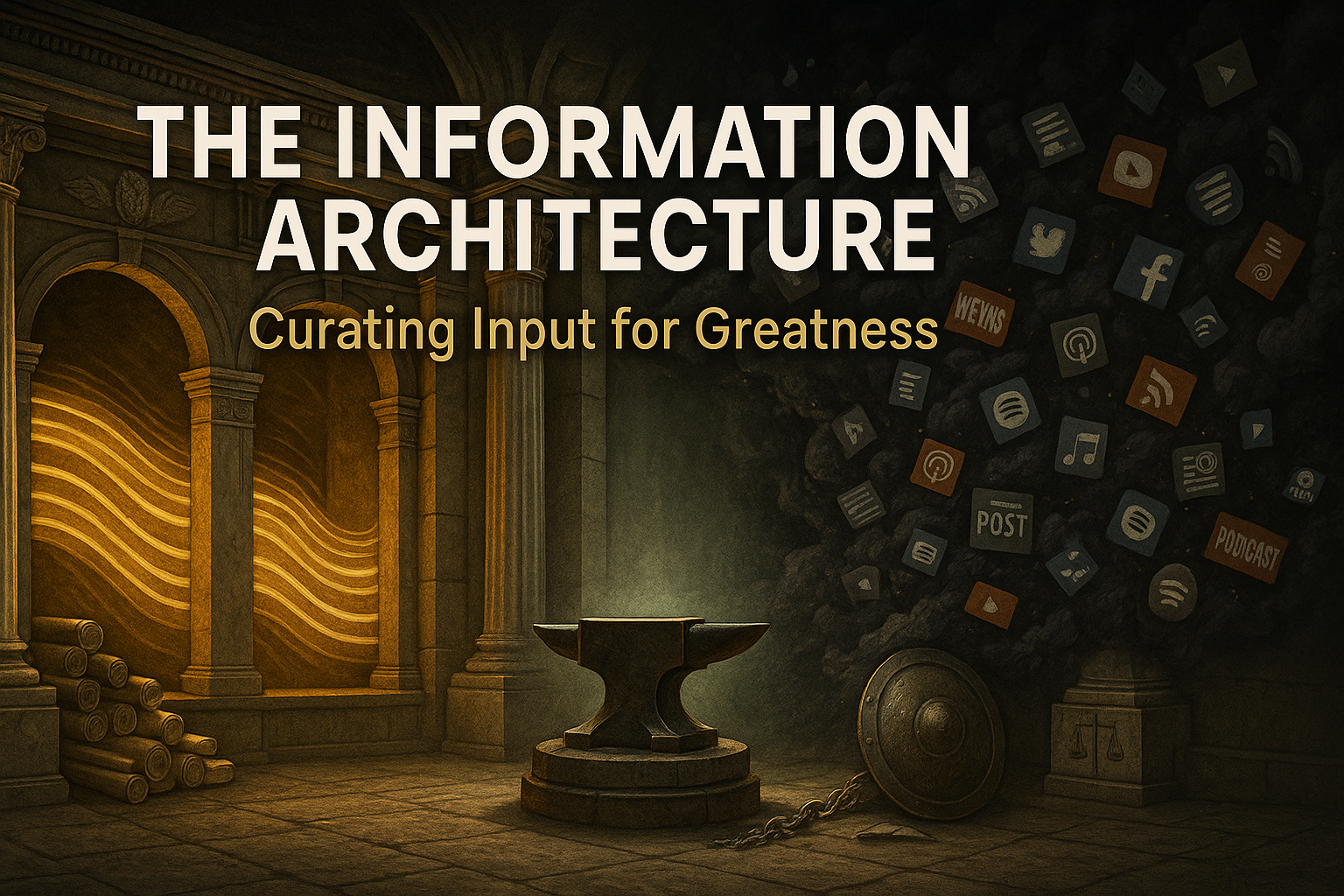
The Greatness Flywheel: Why Excellence is a Cycle, Not a Destination
Excellence isn't a destination you arrive at once and maintain through willpower. Excellence is a flywheel. The six-stage cycle that transforms ancient Greek wisdom into systematic excellence methodology.
The Philosopher King: Ancient Wisdom for Modern Leadership Integration
Plato's most radical leadership idea wasn't about power or position, it was about character. The philosopher king represents the ultimate integration of wisdom, excellence, courage, and transformation. Here's how to stop managing systems and start transforming people.
AI Fluency: The New Technical Literacy
Just as literacy transformed society, AI fluency is becoming the fundamental skill that separates those who thrive from those who struggle in the modern workplace. It's not about coding, it's about thinking.
Arete: Why Excellence is a Way of Being, Not Achieving
The Greeks understood something we've forgotten: excellence isn't something you achieve, it's something you become. This fundamental shift changes everything about how you approach work, leadership, and life.
The Information Trap: Why Knowledge Without Action Is Just Entertainment
You don't need another course. You need to start doing. The journey itself holds every lesson you need to learn. The internet gave us infinite information and infinite excuses.
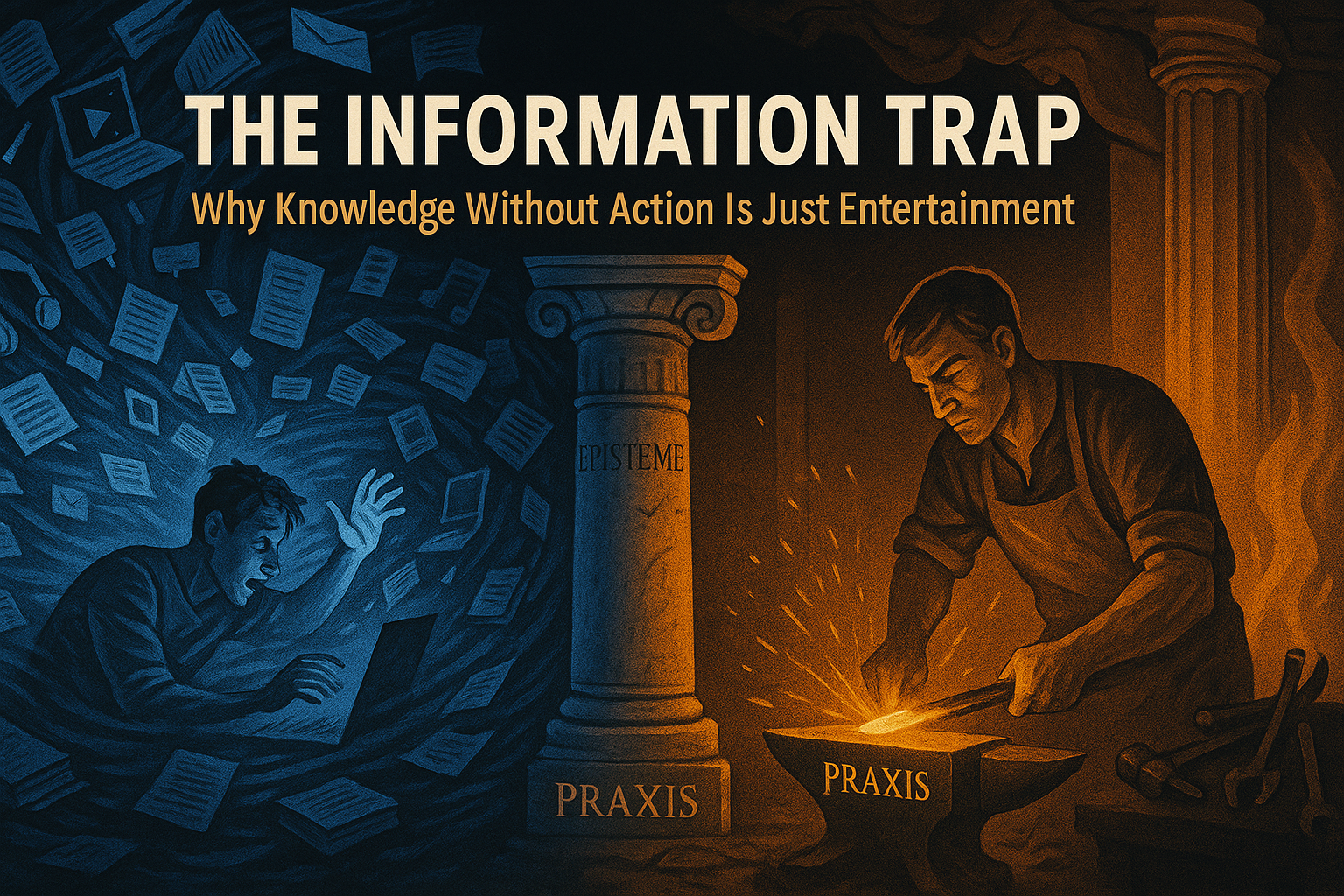
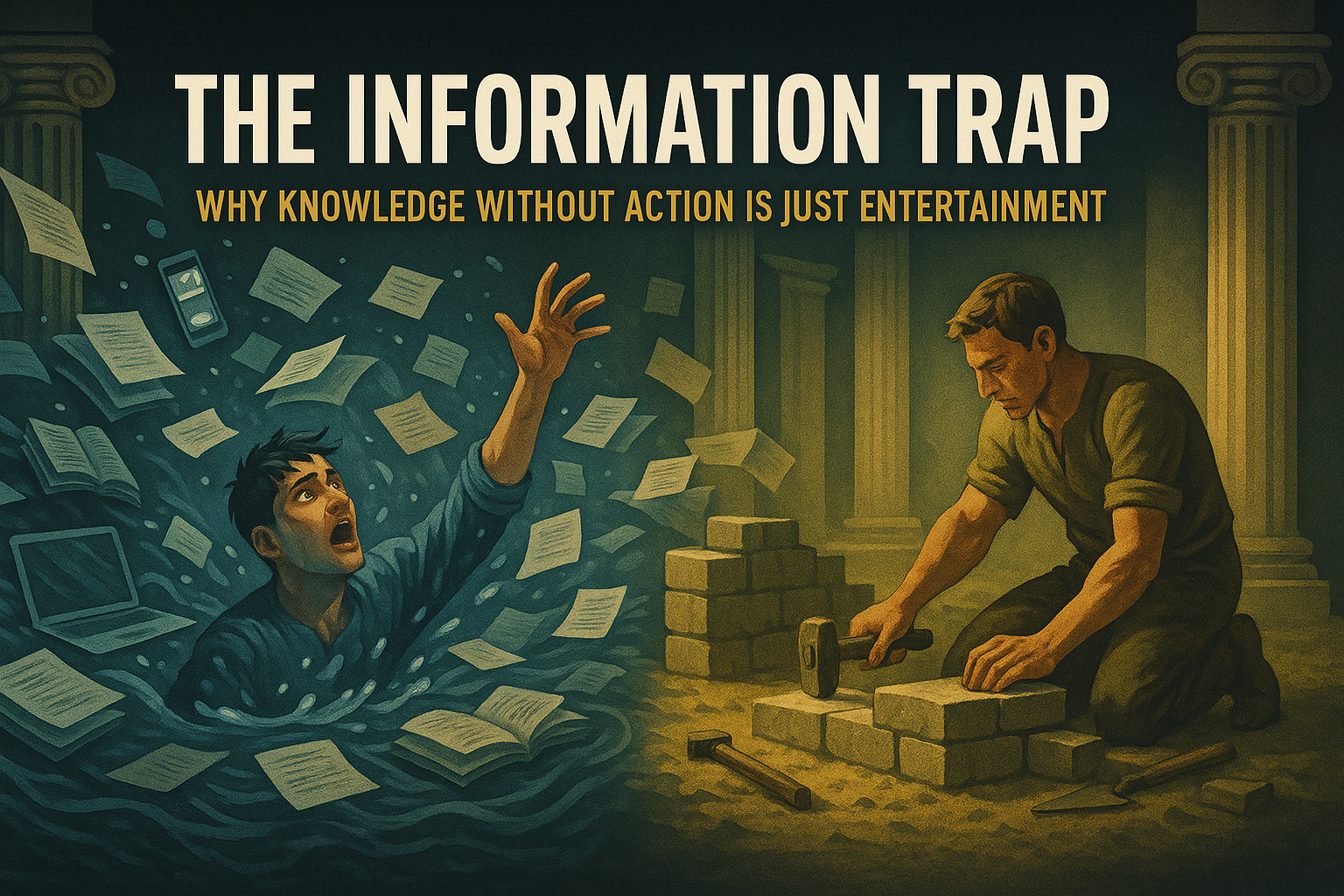
The Information Trap: Why Knowledge Without Action Is Just Entertainment
Most of your learning is actually entertainment in disguise. Here's why information without action is intellectual hoarding, and how to transform from consumer to creator through practical implementation.
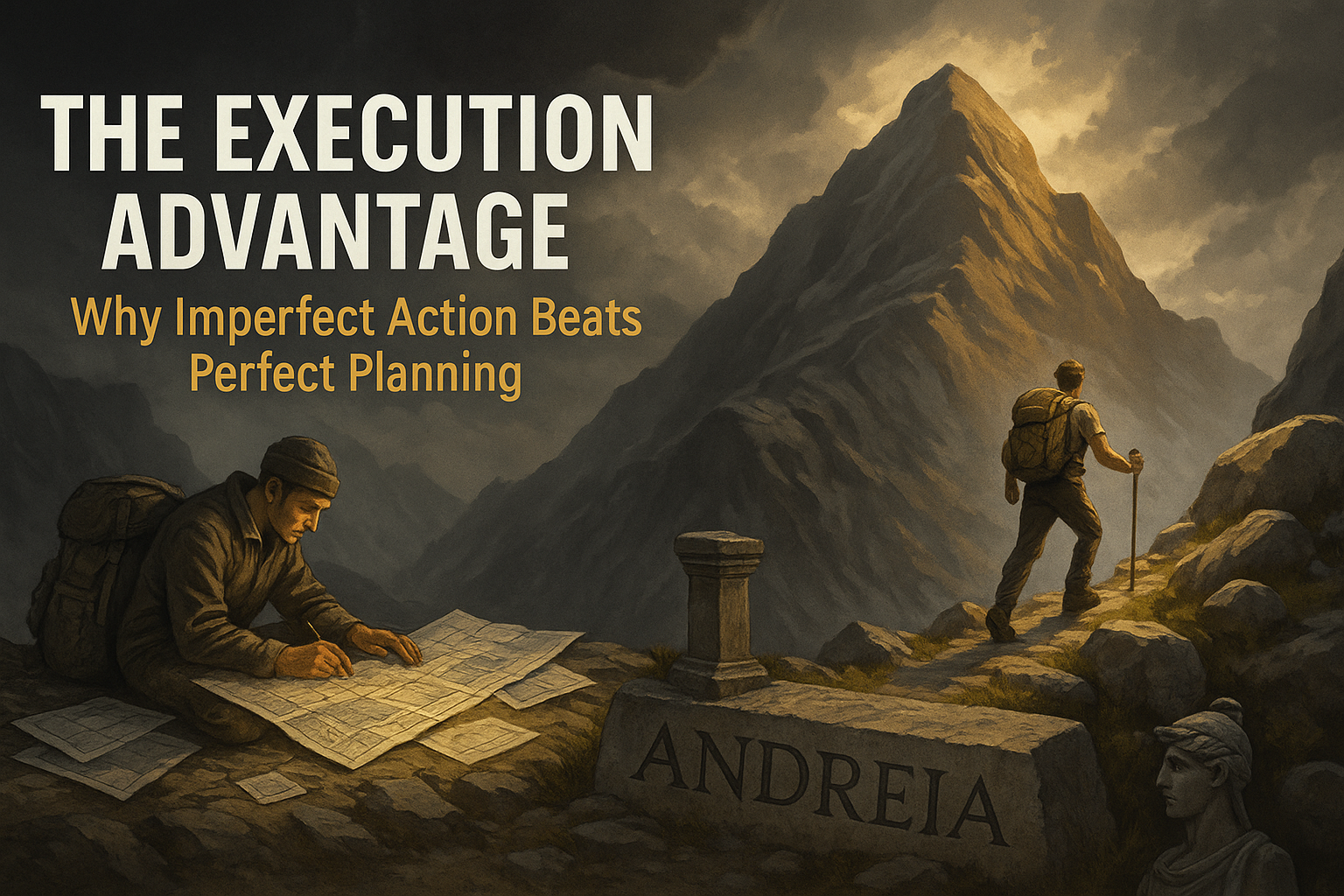
The Execution Advantage: Why Imperfect Action Beats Perfect Planning
Perfect plans are usually perfectly wrong. Here's why imperfect action creates better results than perfect planning, and how to build the execution advantage through courage and rapid iteration.
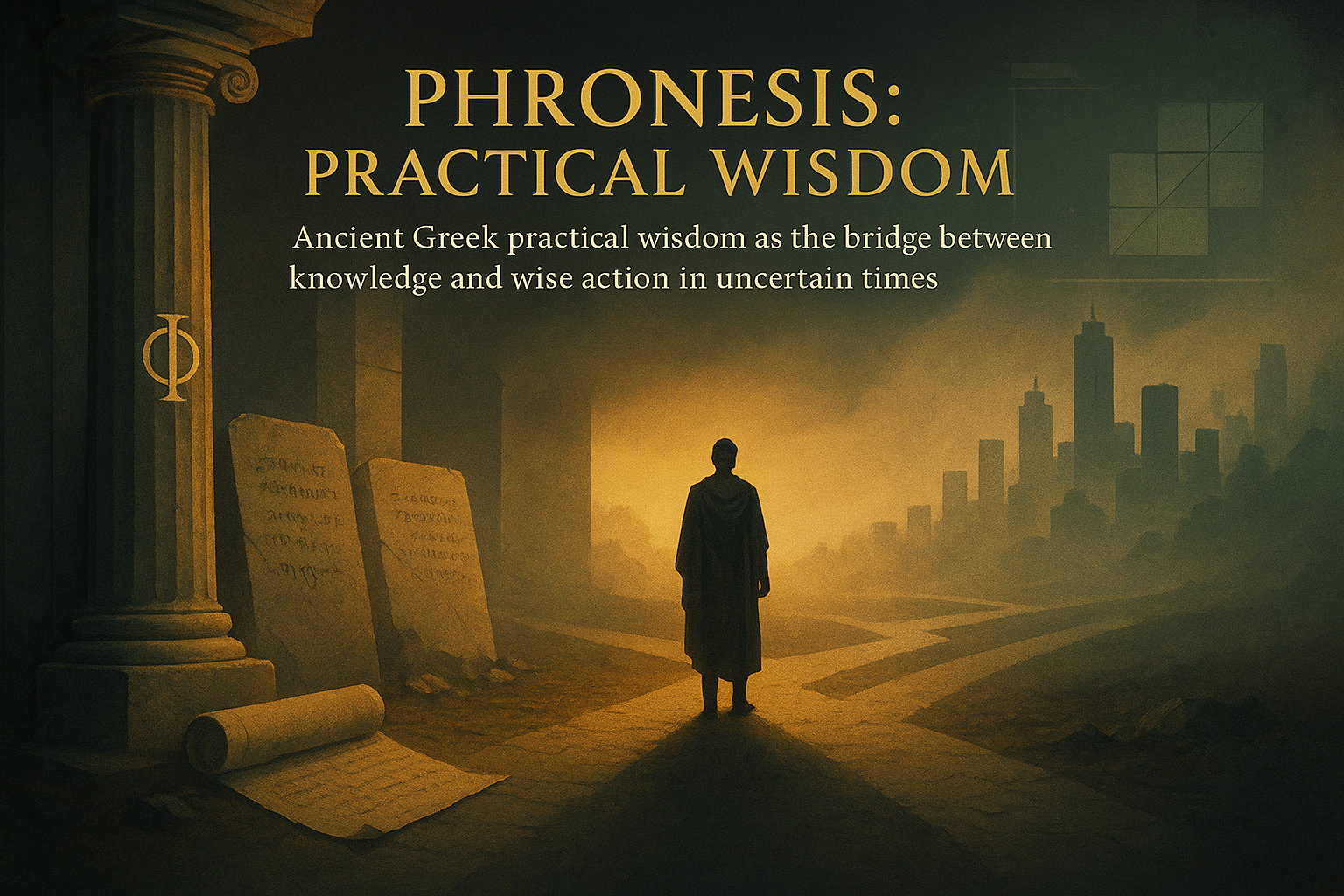
Phronesis: The Lost Art of Practical Wisdom
The ancient Greeks had a word for the leadership skill we desperately need today: phronesis. It's not about having all the answers, it's about acting wisely when you don't.
Between Trapezes: Navigating AI Uncertainty with Ancient Wisdom
In the moment between letting go of one trapeze and grasping the next, there's a space where everything depends on trust, timing, and practical wisdom. For leaders navigating AI transformation, this moment isn't a crisis, it's where excellence is forged.