Praxis vs Techne: Key Differences in Greek Philosophy
You make things and you do things, and the difference between making and doing is one of the most consequential distinctions in Aristotle’s philosophy. Praxis is action that has its end in itself. When you act justly, the justice is in the acting. There is no separate product left over when the action is complete. Techne is skilled production that aims at an external result. When a carpenter builds a table, the table is the point. The building is instrumental to the product. Aristotle developed this distinction in Book VI of the Nicomachean Ethics because he recognized that confusing these two categories distorts both ethical reasoning and productive work. Praxis is guided by phronesis, practical wisdom. It operates in the domain of ethics and politics, where the question is not how to produce something but how to act rightly given the particulars of the situation. There is no recipe for justice, no algorithm for courage. Each situation requires perception, judgment, and a commitment to acting well that cannot be reduced to technique. Techne is guided by its own specific knowledge, the systematic understanding of how to produce a particular type of result. A doctor has techne in medicine. A shipbuilder has techne in construction. The knowledge is transferable, teachable, and oriented toward outcomes that can be independently evaluated. The table is well-made or it is not. The ship is seaworthy or it is not. The modern world has largely collapsed this distinction. We treat ethical and political questions as technical problems waiting for the right solution. We approach leadership as a skill to be learned from frameworks and models rather than a practice requiring ongoing moral judgment. We evaluate human relationships by their outputs rather than by the quality of engagement within them. This collapse produces a characteristic set of failures. When you treat praxis as techne, you look for formulas where perception is needed, you standardize where context demands flexibility, and you measure outputs where the quality of the process itself is what matters. When you treat techne as praxis, you moralize what should be evaluated technically, you invoke character when competence is the actual issue, and you confuse the question of whether something was done well with whether the person doing it was virtuous. The distinction does not mean that ethical action requires no skill or that skilled production has no ethical dimension. It means that the two operate by different logics. Recognizing which logic applies to the situation in front of you is itself an act of practical wisdom.
Definitions
Praxis
(πρᾶξις)
PRAHK-sis
Action or practice directed toward living well. For Aristotle, praxis is purposeful human activity where the doing itself is the end, distinct from poiesis (making) where the product is the goal. Character is formed through praxis, not theory.
Techne
(τέχνη)
TEKH-nay
The systematic knowledge and skill required to produce something well—craft, art, or applied expertise. For Aristotle, techne bridges theoretical knowledge and practical action, representing the reasoned capacity to make or create according to true understanding.
Key Differences
| Aspect | Praxis | Techne |
|---|---|---|
| End or Goal | Praxis has its end in itself. Acting justly, deliberating wisely, and exercising courage are valuable in the doing, not as means to some separate product. | Techne aims at an external product. The value of skilled making lies in the result produced: the house built, the poem composed, the patient healed. |
| Guiding Virtue | Praxis is guided by phronesis (practical wisdom), the capacity to perceive what the situation demands and to act rightly in particular circumstances. | Techne is guided by specialized knowledge, the systematic understanding of how to produce a specific type of result reliably and well. |
| Domain | Praxis operates in ethics and politics, the domain of human interaction where right action depends on context, relationships, and moral perception. | Techne operates in craft and production, the domain of making where quality depends on skill, knowledge, and adherence to standards appropriate to the craft. |
| Reversibility | Actions in praxis cannot be unmade. A betrayal cannot be unbetrayed. A courageous stand, once taken, exists permanently in the fabric of your character and relationships. | Products of techne can often be remade, corrected, or improved. A poorly made table can be rebuilt. A flawed design can be revised. The product exists independently of the process. |
| Evaluation Criteria | Praxis is evaluated by rightness: was this the appropriate action given the circumstances? The standard is moral and contextual, not measurable by output metrics. | Techne is evaluated by effectiveness: did the production achieve its intended result at the expected quality? The standard is functional and can often be objectively assessed. |
End or Goal
Praxis has its end in itself. Acting justly, deliberating wisely, and exercising courage are valuable in the doing, not as means to some separate product.
Techne aims at an external product. The value of skilled making lies in the result produced: the house built, the poem composed, the patient healed.
Guiding Virtue
Praxis is guided by phronesis (practical wisdom), the capacity to perceive what the situation demands and to act rightly in particular circumstances.
Techne is guided by specialized knowledge, the systematic understanding of how to produce a specific type of result reliably and well.
Domain
Praxis operates in ethics and politics, the domain of human interaction where right action depends on context, relationships, and moral perception.
Techne operates in craft and production, the domain of making where quality depends on skill, knowledge, and adherence to standards appropriate to the craft.
Reversibility
Actions in praxis cannot be unmade. A betrayal cannot be unbetrayed. A courageous stand, once taken, exists permanently in the fabric of your character and relationships.
Products of techne can often be remade, corrected, or improved. A poorly made table can be rebuilt. A flawed design can be revised. The product exists independently of the process.
Evaluation Criteria
Praxis is evaluated by rightness: was this the appropriate action given the circumstances? The standard is moral and contextual, not measurable by output metrics.
Techne is evaluated by effectiveness: did the production achieve its intended result at the expected quality? The standard is functional and can often be objectively assessed.
When to Apply Each Concept
When to Choose Praxis
Recognize praxis when the situation calls for moral judgment rather than technical execution. Leadership decisions, ethical dilemmas, relational conflicts, and questions about how to live all belong to the domain of praxis. In these situations, looking for a formula or technique is the wrong approach. What you need is the perception and judgment that phronesis provides.
When to Choose Techne
Recognize techne when the situation calls for skilled execution aimed at a specific result. Building, designing, coding, diagnosing, and creating all belong to the domain of techne. In these situations, character alone is insufficient. What you need is the specific competence required to produce a good result.
Frequently Asked Questions
What is the difference between praxis and techne?
Praxis is purposeful ethical action that has its end in itself, such as acting justly or deliberating wisely. Techne is skilled production aimed at an external result, such as building a house or composing music. Aristotle distinguished them in the Nicomachean Ethics because they operate by different logics and are guided by different intellectual virtues: praxis by phronesis, techne by productive knowledge.
Praxis vs techne in Aristotle?
Aristotle classified praxis and techne as distinct forms of rational activity in Nicomachean Ethics Book VI. Praxis belongs to the practical sphere where the goal is right action in particular circumstances. Techne belongs to the productive sphere where the goal is making something well. The distinction prevents the error of reducing ethical life to technique or evaluating skilled production by moral criteria alone.
Is praxis the same as practice?
The English word practice descends from praxis, but the meanings have diverged. Modern practice often means repeated execution to improve skill, which is closer to askesis or techne. Aristotle's praxis refers specifically to action whose end is internal to the activity itself, particularly ethical and political action guided by practical wisdom. Praxis is not practice in the sense of rehearsal; it is action that is its own fulfillment.
How do praxis and techne relate to phronesis?
Phronesis (practical wisdom) is the intellectual virtue that guides praxis. It enables you to perceive what the situation demands and to act rightly in particular circumstances. Techne has its own form of knowledge, but that knowledge is about production, not about right action. Aristotle argued that phronesis cannot be reduced to techne because ethical situations do not admit of the same kind of systematic, repeatable solutions that productive skills do.
Articles Exploring Praxis or Techne (33)
Code Got Cheap. Building Did Not.
A ticket used to be the whole job: receive the ask, type the code, argue that you matched it. Cheap code ends that identity before lunch. What remains is deciding whether the thing should exist.

Love Is Teaching Them How to Jump a Dead Battery
Speeches about values feel like formation. The transfer happens in the driveway, at the pool filter, and in the unsexy work cousins of those jobs. If you keep doing the task, you kept the skill.
Big PRs Used to Be a Smell. Agents Broke the Premise.
A craftsman friend recoils at huge agent PRs. The disgust is real. The absolute rule is not. Small PRs protected human memory and slow forensics. Agents change both. Keep atomic commits and fast recovery. Stop worshiping line count as excellence.

Your Standards Didn't Slip. You Stopped Measuring.
After the win you stopped looking at the bar, kept a fluent story about why, and called the soft week strategy. Rewards end. Standards renew. Measuring is the difference.
Hide the Sweat and You Hide the Path
Law 30 of the 48 Laws of Power tells you to make your accomplishments seem effortless. Hide the toil. Conceal the tricks. Act as if you could do much more. The tactical truth is real: audiences confuse rehearsal with weakness, and clean execution reads as competence. The character cost arrives when concealment becomes mystique. Juniors never see the path. Effort becomes shame. Your identity fuses to a costume of natural gift. The ARETE alternative is Castiglione's sprezzatura rebuilt on Greek hexis: earned ease from practice, ponos honored in the forge, techne that can still teach.

Stop Copying Their Playbook. Steal the Principle Underneath It.
You installed their standup, their OKRs, their hiring scorecard. Six months later you have their vocabulary and none of their results. Excellence rarely transplants as costume. The triangle offense without Jordan collapses. Forced ranking without the culture that could carry it poisons. Stop copying the finished playbook. Steal the reason it worked, then rebuild the practice in your own materials.
AI Was Supposed to Level the Field. It Widened the Gap.
The promise was equal access and a rising bottom. The mechanism runs the other way. AI does not replace discernment. It multiplies whatever quality of judgment already sits in the chair, which means the people who needed a leveler most are often the ones the tool harms first.

The Machines Picked an Operating System. It Wasn't Windows.
For fifty years the operating system argument was a matter of taste, and taste kept Windows on seventy percent of the world's desktops. Then computers got a new user. AI agents work through shell commands, text streams, and small tools chained together, and that describes a design philosophy written down at Bell Labs in 1978. The machines were never going to vote on familiarity. They compose with whatever was built for composition, and the gap between the two kinds of operating system is about to become the gap between working infrastructure and legacy.

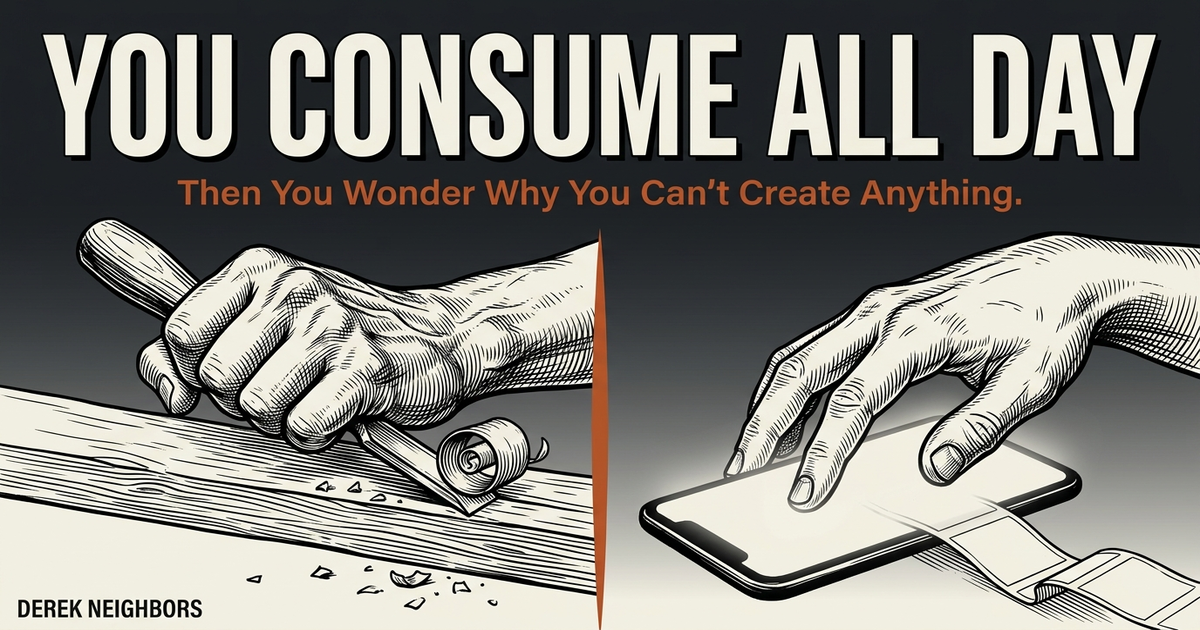
You Consume All Day. Then You Wonder Why You Can't Create Anything.
Two people spend the same free evening. One opens a feed and consumes for three hours. The other picks up a tool that fights back and makes something clumsy and real. From the outside both are relaxing. A year later one of them can do a dozen things with their hands and the other can only find things other people made. Every tool trains you. A craft tool demands skill and leaves capability in you. A capture tool demands only your appetite and hands you consumption you rent from an algorithm. The line was never analog versus digital. It is whether the thing in your hand is finishing you into a maker or a consumer.
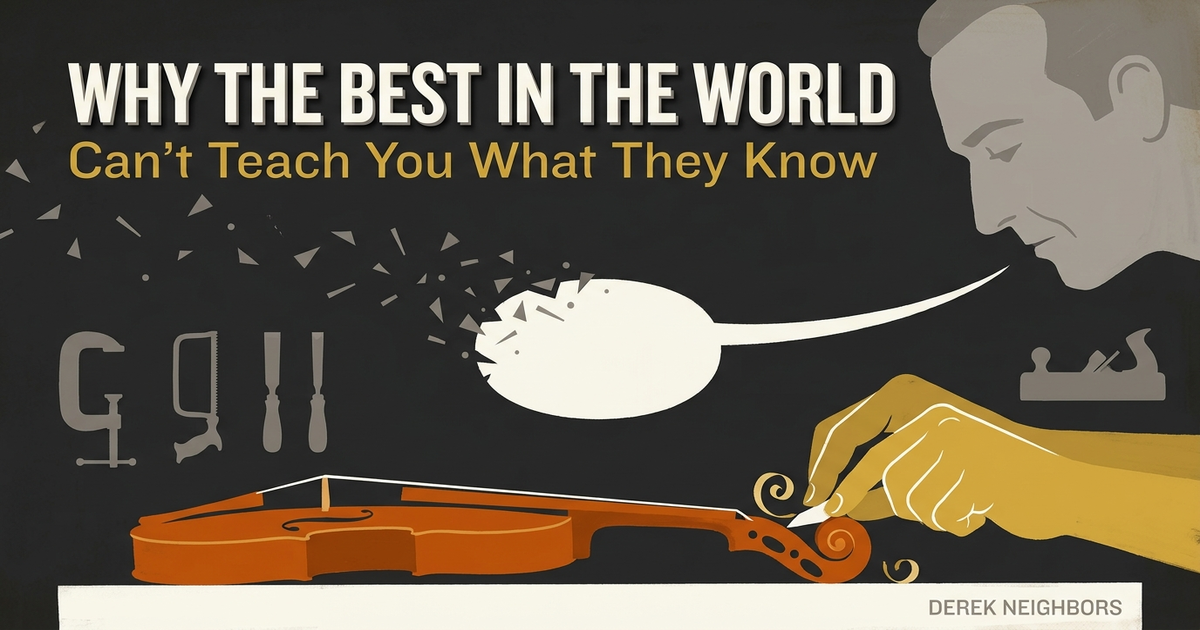
Why the Best in the World Can't Teach You What They Know
Ask the best performer in any field how they do it and you get a slogan. Trust your gut. See the ball, hit the ball. We assume they're hiding the secret or explaining it badly. The truth is stranger: fluent expertise erases its own steps as it compiles, so the master's explanation is a reconstruction by a narrator who no longer has access to the machinery. The Greeks called the unteachable knack empeiria. Modern research calls it tacit knowledge. Either way, the words are the least transferable thing a master has, and the people who learn fastest stop collecting answers and start watching hands.
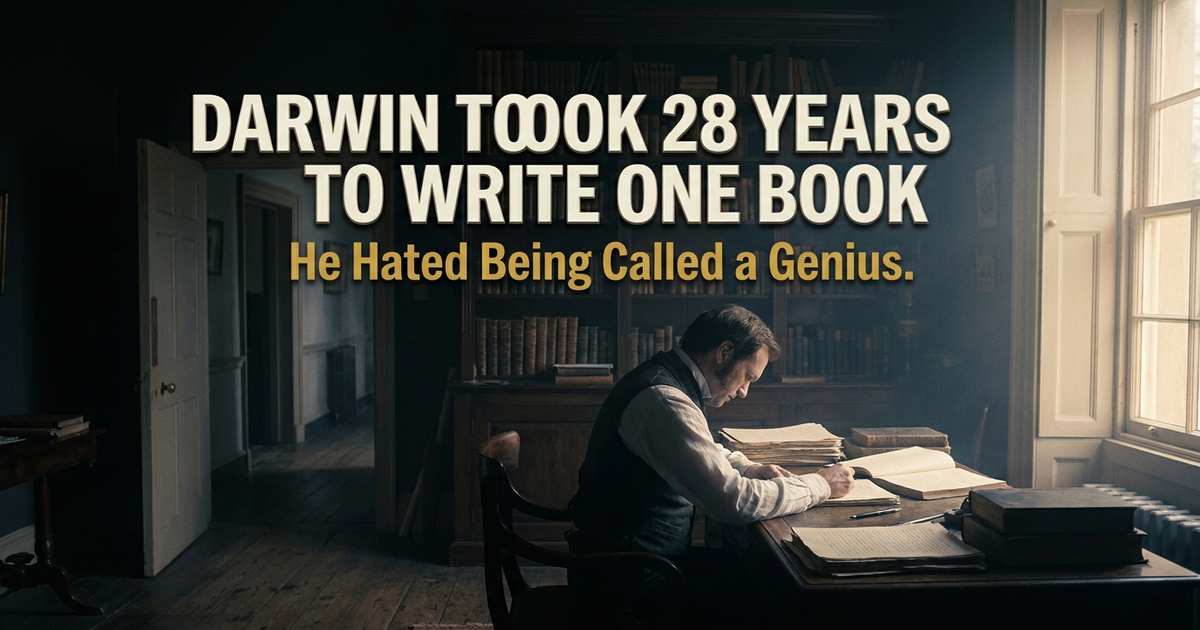
Darwin Took 28 Years to Write One Book. He Hated Being Called a Genius.
Charles Darwin spent twenty-eight years between the HMS Beagle's return in 1836 and the publication of On the Origin of Species in 1859. Eight of those years he spent classifying barnacles. He described himself in his autobiography as not a quick thinker or writer. The word the public eventually used for him was genius. He hated it. Genius is a hindsight label we paste onto a long, mostly invisible accumulation of patient daily work, and the lightning-bolt myth of insight survives because it lets the rest of us off the hook for not enduring the years of karteria, patient endurance, the actual builders endured.
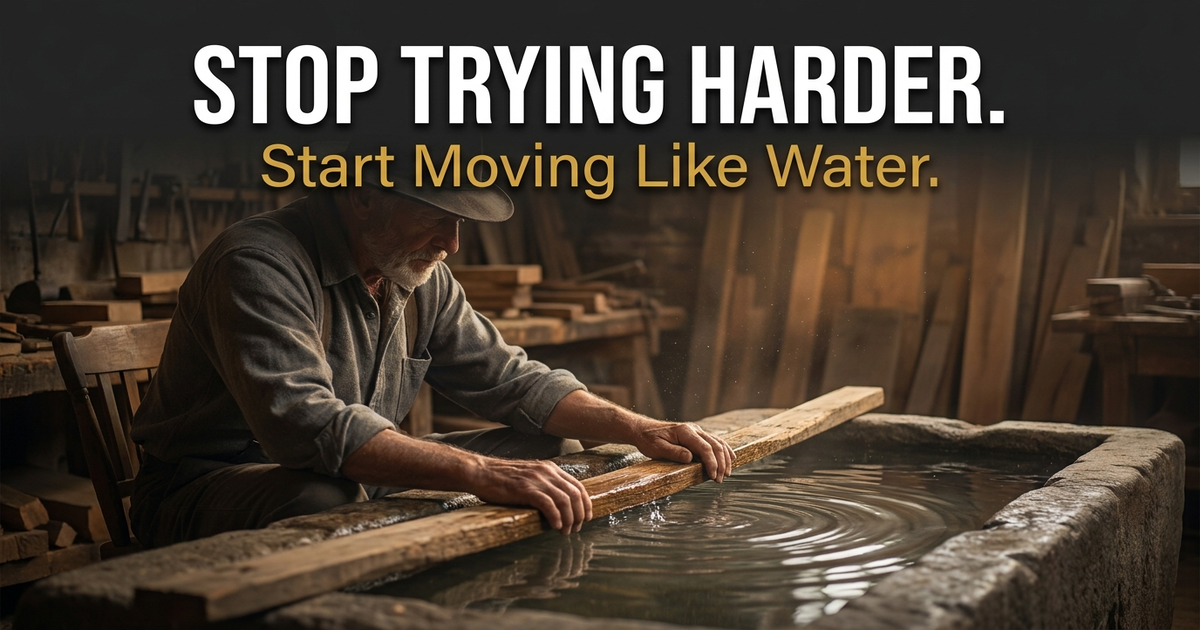
Stop Trying Harder. Start Moving Like Water.
The mythology that says excellence comes from gripping tighter is a Western misread of how skilled humans actually perform. Four hundred years ago, a swordsman named Miyamoto Musashi described the working stance every senior craftsman, surgeon, musician, and distance runner eventually finds: mizu no kokoro, the water mind. Alert without rigidity. Fitted to the moment. Impossible to tense up. The novice grips. The master flows. This is the investigation into why, and the training that gets you across the threshold.
Just Because AI Can Do It Doesn't Mean You Should
For all of history, scarcity decided what got automated. AI removed the constraint, and the burden quietly flipped: you no longer have to justify automating something, you have to justify keeping it. Most people are answering the wrong question. The ancients named the judgment we now need most, and it has nothing to do with whether the machine can do the work.

Stop Solving Problems You Haven't Defined Yet
Motion feels responsible. Definition feels slow. That is why so many teams spend weeks solving symptoms with impressive energy while the real problem keeps reproducing itself underneath the work.
Deep Work Is Dying. The Few Who Protect It Will Run Everything.
In a world engineered to fragment your attention, the ability to think deeply about one problem for two hours has become a competitive advantage so rare it borders on superpower. The ancients called this capacity technē. We forgot it. Time to remember.

You Don't Want to Change. You Want to Feel Better.
You've read the books, hired the coach, attended the retreat. Six months later, the same patterns are running. The same conflicts repeat. The vocabulary improved. The behavior didn't. The effort was real. The misunderstanding was deeper: what change actually requires.

Stop Asking for More Resources. Your Constraints Are the Advantage.
The meeting where someone asks for more budget, more headcount, more time is almost never about resources. It's about avoiding the harder question of what to cut. The paradox: limitations don't block great work. They force it.

Why Arguing Your Point Is Always a Losing Strategy
For the second time in this series, Greene and the ancient philosophers agree. Demonstrate, don't argue. But they agree for different reasons, and the difference reveals whether you're performing power or practicing excellence.
The Plumber Will Outlast the Programmer. History Already Proved It.
Every technological revolution from steam to computing followed the same playbook. AI follows it too, with a cruel twist: the people doing execution-level knowledge work get displaced while skilled trades thrive.

The Boring Truth About Excellence: Why Mastery Looks Ordinary Until It Doesn't
We expect excellence to look impressive. But the most exceptional people spend most of their time doing things that look completely ordinary. Here's the boring truth about how mastery is actually built.

You're Not Less Talented. You're Less Focused.
What looks like exceptional talent is usually exceptional attention. The people crushing it aren't more gifted, they've just built the character discipline to ignore everything except what matters most.
Stop Waiting for Flow - Start Training It Like Every Other Skill
You can spend another year waiting for flow to happen, or you can spend the next 12 weeks training it like the ancient Greeks did, systematically, progressively, relentlessly.

Stop Following Your Passion. Start Building Excellence.
Passion is self-focused and fleeting. Excellence through service is other-focused and enduring. The Greeks never told anyone to follow their passion. They built character through craft. Here's why that matters for your work.
AI First: The Identity Revolution
The real AI revolution isn't about the technology. It's about who you become when you stop fighting it and start forging yourself in its fire.

AI First: The Mindset Shift That Changes Everything
The fundamental mindset architecture that separates AI leaders from AI laggards. Three core shifts with practical implementation frameworks grounded in ancient wisdom.
The Craft Stage: When Skill Becomes Second Nature (Techne)
You don't have a knowledge problem. You have a craft problem. Most people understand excellence intellectually but lack the embodied competence to execute it consistently. Techne bridges the gap between knowing and doing.
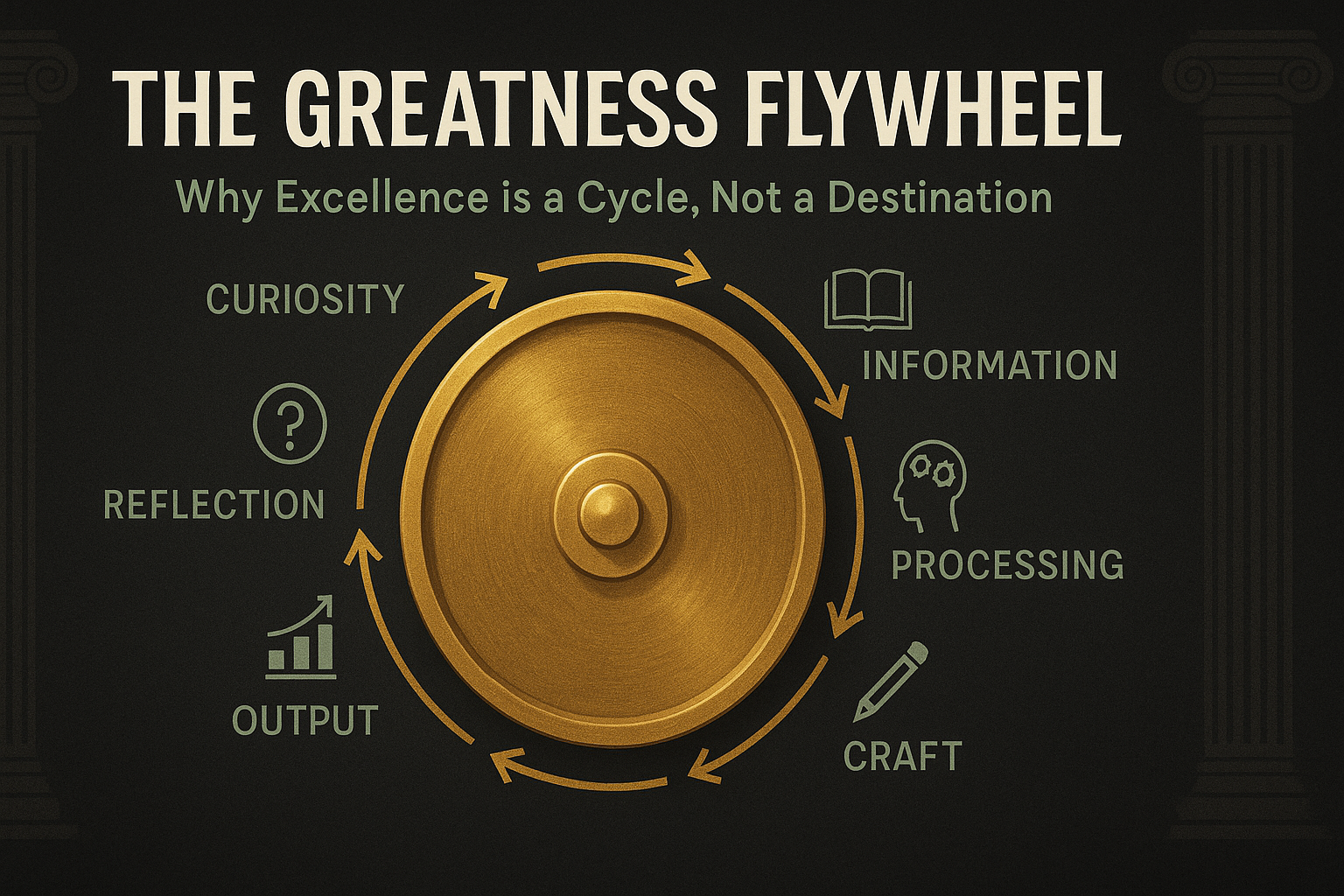
The Greatness Flywheel: Why Excellence is a Cycle, Not a Destination
Excellence isn't a destination you arrive at once and maintain through willpower. Excellence is a flywheel. The six-stage cycle that transforms ancient Greek wisdom into systematic excellence methodology.
The Philosopher King: Ancient Wisdom for Modern Leadership Integration
Plato's most radical leadership idea wasn't about power or position, it was about character. The philosopher king represents the ultimate integration of wisdom, excellence, courage, and transformation. Here's how to stop managing systems and start transforming people.
AI Fluency: The New Technical Literacy
Just as literacy transformed society, AI fluency is becoming the fundamental skill that separates those who thrive from those who struggle in the modern workplace. It's not about coding, it's about thinking.
Arete: Why Excellence is a Way of Being, Not Achieving
The Greeks understood something we've forgotten: excellence isn't something you achieve, it's something you become. This fundamental shift changes everything about how you approach work, leadership, and life.
The Information Trap: Why Knowledge Without Action Is Just Entertainment
You don't need another course. You need to start doing. The journey itself holds every lesson you need to learn. The internet gave us infinite information and infinite excuses.

Phronesis: The Lost Art of Practical Wisdom
The ancient Greeks had a word for the leadership skill we desperately need today: phronesis. It's not about having all the answers, it's about acting wisely when you don't.
Between Trapezes: Navigating AI Uncertainty with Ancient Wisdom
In the moment between letting go of one trapeze and grasping the next, there's a space where everything depends on trust, timing, and practical wisdom. For leaders navigating AI transformation, this moment isn't a crisis, it's where excellence is forged.