Mimesis vs Poiesis: Key Differences in Greek Philosophy
Mimesis and poiesis represent two poles of creative activity. Mimesis learns by imitating what exists. Poiesis brings into existence what did not exist before. All creative development moves between these poles, and understanding where you are on the spectrum clarifies what your craft demands from you at each stage of growth.
Definitions
Mimesis
(μίμησις)
mih-MAY-sis
The act of imitation or representation, central to Aristotle’s theory of art and learning. Beyond mere copying, mimesis describes how humans learn virtue by observing and emulating exemplary models, internalizing excellence through deliberate imitation until it becomes authentic character.
Poiesis
(ποίησις)
poy-AY-sis
The act of bringing something into being that did not exist before—creative production that transforms raw material into meaningful form. For Aristotle, poiesis represents making or crafting, distinguished from mere action (praxis) by its focus on producing an external work or artifact.
Key Differences
| Aspect | Mimesis | Poiesis |
|---|---|---|
| Creative Direction | Mimesis moves from the existing to the reproduced. It takes what is already present in nature, art, or human behavior and represents it. | Poiesis moves from non-existence to existence. It brings forth something genuinely new through the creative act. |
| Relationship to Originals | Mimesis requires a model or original to imitate. The quality of mimesis depends on the accuracy, insight, or depth of the representation. | Poiesis does not require a pre-existing model. The maker draws on skill, vision, and understanding to produce something that has no direct predecessor. |
| Learning Stage | Mimesis is foundational to learning. You develop skill by imitating masters, following established patterns, and reproducing known forms. | Poiesis represents mature creativity. After mastering through imitation, you develop the capacity to create original works. |
| Philosophical Status | Plato criticized mimesis as twice removed from truth (copies of copies). Aristotle defended it as natural to humans and essential for learning. | Poiesis was broadly respected as a genuine bringing-forth. The poet (poietes, maker) was honored for the ability to create rather than copy. |
Creative Direction
Mimesis moves from the existing to the reproduced. It takes what is already present in nature, art, or human behavior and represents it.
Poiesis moves from non-existence to existence. It brings forth something genuinely new through the creative act.
Relationship to Originals
Mimesis requires a model or original to imitate. The quality of mimesis depends on the accuracy, insight, or depth of the representation.
Poiesis does not require a pre-existing model. The maker draws on skill, vision, and understanding to produce something that has no direct predecessor.
Learning Stage
Mimesis is foundational to learning. You develop skill by imitating masters, following established patterns, and reproducing known forms.
Poiesis represents mature creativity. After mastering through imitation, you develop the capacity to create original works.
Philosophical Status
Plato criticized mimesis as twice removed from truth (copies of copies). Aristotle defended it as natural to humans and essential for learning.
Poiesis was broadly respected as a genuine bringing-forth. The poet (poietes, maker) was honored for the ability to create rather than copy.
When to Apply Each Concept
When to Choose Mimesis
Lean on mimesis during the learning phase of any skill. Study the masters, copy their techniques, analyze their choices. Imitation is not plagiarism when it serves development. Writers who copy passages by hand, painters who reproduce masterworks, and programmers who study and replicate excellent code are all using mimesis as a learning tool.
When to Choose Poiesis
Lean on poiesis when you have absorbed enough through mimesis that you can generate original work. When you feel the pull to create something that does not yet exist, to synthesize your influences into a voice or vision that is distinctly yours, you are moving into poiesis. The shift happens gradually, and the best creators continue cycling between mimesis (learning) and poiesis (making).
Frequently Asked Questions
What is the difference between mimesis and poiesis?
Mimesis is imitation or representation, the act of reproducing or depicting what already exists. Poiesis is creative production, the act of bringing something new into existence. In artistic development, mimesis typically precedes poiesis: you learn by imitating, then you create originally. Both are essential, and most mature creative work involves elements of each.
Did Plato and Aristotle agree about mimesis?
No. Plato was deeply suspicious of mimesis, arguing in the Republic that artistic imitation is twice removed from truth and can corrupt the soul by appealing to emotions rather than reason. Aristotle defended mimesis in the Poetics, arguing that imitation is natural to humans, that we learn through it from childhood, and that artistic mimesis can reveal universal truths about human nature.
How do mimesis and poiesis work together in creative development?
Creative mastery follows a natural progression from mimesis to poiesis. Early development relies heavily on imitation: copying techniques, studying exemplary work, and internalizing established patterns. As skill develops, the practitioner begins synthesizing influences and generating original work (poiesis). Mature creators continue alternating between the two, using mimesis to expand their range and poiesis to express their unique vision.
Articles Exploring Mimesis or Poiesis (10)
Your Worst Boss Taught You More Than Your Best One
Ask a new manager about their best boss and you get a feeling: things were calm. Ask about their worst and you get the date, the meeting, and the sentence. The good boss's craft was built to disappear, so there was nothing to copy. The bad boss left the damage where you could feel it. That makes the bad lesson stick, and it also makes it dangerous, because the repair you learned from pain is usually the opposite of one person's flaw.
You Wait for Consensus and Call It Thinking
The original thought is already in the room. What is missing is the person willing to say it while it can still lose. Consensus is a tool. It is a poor substitute for a first speaker.
Code Got Cheap. Building Did Not.
A ticket used to be the whole job: receive the ask, type the code, argue that you matched it. Cheap code ends that identity before lunch. What remains is deciding whether the thing should exist.

Stop Copying Their Playbook. Steal the Principle Underneath It.
You installed their standup, their OKRs, their hiring scorecard. Six months later you have their vocabulary and none of their results. Excellence rarely transplants as costume. The triangle offense without Jordan collapses. Forced ranking without the culture that could carry it poisons. Stop copying the finished playbook. Steal the reason it worked, then rebuild the practice in your own materials.
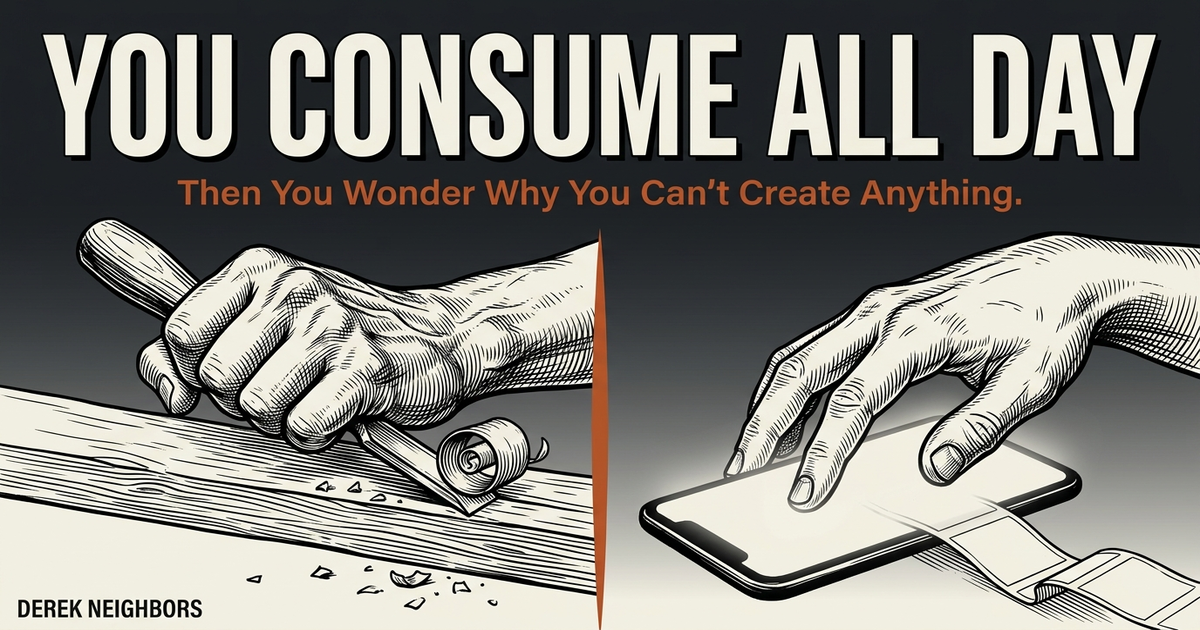
You Consume All Day. Then You Wonder Why You Can't Create Anything.
Two people spend the same free evening. One opens a feed and consumes for three hours. The other picks up a tool that fights back and makes something clumsy and real. From the outside both are relaxing. A year later one of them can do a dozen things with their hands and the other can only find things other people made. Every tool trains you. A craft tool demands skill and leaves capability in you. A capture tool demands only your appetite and hands you consumption you rent from an algorithm. The line was never analog versus digital. It is whether the thing in your hand is finishing you into a maker or a consumer.
Why the Best in the World Can't Teach You What They Know
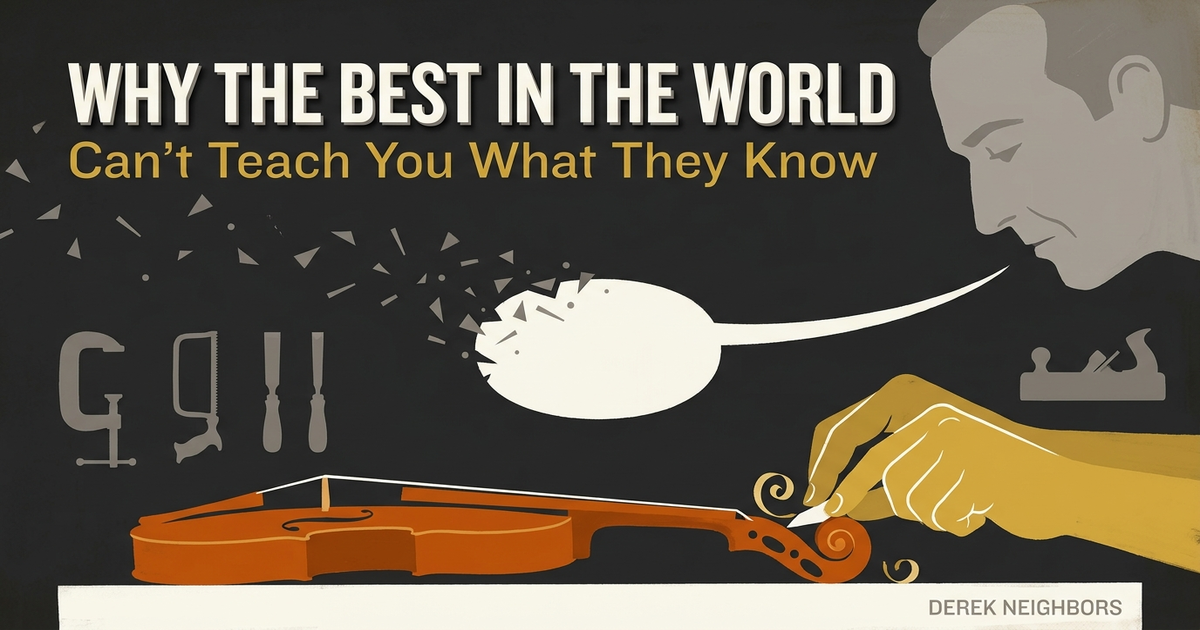
Ask the best performer in any field how they do it and you get a slogan. Trust your gut. See the ball, hit the ball. We assume they're hiding the secret or explaining it badly. The truth is stranger: fluent expertise erases its own steps as it compiles, so the master's explanation is a reconstruction by a narrator who no longer has access to the machinery. The Greeks called the unteachable knack empeiria. Modern research calls it tacit knowledge. Either way, the words are the least transferable thing a master has, and the people who learn fastest stop collecting answers and start watching hands.
Just Because AI Can Do It Doesn't Mean You Should
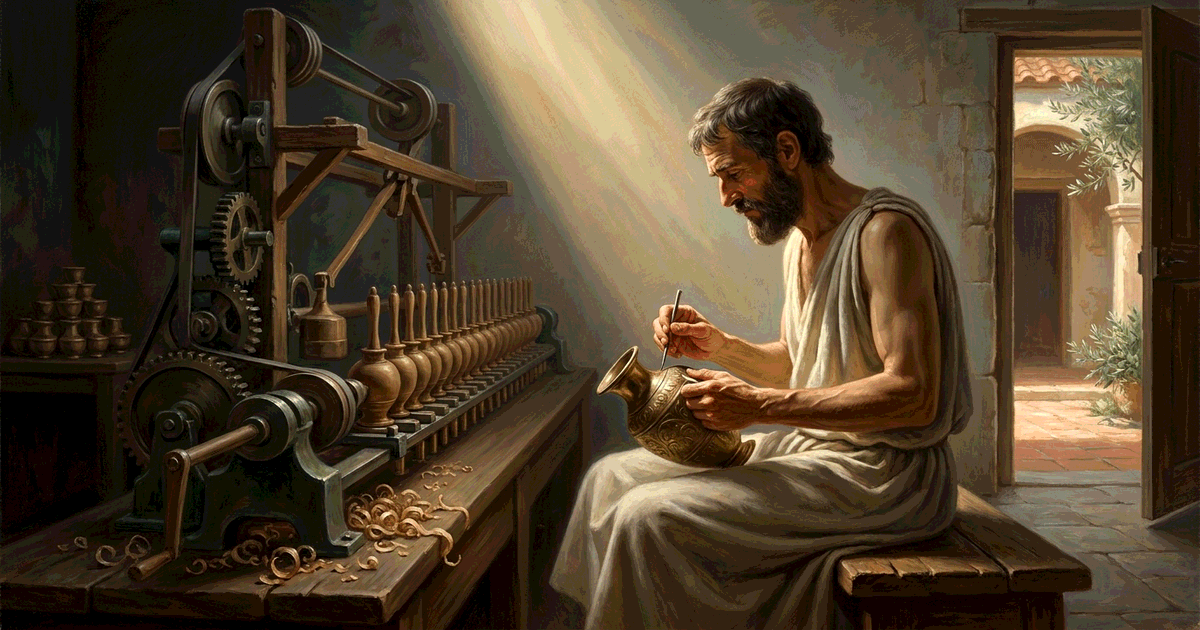
For all of history, scarcity decided what got automated. AI removed the constraint, and the burden quietly flipped: you no longer have to justify automating something, you have to justify keeping it. Most people are answering the wrong question. The ancients named the judgment we now need most, and it has nothing to do with whether the machine can do the work.
Your Environment Will Beat Your Discipline Every Time
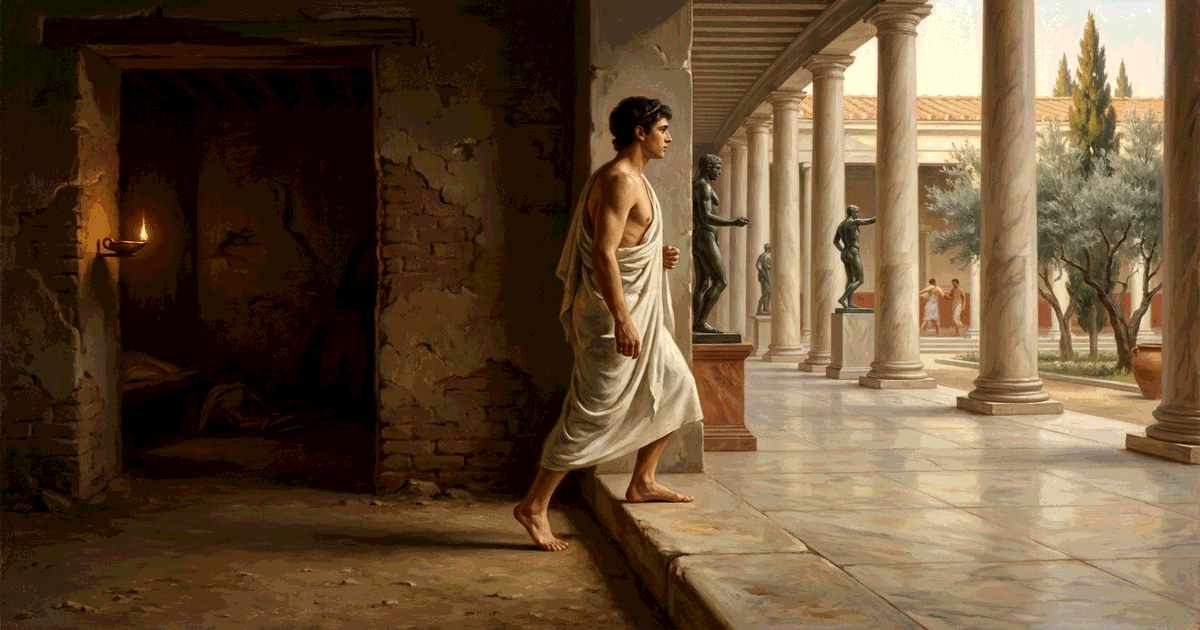
Disciplined people stall, blame themselves, and try harder. The verdict is wrong. The room they are standing in has a low ceiling, and the will they keep applying to themselves should have been applied, years ago, to choosing a different room. The Greeks understood this. We have spent two centuries forgetting it.
Your Inner Critic Is Murdering Your Best Ideas in the Crib
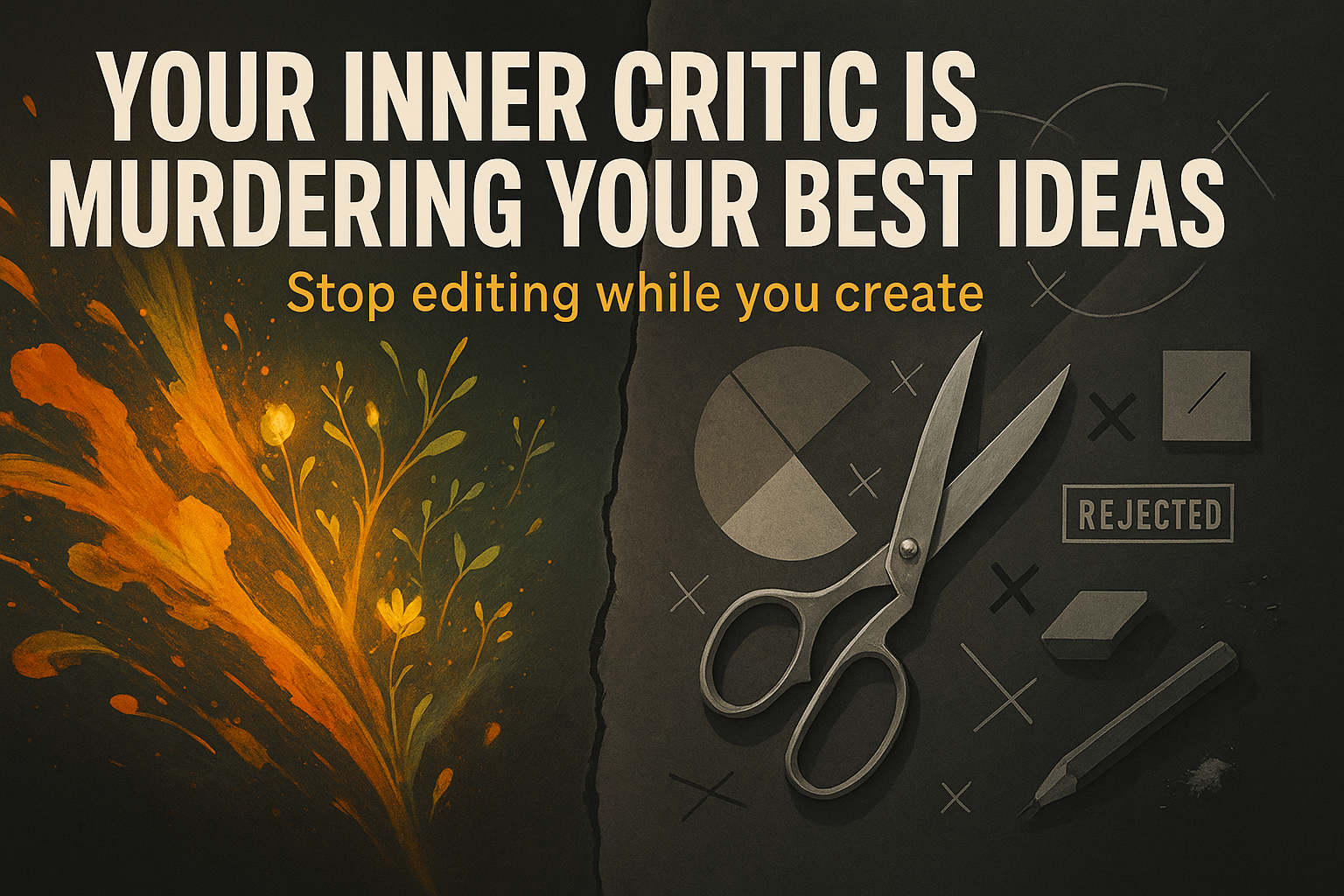
Your inner critic isn't the enemy. But letting it judge while you create guarantees mediocrity. Excellence requires opposite mindsets—and knowing when to deploy each.
Stop Apologizing for Your Ambition. Character Is Caught, Not Taught.
Your kids don't learn character from perfect attendance. They learn it from watching you demonstrate what's worth pursuing. Stop apologizing for your ambition. Start showing them what commitment looks like.
