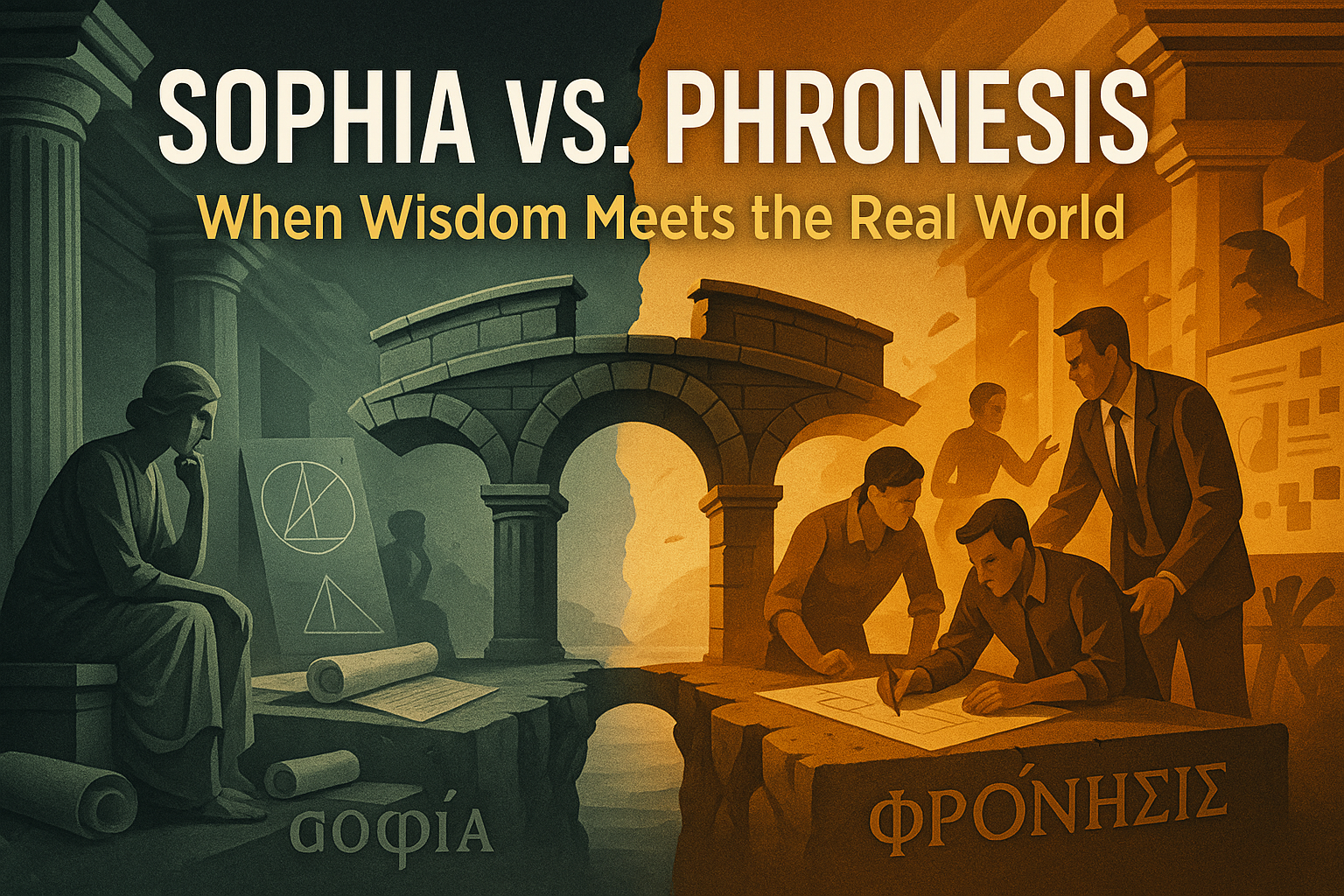
Megalopsychia vs Hubris: Key Differences in Greek Philosophy
These two concepts are easy to confuse and catastrophic to get wrong. Megalopsychia is greatness of soul, the quality of a person who knows their worth and acts accordingly. Hubris is overreaching arrogance, the quality of a person who claims more than they have earned. Both involve high self-assessment. Both produce behavior that looks confident, bold, and self-assured. The difference is calibration. The megalopsychos in Aristotle’s Nicomachean Ethics is a person of genuine achievement and developed character who claims honor proportional to their actual merit. They are not modest, because false modesty in the face of real excellence is its own form of dishonesty. They are not arrogant, because their claims match their capabilities. They stand on solid ground and know it. The hubristic person claims the same honor without the foundation. Their self-assessment has decoupled from reality. They treat boundaries as suggestions, wisdom from others as irrelevant, and their own judgment as infallible. Where the megalopsychos is calibrated, the hubristic person is inflated. Modern culture, especially in professional settings, struggles with this distinction because it has collapsed all strong self-assessment into a single category. Depending on the cultural moment, that category is either ‘confidence’ (celebrated) or ‘arrogance’ (condemned). Neither label captures the Greek insight. Megalopsychia says: if you have done the work and developed genuine excellence, claim it. Do not diminish yourself to make others comfortable. Hubris says: you have not done the work, but you are claiming the reward anyway. The practical stakes are severe. When you cannot distinguish calibrated greatness from unfounded arrogance, you either punish your best people for owning their excellence or excuse your worst people for overstepping their competence. Organizations that flatten this distinction drive away their most capable members and promote their most deluded ones. The diagnostic question that separates these two is deceptively simple: does the evidence support the claim? The megalopsychos can point to a record of sustained achievement, developed character, and tested judgment. The hubristic person cannot, or will not bother to, because they believe their self-assessment needs no external validation. Aristotle treated megalopsychia as the crown of the virtues precisely because it requires every other virtue as its foundation. You cannot possess genuine greatness of soul without andreia (courage), sophrosyne (temperance), dikaiosyne (justice), and phronesis (practical wisdom) already operating in your character. Hubris, by contrast, requires nothing but appetite and self-deception.
Definitions
Megalopsychia
(μεγαλοψυχία)
meg-ah-loh-psoo-KHEE-ah
Greatness of soul—the virtue of one who considers themselves worthy of great things and is actually worthy of them. For Aristotle, it is the crown of all virtues, belonging to those who rightly claim honor for genuine excellence while remaining untroubled by fortune or misfortune.
Hubris
(ὕβρις)
HOO-bris
Excessive pride or arrogance that leads one to transgress natural or divine limits, often resulting in downfall. In Greek thought, hubris represented the dangerous overstepping of human boundaries—the fatal assumption that one is beyond the constraints that govern mortal life.
Key Differences
| Aspect | Megalopsychia | Hubris |
|---|---|---|
| Accuracy of Self-Assessment | Megalopsychia involves accurate self-knowledge. The person of great soul knows what they deserve because they have honestly assessed their character, achievements, and capabilities. | Hubris involves inflated self-assessment. The arrogant person claims more than their actual character and achievements warrant. The gap between claim and reality defines the vice. |
| Relationship to Others | Megalopsychia includes genuine concern for honor and appropriate recognition while treating others with measured dignity. The megalopsychos does not need to diminish others to feel large. | Hubris typically involves contempt for or indifference to others. The hubristic person needs others to acknowledge their superiority and may actively humiliate those they see as beneath them. |
| Philosophical Tradition | Aristotle treats megalopsychia as the crown of the virtues in the Nicomachean Ethics. It is a genuine excellence that requires all other virtues as its foundation. | Hubris is treated as a catastrophic vice in Greek tragic tradition. It is the quality that triggers nemesis, the divine or natural correction that restores balance after transgression. |
| Emotional Quality | Megalopsychia carries an emotional quality of settled confidence. The person of great soul is not easily disturbed because their self-worth does not depend on external validation. | Hubris carries an emotional quality of intoxication or inflation. The arrogant person feels invincible, which produces a dangerous insensitivity to risk and a brittle reaction to challenge. |
| Consequence | Megalopsychia produces stable, sustained excellence. Because the self-assessment is accurate, the person can take appropriate risks, accept appropriate honor, and contribute at a level consistent with their real abilities. | Hubris produces catastrophic reversal. Because the self-assessment is inflated, the person eventually takes a risk their abilities cannot support, and the resulting failure is proportional to the gap between claim and reality. |
Accuracy of Self-Assessment
Megalopsychia involves accurate self-knowledge. The person of great soul knows what they deserve because they have honestly assessed their character, achievements, and capabilities.
Hubris involves inflated self-assessment. The arrogant person claims more than their actual character and achievements warrant. The gap between claim and reality defines the vice.
Relationship to Others
Megalopsychia includes genuine concern for honor and appropriate recognition while treating others with measured dignity. The megalopsychos does not need to diminish others to feel large.
Hubris typically involves contempt for or indifference to others. The hubristic person needs others to acknowledge their superiority and may actively humiliate those they see as beneath them.
Philosophical Tradition
Aristotle treats megalopsychia as the crown of the virtues in the Nicomachean Ethics. It is a genuine excellence that requires all other virtues as its foundation.
Hubris is treated as a catastrophic vice in Greek tragic tradition. It is the quality that triggers nemesis, the divine or natural correction that restores balance after transgression.
Emotional Quality
Megalopsychia carries an emotional quality of settled confidence. The person of great soul is not easily disturbed because their self-worth does not depend on external validation.
Hubris carries an emotional quality of intoxication or inflation. The arrogant person feels invincible, which produces a dangerous insensitivity to risk and a brittle reaction to challenge.
Consequence
Megalopsychia produces stable, sustained excellence. Because the self-assessment is accurate, the person can take appropriate risks, accept appropriate honor, and contribute at a level consistent with their real abilities.
Hubris produces catastrophic reversal. Because the self-assessment is inflated, the person eventually takes a risk their abilities cannot support, and the resulting failure is proportional to the gap between claim and reality.
When to Apply Each Concept
When to Choose Megalopsychia
Cultivate megalopsychia when you have genuinely developed excellence and are tempted to downplay it. If you have invested years in mastering your craft, built a track record of substantive achievement, and developed the character to handle responsibility, owning that excellence is not arrogance. It is honesty. The question megalopsychia asks is: ‘Am I claiming what I have actually earned?’
When to Choose Hubris
Watch for hubris when success arrives faster than character development, when praise outpaces performance, or when you begin treating your own judgment as beyond question. The diagnostic for hubris is: ‘Am I claiming more than my actual achievements and character support?’ If advisors have stopped challenging you, if you have stopped listening to criticism, or if you believe your past success guarantees future results, hubris may already be operating.
Frequently Asked Questions
What is the difference between megalopsychia and hubris?
Megalopsychia is greatness of soul, the accurate self-assessment of a genuinely excellent person who claims honor proportional to their merit. Hubris is overreaching arrogance, the inflated self-assessment of a person who claims more than they deserve. The difference is calibration: megalopsychia matches claim to reality, while hubris exceeds it. Aristotle considered megalopsychia a virtue. The tragedians treated hubris as the catalyst for destruction.
Is megalopsychia arrogance?
No. Megalopsychia and arrogance look similar from the outside because both involve strong self-assertion. The critical difference is accuracy. The megalopsychos has done the work and earned the honor they claim. The arrogant person has not. Aristotle explicitly distinguishes megalopsychia from both hubris (overclaiming) and false modesty (underclaiming). The virtuous position is accurate self-assessment, not automatic self-deprecation.
How to distinguish confidence from hubris?
Ask three questions. First: Is the confidence supported by demonstrated capability and track record? Confidence grounded in real achievement is closer to megalopsychia. Second: Does the person accept legitimate feedback and recognize limits? The megalopsychos can acknowledge areas of weakness. The hubristic person cannot. Third: Does the person's behavior benefit or harm those around them? Calibrated confidence elevates a team. Hubris damages it.
Megalopsychia vs hubris in leadership?
A leader with megalopsychia makes bold decisions backed by genuine expertise, takes responsibility proportional to their authority, and does not seek approval for decisions within their competence. A leader with hubris makes bold decisions without the expertise to support them, claims authority beyond their mandate, and dismisses input from people who know more. The first builds organizational capability. The second creates organizational risk.
Articles Exploring Megalopsychia or Hubris (22)
Some Lunches Are Worth Owing For
Law 40 of the 48 Laws of Power tells you to distrust anything free, pay full price, and give lavishly because generosity draws power. Half of that is sound. The other half teaches you to turn down help, keep a ledger on your friends, and give only when it buys something.
Sour Grapes Cost More Than the Grapes
Law 36 of the 48 Laws of Power tells you to disdain what you cannot have and to ignore your enemies, because ignoring them is the best revenge. Half of that is true. Attention makes things bigger, and you cannot hang your good on things outside your reach. Then Greene tells you to do it the way Aesop's fox did, by deciding the grapes were sour. The fox lied to himself, and the lie is the expensive part. The Stoics had a cheaper way to lose.

Make Someone Untouchable and the Failure Is Already Yours
A founding architect nobody was allowed to question. A senior engineer who questioned him once and got moved. Two years of pull requests with zero comments that everyone called quality. Then the migration that took the platform down, with a root cause that had been raised in the one review that got silenced. Athens ran the same story with Alcibiades in 415 BC and lost a fleet. The moment an organization decides someone is beyond reproach, the failure that follows belongs to everyone who agreed, and there is an old Greek word for the thing they got backwards.
The Room Orbits Whoever Holds Steady
Watch any room when something breaks. Eyes go to one person, and it is not always the boss. Authority people actually follow is accumulated character, built through held standards and absorbed hits.
Act Like a King and You Start Needing the Bow
Law 34 of the 48 Laws of Power tells you to act like a king so the room treats you like one. The tactical truth is real. Rooms copy how you price yourself, and cheap familiarity can collapse the work. The character cost arrives when bearing becomes a standing request for deference. You start needing the bow. The ARETE alternative still holds a standard for how you are treated, then roots that standard in inner sufficiency instead of a court.
How You Leave Tells the Truth About Who You Are
We grade people on how they begin. The evidence of character is how they dissolve a living bond. Honorable closure tells the truth without turning the last hour into a trial, owns what you own without requiring a matching apology, and moves forward without needing the last word.

The Big Guy Breaks When You Refuse to Stay Down
Position feels like invincibility until someone smaller keeps standing after every punch. The damage is not only physical. It lands in the story the big guy told about being untouchable. If you are on top, keep training the grit that got you there. If you are behind, make refusal your strategy.

Write Your Own Review First. Then Decide What Theirs Means.
Owning your career means owning the judgment. Write your own honest review before the meeting, then use theirs as information that updates your ledger.

Hard Times Build Character. Easy Times Expose It.
Training virtue for hard times is the easy half. The real exam starts when constraints fall away and the only person who can stop you is you. Hard times build the muscle. Easy times tell you what the muscle was for.

Your Response to Unfairness Reveals More About You Than the Unfairness Does
Three leaders take the same public hit. One escalates, one absorbs and redirects, one performs martyrdom for an audience. The unfairness was identical. The response was not. Between the stimulus and your reply lies the only territory where character actually lives, and most people never inspect what runs there.

Your Successor Can't Lead While You're Still in the Room
Most leaders treat succession as a problem of finding the right person. The harder problem comes after. Your continued presence, offered as help, keeps the team loyal to you and the successor leading in your shadow. The Greeks had a discipline for the deliberate withdrawal that finishes the job: anachoresis. The handoff that looks like loss is the only move that completes the work, and it is the one most leaders refuse to make.

The People You're Afraid to Offend Already Run Your Life
Greene says study people before you act, and never offend the wrong one. Run that as your operating system for a few years and watch what it does to your honesty. The Greeks had a sharper answer.
Your Self-Doubt Is a Tax on Everyone Around You
We treat self-deprecation as humility. Aristotle saw it as the same failure of self-knowledge as arrogance, just from the opposite side. The cost lands on the people around you.

If You Need to Destroy Your Enemies, You Were Never Really Winning
Greene says leave nothing to chance and annihilate your opponent completely. But total destruction requires total obsession with another person's existence. The Greeks called this failure of character, not strength. Megalopsychia, greatness of soul, means your purpose is too large for any single enemy to define.
Your Team Doesn't Tease You. That Should Terrify You.
The capacity to receive what you give is the mark of integrated character. Leaders who dish out sharp feedback but bristle when it comes back their way reveal something they would rather not face: their strength was a performance all along.
You Think You're Good. Then You Meet Someone Who Actually Is.
The distance between very good and extraordinary isn't incremental. It's a cliff. And the moment you encounter someone who has already climbed it, your response reveals more about your character than your skills ever will.

Your Modesty Is Costing Everyone Around You
Greene says court attention at all costs. The Greeks say build something worth seeing, then refuse to hide it. One manufactures spectacle. The other practices megalopsychia, the discipline of being exactly as capable as you are, in public, where it counts.
Your Life Right Now Is Just Your Last 90 Days Playing Out
Your fitness, your bank account, your relationships, your opportunities right now aren't revealing your identity. They're showing you what you've been doing for the past 30-90 days. That's not philosophy. That's physics.

Why Leaders Who Don't Need Applause Get All the Respect
The leaders who command the most respect don't need your applause to do the work. And that's exactly why you can't stop watching them.

AI-First Leadership: Guiding Organizational Transformation
Most leaders want AI transformation results without undergoing the leadership metamorphosis it requires. Here's what AI-first leadership actually demands.

When Craft Becomes Cowardice: The Ancient Test for True Excellence
Jason Fried's knife-maker defense sounds reasonable, stay in your lane, perfect your craft, ignore the pressure to build battleships. But what if your 'disciplined focus' is just fear dressed as virtue? Aristotle had a test for this.
Sophia vs. Phronesis: When Wisdom Meets the Real World
Why brilliant strategies fail and how ancient Greek wisdom provides the solution through integrating theoretical and practical wisdom.