Doxa (δόξα): Meaning, Definition & Modern Application
DOK-sah
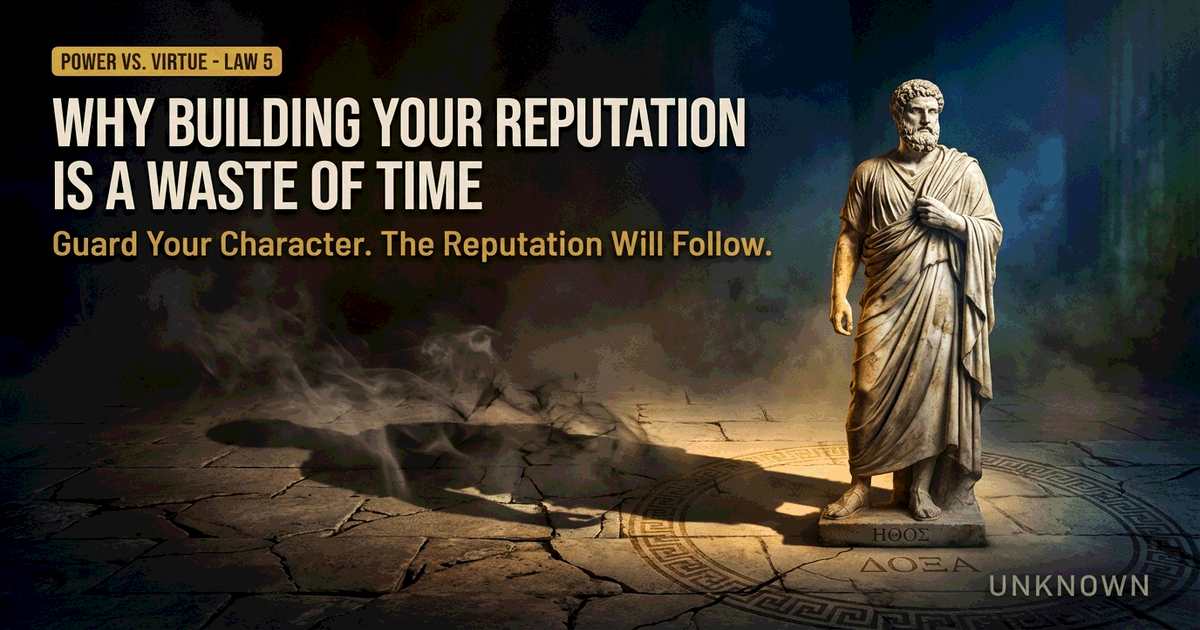
Opinion, reputation, or common belief as distinguished from true knowledge (episteme). In ancient Greek thought, doxa represents the realm of appearance and popular perception—what most people believe to be true, which may or may not align with deeper reality.
Etymology
From the Greek verb dokein, meaning “to seem” or “to appear.” Doxa carried a double meaning: both “opinion” (what seems true) and “glory” or “reputation” (how one appears to others). Plato’s divided line in the Republic placed doxa in the lower half, representing belief without genuine understanding. Parmenides drew a sharp line between the “way of truth” and the “way of doxa,” framing opinion as the obstacle truth must overcome.
Modern Application
Recognize that your leadership reputation exists in two realms: how others perceive you and who you actually are. Use the gap between doxa and truth as a compass—when public opinion flatters you, stay humble; when it criticizes unfairly, stay the course. Build your character on substance rather than perception, knowing that genuine excellence eventually shapes its own reputation.
How to Practice Doxa
This week, identify one area where you have been making decisions based on what others think rather than what you know to be true. Write down the specific opinion driving your behavior and examine it: is it grounded in evidence or in social pressure? Practice separating your sense of identity from external validation. When you receive praise, ask whether it reflects genuine achievement. When you receive criticism, ask whether it contains useful truth. Build the habit of checking your beliefs against first principles rather than popular consensus. Keep a belief inventory: list five things you hold to be true about yourself and your work, then trace each belief back to its source. Did you arrive at it through your own investigation, or did you absorb it from the people around you? For each belief rooted in social consensus rather than personal evidence, design a test to verify or discard it. This practice of examining the foundations of your opinions is the first step toward distinguishing genuine knowledge from inherited assumption.
Frequently Asked Questions
What is doxa in Greek philosophy?
Doxa is the Greek concept of opinion, reputation, or common belief. Plato distinguished it from genuine knowledge (episteme), placing it in the realm of appearances and perceptions that may or may not align with deeper reality. In the Republic, Plato positioned doxa in the lower half of his divided line, representing a mode of cognition that falls short of true understanding because it lacks grounding in demonstrable causes.
What does doxa mean?
Doxa means both "opinion" (what seems true) and "glory" or "reputation" (how one appears to others). It comes from the verb dokein, meaning "to seem" or "to appear." In philosophical usage, it describes beliefs held without genuine understanding of their foundations. This double meaning reveals a deep Greek insight: the realm of opinion and the realm of reputation are the same domain, both governed by appearance rather than truth.
How do you practice awareness of doxa?
You develop awareness of doxa by examining which of your beliefs rest on evidence versus social consensus. Separate your identity from external validation. When making decisions, check whether you are following what you know or what others expect. A useful exercise is to track how many decisions you make in a week based on what you believe to be true versus what you believe others want, then honestly assess the ratio.
What is the difference between doxa and episteme?
Doxa is opinion or belief that may or may not be true, held without full understanding of its foundations. Episteme is systematic knowledge grounded in demonstrable causes and principles. The gap between them is the distance between thinking you know and actually knowing. Plato's entire philosophical project can be understood as the effort to move people from doxa to episteme, from the shadows of the cave to the light of genuine understanding.