Parrhesia vs Aletheia: Key Differences in Greek Philosophy
Parrhesia and aletheia both involve truth, but they operate in different dimensions. Aletheia concerns the nature of truth itself, the process of reality becoming unconcealed. Parrhesia concerns the act of speaking truth, especially when doing so carries personal risk. You can understand truth without voicing it. Parrhesia is the courage to open your mouth anyway.
Definitions
Parrhesia
(παρρησία)
par-ray-SEE-ah
The courage to speak truth freely and frankly, especially to those in power, regardless of personal risk. In ancient philosophy, parrhesia was considered both a moral duty and a democratic virtue—the speaker accepts danger in service of truth.
Aletheia
(ἀλήθεια)
ah-LAY-thay-ah
Truth as unconcealment. Not merely accurate statements, but the fundamental orientation toward reality as it actually is, the state of being unhidden.
Key Differences
| Aspect | Parrhesia | Aletheia |
|---|---|---|
| Focus | Parrhesia focuses on the act of speaking. It is about the courage and practice of expressing truth to others, particularly to those in power. | Aletheia focuses on the nature of truth itself. It is about reality being disclosed or uncovered from hiddenness. |
| Social Dimension | Parrhesia is inherently social. It requires a speaker, a listener, and a power dynamic where speaking carries risk. | Aletheia can be solitary. Truth as unconcealment can occur in private contemplation, personal discovery, or individual awareness. |
| Risk | Parrhesia involves personal risk by definition. Foucault emphasized that the speaker must have something to lose for the speech act to qualify as parrhesia. | Aletheia does not necessarily involve risk. Discovering truth can be uncomfortable, but the concept itself does not require danger. |
| Virtue Involved | Parrhesia requires courage (andreia). It is a practice that demands moral bravery alongside truth-telling. | Aletheia requires orientation toward reality. It demands intellectual honesty and the willingness to see what is actually there. |
Focus
Parrhesia focuses on the act of speaking. It is about the courage and practice of expressing truth to others, particularly to those in power.
Aletheia focuses on the nature of truth itself. It is about reality being disclosed or uncovered from hiddenness.
Social Dimension
Parrhesia is inherently social. It requires a speaker, a listener, and a power dynamic where speaking carries risk.
Aletheia can be solitary. Truth as unconcealment can occur in private contemplation, personal discovery, or individual awareness.
Risk
Parrhesia involves personal risk by definition. Foucault emphasized that the speaker must have something to lose for the speech act to qualify as parrhesia.
Aletheia does not necessarily involve risk. Discovering truth can be uncomfortable, but the concept itself does not require danger.
Virtue Involved
Parrhesia requires courage (andreia). It is a practice that demands moral bravery alongside truth-telling.
Aletheia requires orientation toward reality. It demands intellectual honesty and the willingness to see what is actually there.
When to Apply Each Concept
When to Choose Parrhesia
Practice parrhesia when you see a truth that needs to be spoken and others are avoiding it. When your team is heading toward a bad decision, when leadership needs honest feedback, or when silence would make you complicit in a problem, parrhesia is the relevant virtue. The question is not whether the truth exists but whether you will voice it.
When to Choose Aletheia
Practice aletheia when you need to see clearly before you can speak or act. When you are confused, deceived, or operating on assumptions, the first task is to uncover what is real. Aletheia is the foundation that parrhesia builds on, because you cannot speak truth fearlessly if you have not first done the work of seeing clearly.
Frequently Asked Questions
What is the difference between parrhesia and aletheia?
Aletheia is truth as unconcealment, the philosophical concept of reality being disclosed from hiddenness. Parrhesia is fearless speech, the practice of speaking truth openly despite personal risk. Aletheia describes what truth is. Parrhesia describes the act of expressing it. A person can perceive truth (aletheia) without ever voicing it. Parrhesia is the bridge between seeing truth and speaking it.
Do you need aletheia before parrhesia?
Yes. You cannot practice genuine parrhesia, fearless truth-telling, without first having access to truth itself. Speaking boldly about something false is not parrhesia; it is recklessness or delusion. The practice requires first doing the work of aletheia (seeing clearly) and then the work of parrhesia (speaking courageously).
Why is parrhesia considered dangerous?
Foucault's analysis of parrhesia emphasized that true fearless speech requires the speaker to occupy a position of less power than the listener. Speaking truth to a king, a boss, or a crowd that disagrees with you carries real consequences. The danger is what makes parrhesia a virtue rather than a habit. Saying what is true when it costs you nothing requires no particular moral strength.
Articles Exploring Parrhesia or Aletheia (4)
Why Staying Silent Is the Most Expensive Thing You'll Ever Do
Every swallowed truth is a down payment on becoming someone you don't recognize. The Greeks had a word for what's missing: parrhesia.

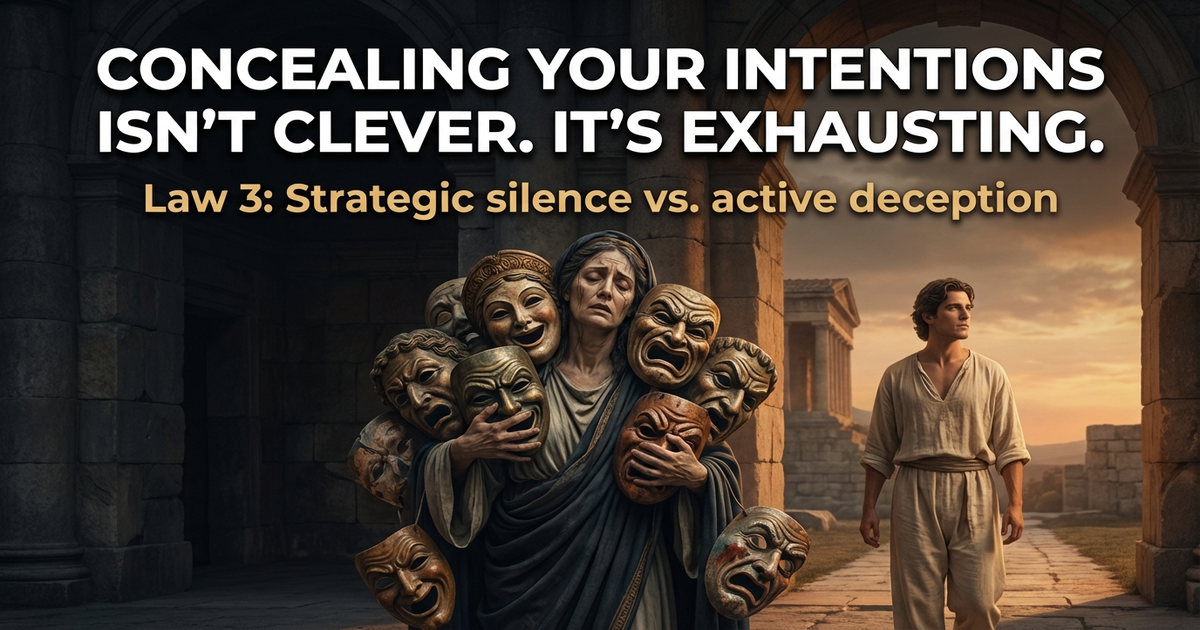
Concealing Your Intentions Isn't Clever. It's Exhausting.
Greene's Law 3 conflates wisdom with manipulation. Strategic silence is phronesis. Active deception is a cognitive tax that compounds into exhaustion and isolation.
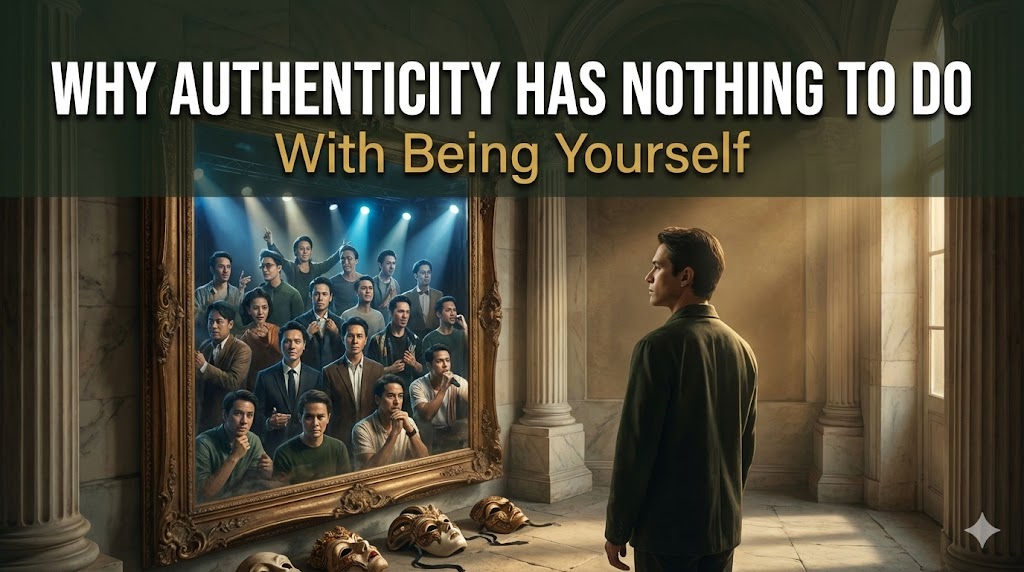
Why Authenticity Has Nothing to Do With Being Yourself
Authenticity has become a personal branding buzzword. The Greeks knew better. True authenticity isn't about expressing your real self. It's about refusing to fragment into different versions for different audiences. Wholeness, not performance.
Character Isn't What You Post. It's What You Practice.
Social media has convinced us that visible virtue is real virtue. Aristotle knew better. Character is the pattern of what you do when no one's watching, not the highlight reel you curate for strangers.