Mathesis (μάθησις): Meaning, Definition & Modern Application
MAH-thay-sis
The act of learning or acquiring knowledge through study. Distinguished from askesis (training through practice), mathesis is intellectual acquisition without the behavioral component that transforms understanding into virtue.
Etymology
From the Greek verb manthanein, meaning “to learn.” The root also gives us “mathematics” and “polymath.” In classical usage, mathesis referred specifically to theoretical learning, the intake of knowledge through instruction and study. Aristotle and the Stoics drew a sharp line between mathesis and askesis: the first fills the mind, the second shapes the character. The distinction matters because Greek philosophy held that knowledge alone, without practiced application, fails to produce virtue.
Deep Analysis
Mathesis derives from the verb manthanein, to learn, and shares its root with mathema, a lesson or subject of study. The word that eventually became “mathematics” in English originally meant any subject that could be systematically learned and taught. For the Greeks, mathesis was not restricted to numbers and geometry. It encompassed the entire process of disciplined study through which a person moves from ignorance to understanding.
Plato’s dialogue the Meno raises the most provocative question about mathesis in all of ancient philosophy. Meno poses what has become known as the “learner’s paradox”: how can you search for something you do not know? If you know it, you do not need to search. If you do not know it, you will not recognize it when you find it. Plato’s response, delivered through Socrates, is the theory of recollection (anamnesis). Learning is not the acquisition of something entirely new. It is the recovery of knowledge the soul possessed before birth but forgot upon entering the body. Whether or not you accept the metaphysical framework, the insight is profound: genuine learning is not information transfer. It is the awakening of understanding that the learner, in some sense, already possesses in latent form.
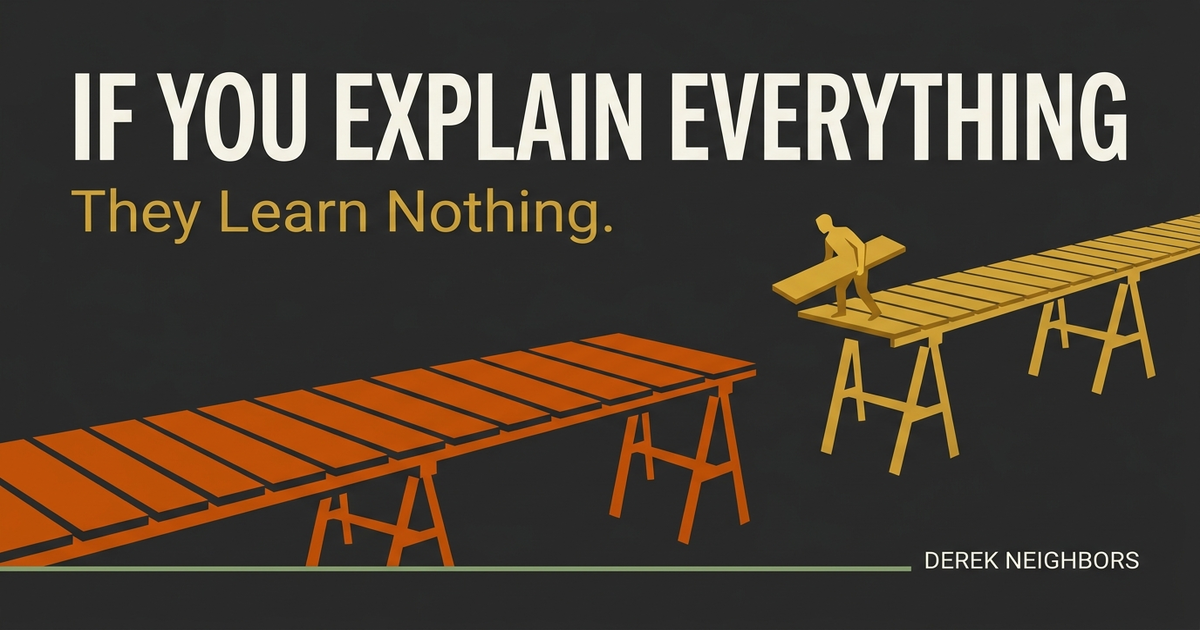
Aristotle approached mathesis more empirically. He distinguished between learning through instruction and learning through discovery. In the Posterior Analytics, he argued that all teaching and intellectual learning proceeds from pre-existing knowledge. You cannot learn anything without some prior framework into which the new knowledge fits. This is why teaching a subject requires understanding not only the content but the student’s existing knowledge, their starting point for learning. Effective mathesis meets the learner where they are and builds bridges from what they already understand to what they do not yet grasp.
The relationship between mathesis and askesis (disciplined training) reveals a crucial distinction. Mathesis is learning through study, instruction, and intellectual engagement. Askesis is learning through practice, repetition, and embodied experience. Aristotle argued that intellectual virtues like sophia (theoretical wisdom) and episteme (scientific knowledge) are developed primarily through mathesis, through teaching and study. Character virtues like courage and temperance are developed through askesis, through habitual practice. But the two are not entirely separable. Understanding what courage is (mathesis) and being courageous (askesis) are different achievements, and the second requires the first as a foundation without being reducible to it.
Praxis (action directed by wisdom) adds a third dimension. You can study ethics extensively (mathesis), practice specific behaviors habitually (askesis), and still fail to act wisely in novel situations if you lack the capacity for practical judgment that integrates study and practice with situational awareness. Genuine learning, in the fullest Greek sense, involves all three: the intellectual understanding of principles, the habitual embodiment of those principles, and the practical wisdom to apply them in circumstances that textbooks cannot anticipate.
The modern separation between theoretical and practical education would have struck the Greeks as deeply confused. For Plato and Aristotle, the purpose of mathesis was not to accumulate information or develop marketable skills. It was to form the soul. The study of geometry, music, and astronomy, which formed the core of Greek education, was valued not primarily for its practical applications but because it trained the mind to perceive order, proportion, and truth. The student who learned to follow a geometric proof was developing a capacity for rigorous thinking that extended far beyond geometry into ethics, politics, and every domain of life.
The role of wonder (thaumazein) in initiating mathesis cannot be overlooked. Both Plato and Aristotle identified wonder as the beginning of philosophy and, by extension, of all genuine learning. Wonder is not idle curiosity. It is the recognition that something you thought you understood is more complex than you assumed, that reality exceeds your current framework for understanding it. The student who has lost the capacity for wonder has lost the impulse that drives genuine mathesis. They may still accumulate information, but they will not undergo the transformation that learning, in the Greek sense, requires.
The social dimension of mathesis is also significant. Plato’s dialogues consistently show learning occurring between people, not in isolation. The Socratic method requires a conversation partner whose questions and challenges force you to examine your assumptions. The solitary reader, while engaged in a genuine form of mathesis, is limited by their inability to be surprised by perspectives they did not generate themselves. This is why the Greeks structured education around dialogue, debate, and communal inquiry: the social encounter provides the friction that individual reflection cannot.
Phronesis (practical wisdom) connects to mathesis through the question of what constitutes genuine understanding. You have not genuinely learned something if you can only repeat it. You have genuinely learned it when you can apply it in novel contexts, explain it to someone who does not yet understand it, and recognize its limits. This criterion for genuine learning is more demanding than any test or certification can measure, which is why the Greeks relied on extended personal mentorship rather than standardized assessment.
Modern Application
You encounter mathesis whenever learning substitutes for doing. Reading about leadership without leading, studying negotiation without negotiating, consuming fitness content without training. Mathesis is necessary but insufficient. It becomes dangerous when the accumulation of knowledge creates the feeling of progress without requiring behavioral change.
Historical Examples
Plato’s Academy, founded around 387 BCE in a grove sacred to the hero Akademos outside Athens, institutionalized mathesis as the central activity of philosophical life. The Academy was not a lecture hall. It was a community dedicated to collaborative inquiry, where students engaged in dialectic, the method of learning through structured conversation. Plato’s dialogues, which dramatize this process, show learning happening not through the transmission of information from teacher to student but through the mutual examination of ideas until contradictions are exposed and deeper understanding emerges.
Euclid of Alexandria, working around 300 BCE, produced the Elements, which became the most influential textbook in Western history. The Elements did not merely catalogue geometric facts. It demonstrated a method of learning through proof: starting from self-evident axioms and building, step by step, toward increasingly complex theorems. For over two thousand years, studying Euclid was considered essential to developing the capacity for rigorous thought. Abraham Lincoln reportedly studied the Elements by candlelight, not because he needed geometry, but because he wanted to learn what it meant to prove something beyond doubt.
The medieval Islamic institution of the madrasa, which spread from Baghdad across the Islamic world beginning in the eleventh century, formalized mathesis as a structured curriculum combining religious sciences, philosophy, mathematics, and medicine. The madrasa system preserved and extended Greek learning during centuries when it was largely unavailable in Western Europe. Scholars like al-Khwarizmi, whose name gives us the word “algorithm,” and Ibn Sina (Avicenna), whose Canon of Medicine remained a standard text for six centuries, demonstrate that the Greek commitment to disciplined study produced extraordinary results when transplanted into new cultural soil.
How to Practice Mathesis
Use mathesis as a starting point, never an endpoint. When you finish a book or course, immediately identify one specific behavior to change based on what you learned, then practice it within 48 hours. Set a personal rule: no new learning input until you have applied the last one. Track your ratio of consumption to action weekly. If you are reading more than you are doing, you are collecting knowledge, not building capability. Pair every learning session with a practice session of equal length. Ask yourself after each workshop or course: what will I do differently tomorrow morning? If the answer is nothing, the learning was entertainment. Find an accountability partner who asks not what you learned but what you changed.
Application Examples
A company invests heavily in training programs that teach employees new frameworks and methodologies. Completion rates are high. Behavior change is minimal. Six months later, people are operating the same way they did before the training. The knowledge was transferred but never integrated.
Mathesis that stops at information transfer produces educated people who do not change. Genuine learning transforms the learner’s capacity, not merely their knowledge. If employees can describe a framework but cannot apply it under pressure, the mathesis was incomplete. Learning must connect intellectual understanding to practical action or it remains inert.
A person reads thirty books on productivity in a single year. They can explain the Eisenhower matrix, the Pomodoro technique, and Getting Things Done in detail. Their actual productivity has not improved. The knowledge accumulation has become a substitute for the behavior change the knowledge was supposed to produce.
Reading about a practice is not the same as engaging in the practice. Mathesis through books provides intellectual understanding, which is necessary but not sufficient. At some point, you must stop studying productivity and start producing. The gap between knowing what to do and doing it cannot be closed by more knowing.
A professor restructures a course from lecture-based instruction to problem-based learning. Students complain that they are not being taught. They want clear explanations and definitive answers. The professor recognizes that the discomfort is itself part of the learning process.
Genuine mathesis is uncomfortable because it requires the learner to struggle with uncertainty before reaching understanding. The demand for clear, pre-digested answers reflects a preference for information receipt over genuine learning. Plato’s Socrates never gave his students answers. He asked questions that forced them to discover understanding for themselves.
A new manager reads every leadership book recommended to her and can articulate multiple leadership philosophies fluently. In her first difficult conversation with an underperforming employee, she freezes. The theories she studied offer no guidance for this specific person in this specific moment.
Mathesis in leadership provides the conceptual foundations, but leadership is exercised in particular situations that theory cannot fully anticipate. The transition from studying leadership to practicing it requires a different kind of learning, one that only happens through engagement with the irreducible complexity of real situations and real people.
A senior executive attends an intensive leadership program and returns energized with new frameworks. Within three months, every new framework has been abandoned because the executive encountered situations that the framework did not address. The frameworks were correct in the abstract but could not accommodate the specific complexity of the executive’s actual context.
The gap between learning a framework and integrating it into practice is the gap between knowledge and understanding. Genuine mathesis in leadership requires not just absorbing new models but testing them against the specific reality of your situation, modifying them where they fall short, and developing the judgment to know when a framework applies and when it does not. This integration takes years, not weekends.
A coach who has trained elite athletes for two decades is asked to explain their coaching method in a manual. The process of articulating what they know reveals gaps: certain decisions they make instinctively, based on pattern recognition developed over thousands of hours, cannot be reduced to rules. The manual captures perhaps sixty percent of what the coach actually does.
The gap between what an expert knows and what they can articulate reveals the limits of mathesis through instruction alone. The remaining forty percent, the pattern recognition and situational judgment developed through years of experience, can only be transmitted through direct mentorship. This is why apprenticeship remains irreplaceable for developing genuine expertise.
Common Misconceptions
The most persistent misunderstanding about mathesis is that it means passive absorption of information, sitting in lectures, reading textbooks, and memorizing facts. Plato and Aristotle would have considered this the lowest form of learning. Genuine mathesis requires active intellectual engagement: questioning, testing, arguing, and struggling with material until understanding is achieved, not merely information receipt. A related error confuses mathesis with formal schooling. The Greeks practiced mathesis in gymnasiums, at symposia, during walks, and in every context where serious inquiry could occur. Equating learning with institutional education misses the point: mathesis is a posture of the mind, not a location or a credential. You can spend years in school without genuine mathesis, and you can practice mathesis continuously without ever entering a classroom.
I learned what learning actually means through failure. I was the person who read every book, attended every workshop, and could articulate frameworks with precision. My knowledge was broad and, in many areas, deep. What I could not do was use any of it when the situation demanded something other than recitation.
A mentor watched me struggle with a team conflict and afterward asked me a question that changed how I think about learning: “You know everything about conflict resolution. Why did you not resolve the conflict?” The answer was that my knowledge was stored in a format that could not be accessed under pressure. I had learned about conflict resolution the way you learn about swimming by reading a manual. The information was technically correct and practically useless.
That experience taught me to distinguish between two fundamentally different states. The first is knowing a concept well enough to explain it. The second is knowing it well enough to use it when you are scared, confused, or under time pressure. The gap between these two states is enormous, and it is closed by practice under conditions that approximate the real challenge, not by more study.
I now structure my own learning around what I call the “deployment test.” After studying a new concept or framework, I identify a real situation in my current work where I can apply it within the next week. If I cannot find one, the learning is premature. If I can find one and the application fails, the failure teaches me what the study could not. Over time, this approach has made me a less prolific reader and a more effective practitioner.
Frequently Asked Questions
What is mathesis in Greek philosophy?
Mathesis is the Greek concept of learning through study and intellectual acquisition. It refers to gaining knowledge through instruction, reading, and observation. Classical philosophers distinguished mathesis from askesis (practical training) and praxis (action), arguing that knowledge without practiced application does not produce virtue or genuine transformation. Aristotle held that you cannot become brave by studying bravery, only by doing brave things.
What is the difference between mathesis and askesis?
Mathesis is intellectual learning, the acquisition of knowledge through study. Askesis is disciplined training through repeated practice and voluntary hardship. The Greeks saw these as fundamentally different activities. Mathesis fills the mind with understanding; askesis shapes character through action. A person can have extensive mathesis about courage, understanding its definition, its components, its philosophical foundations, while completely lacking the askesis that would make them actually courageous under pressure.
How does mathesis relate to personal development?
Mathesis explains why consuming personal development content often fails to produce change. Reading books, attending workshops, and listening to podcasts are all forms of mathesis: intellectual acquisition. Without the corresponding askesis (practice) and praxis (action), the knowledge remains theoretical. The feeling of learning can substitute for the harder work of behavioral change, making mathesis potentially counterproductive when it becomes an end in itself rather than a foundation for practice.