Akrasia (ἀκρασία): Meaning, Definition & Modern Application
ah-KRAH-see-ah
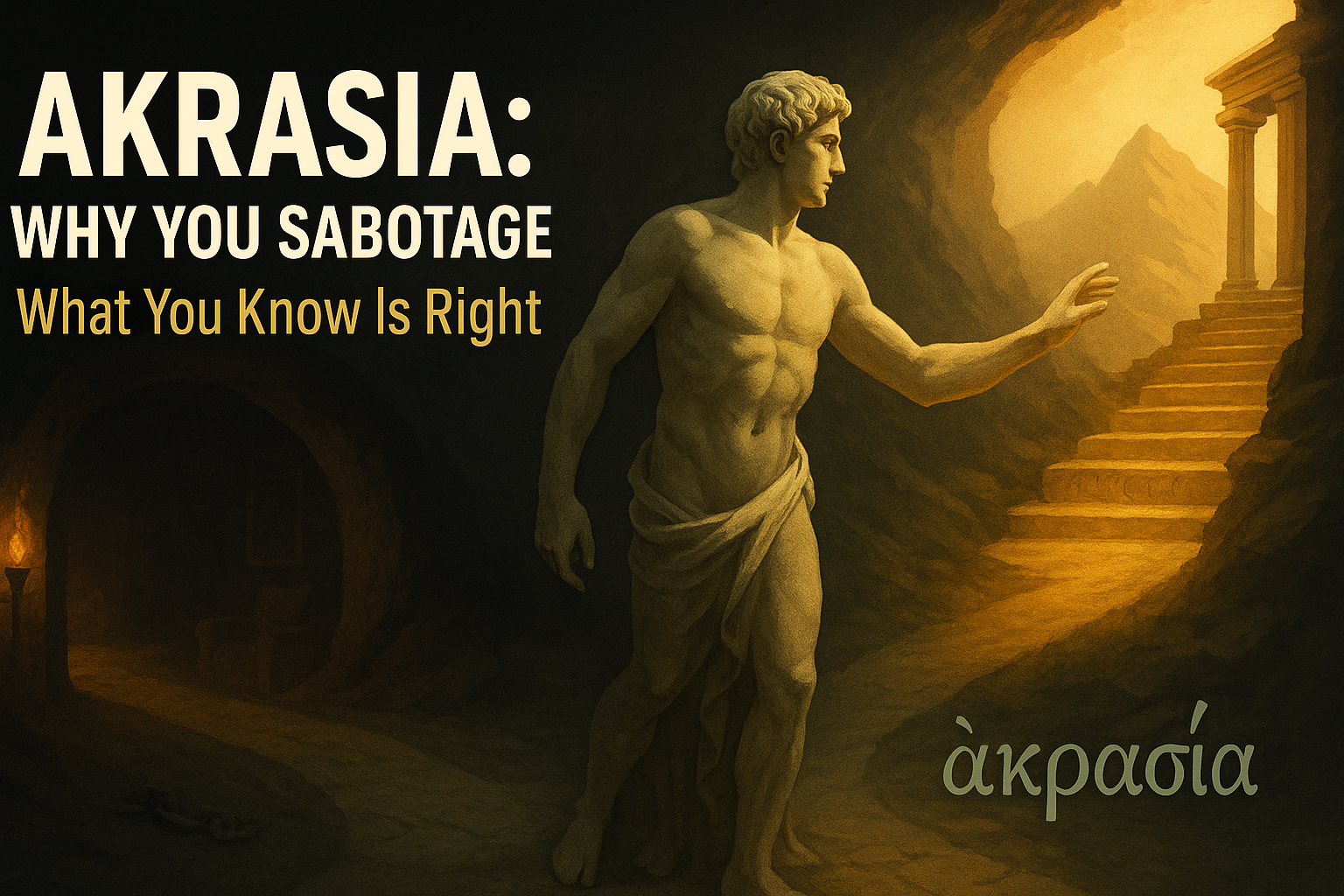
Weakness of will—acting against your own better judgment. For Aristotle, akrasia occurs when you know what is good but fail to do it, overcome by passion, appetite, or momentary impulse.
Etymology
From a- (without) and kratos (power, strength, control), literally “without power” or “lacking command.” Socrates famously denied that akrasia was possible, arguing that no one does wrong knowingly. Aristotle disagreed, devoting a significant portion of the Nicomachean Ethics to explaining how a person can know what is right yet fail to act on it. The concept remains one of philosophy’s most enduring puzzles: how can knowledge be present yet impotent?
Modern Application
You've felt akrasia every time you chose the urgent over the important, knowing better even as you did it. Recognize that leadership failure rarely comes from ignorance—it comes from this gap between knowing and doing. Bridge that gap through deliberate practice until right action becomes habitual, not heroic.
How to Practice Akrasia
Identify your three most common akrasia patterns: the specific situations where you consistently act against your own better judgment. Write each one down with complete honesty. For each pattern, design an environmental change that makes the right action easier and the wrong action harder. Remove temptations rather than relying on willpower. Create accountability structures: tell someone what you intend to do and ask them to follow up. When you notice the gap between knowing and doing, shrink the action to its smallest possible form, something so small that resistance dissolves. Build the habit through micro-actions before scaling up. Socrates famously denied that akrasia was possible, arguing that no one does wrong knowingly. Aristotle disagreed, recognizing that passion can temporarily override knowledge. His insight is practically useful: if you understand that strong emotion can temporarily disable your better judgment, you can design systems that protect you during those moments. Create pre-commitment strategies that bind your future self to right action before the tempting moment arrives. Schedule your most important work for times when your willpower is strongest, and remove all temptation from your environment during those windows.
Frequently Asked Questions
What is akrasia in Greek philosophy?
Akrasia is Aristotle's concept of weakness of will, acting against your own better judgment. It describes the puzzling human capacity to know what is good and right yet fail to do it, overcome by passion, appetite, or momentary impulse. Aristotle devoted a significant portion of the Nicomachean Ethics to explaining how knowledge can be present yet impotent, making akrasia one of philosophy's most enduring puzzles.
What does akrasia mean?
Akrasia literally means "without power" or "lacking command," from a- (without) and kratos (power, control). It describes the state of knowing the right action but lacking the strength of will to perform it. The word is the direct opposite of enkrateia (self-mastery), and the tension between these two states defines much of the moral struggle in daily life.
How do you overcome akrasia?
You overcome akrasia by designing environments that make right action easier and wrong action harder. Remove temptations, create accountability structures, and build habits through small, manageable actions. Bridge the knowing-doing gap through practice until right action becomes automatic rather than heroic. When willpower alone is insufficient, pre-commit to the right course of action before the tempting moment arrives, binding your future self to choices your present self knows are correct.
What is the difference between akrasia and enkrateia?
Akrasia is weakness of will, failing to act on your knowledge of what is right. Enkrateia is self-mastery, successfully overriding impulse through conscious effort. They are direct opposites: the akratic person knows the right action but cannot perform it; the enkratic person feels the pull of temptation but overcomes it. Both states involve the same inner tension; the difference lies in which side wins the contest between knowledge and desire.