Going Full-Time Can Kill the Part of the Work You Loved
By Derek Neighbors on November 29, 2026
There is a stretch at the start of any craft when you do it for nothing and stay up late on it because you want to. You try strange things just to see what happens. Most of them go nowhere, and you don’t care, because the trying was the fun part.
Then it becomes the job. Maybe you went full-time on the thing you used to do on weekends. Maybe you got hired to do what you used to do for free, or your side project turned into a company with payroll. Sahil Bloom made the point recently that going all in on creative work can turn the flow into a job once the margin disappears. I think he is right, and I think most people who have lived it can feel it before they can explain it.
The hours went up, the skill went up for a while, and somewhere in there the thing you loved about the work stopped showing up. Grunt work shows up in every real job, and I’ve argued that living the dream is mostly grunt work, so the toil is fine. What goes missing is narrower and costs more: the part of the craft that never had to pay.
The Standard: Two Kinds of Doing
Aristotle drew a line in Book IX of the Metaphysics that explains this better than any modern framework I know. He split activity into two kinds.
The first kind he called kinesis, a motion toward an end outside itself. Building a house is his example. While you are building, the house is not built. The activity is incomplete at every moment until the end arrives, and then it stops.
The second kind he called energeia, an activity complete in every moment you are doing it. Seeing is his example. You see and have seen at the same time, and nothing is missing halfway through. Thinking works that way, and so does living well. The kinesis vs energeia comparison on this site has the longer version.
| Kinesis (motion) | Energeia (activity) | |
|---|---|---|
| Aristotle’s example | Building a house | Seeing |
| When is it complete? | Only when the end arrives | At every moment you do it |
| In your craft | The paid deliverable | The craft done for its own sake |
Play belongs to the second kind. When you mess around with a guitar or sketch a design nobody asked for, the point of the activity is happening while you do it. Most paid work belongs to the first kind, because it only counts once it ships. In the Nicomachean Ethics Aristotle rates amusement as rest you take so you can get back to work, so the play I mean here is the craft done for its own sake, which he valued far more than a night off.
A healthy craft needs both. You need the motion, because things have to get built and delivered and paid for. You also need the activity that is complete in itself, because that is where you try the strange thing, learn what the material can do, and remember why you picked this work in the first place. In my experience, the people who stay great at a craft for decades keep both going, and the ones I’ve watched flame out let the second kind die without noticing.
The Gap: Why Turning a Hobby Into a Job Kills the Fun
Going full-time moves your whole craft into the first kind, and you barely notice it happening. Every hour now has to produce something. The research on what that does is fifty years old, and it is not subtle.
In 1971 Edward Deci had college students work on Soma puzzles, a kind of block puzzle most people enjoy. One group got paid a dollar for each puzzle they solved. Then the pay stopped, and Deci left each student alone in the room for a few minutes with the puzzles, some magazines, and nothing to do. The students who had been paid spent less of that free time on the puzzles than the students who had never been paid.
Two years later Mark Lepper, David Greene, and Richard Nisbett ran the same idea with preschoolers who already loved drawing with markers. Some of the kids were told they would get a “Good Player” certificate for drawing. Others got the same certificate as a surprise, or got nothing. One to two weeks later, back in the regular classroom with the markers out, the kids who had drawn for the promised award spent about half as much free time drawing as the others.
In 1985 Teresa Amabile asked a group of creative writers to rank reasons for writing before they wrote a short poem. One group ranked outside reasons like money, recognition, and getting published. Another ranked inside reasons like the pleasure of playing with words. Judges rated the poems blind. The writers who had just been thinking about the outside reasons wrote poems judged less creative.
In 1999 Deci, Richard Koestner, and Richard Ryan pooled 128 of these studies, and the detail they found matters. Surprise rewards and honest positive feedback left interest intact. So did rewards handed out just for showing up, with no link to the task. The damage came from tangible rewards people expected for doing or finishing the work, because then the payoff becomes the reason for the hour.
These were short studies on kids and college students, so stretching them across a whole career is my extension of what they found. I think it holds, because going full-time is how you end up in that condition. Freelancers and founders get paid per deliverable. Salaried people get there through reviews, quotas, and a calendar where every hour is tied to something that ships. Either way, every session of the craft becomes a session you expect a payoff from. The rent puts real pressure on you, and you still make the call to stop playing, usually by default and without noticing you made it.
You can’t switch off what expected rewards do to your interest; the effect showed up in preschoolers and college students alike. What you control is how many of your hours carry an expected payoff.
From the inside it looks like this. You only start projects you can finish this week, and you judge every idea by whether a customer would want it. The weird approach stops getting tried because it might cost a day you can’t bill. You get faster at the version of the work that sells, and the work gets narrower, and after a few years you’re very good at one thing and bored by it.
I’ve built software for money for most of my adult life. At Integrum we built software for clients, so most of the code I wrote had someone waiting on the other end of it. That taught me to deliver, and it taught me very little about what else the work could do, because nobody pays you to wander. I also run in the desert most mornings. Nobody pays me for it, and I hope nobody ever does, because I know exactly what would happen to it.
The Path: Five Moves This Week
- Keep a lane with no customer. Put one block on the calendar every week where nothing you make gets shipped, sold, billed, or posted. Two hours is enough to start, and if you’re one invoice away from missing rent, thirty minutes still counts. If it can be delivered, it doesn’t count.
- Give that lane different rules. In the paid lane you start what you can finish. In the play lane, start things you may never finish, pick a problem with no business case, or try the approach you would never risk on a client. Most of it will go in the trash, and that’s fine.
- Hand the production reps to agents. A lot of the paid hours in any craft are repeatable steps: formatting, packaging, the twentieth version of the same deliverable. In software, agents already write and ship most of that work while I frame it and judge it. Give the repeatable reps to the model as fast as you can, and spend some of the hours it frees on play instead of on more production. If every hour the agents give back goes straight into more billable output, you’ve automated your way into a bigger job and no play.
- Keep margin on purpose. The job will take every hour you let it buy. Bloom’s point was about margin, and he’s right that it goes first. Decide in advance how many hours the paid lane gets, and stop there even when there is more you could sell.
- Keep the play lane off the internet. The moment you post the experiment, it has an audience, and an audience is another kind of payoff. I made the longer case in Are You Building a Craft or Building an Audience?. Let some of your work be seen by nobody.
The Test: Has the Play Lane Died?
Answer these honestly.
When did you last make something in your craft that nobody asked for? If you have to think about it for more than a few seconds, the lane is probably gone.
Do you start projects you can’t finish this week? If every project you start has a delivery date, you’re only doing kinesis.
When you get a strange idea, is your first question whether anyone would pay for it? That question belongs in the paid work, and asked during play it kills the idea before it has a chance.
Do you still do the craft on a day off? Some people need a full break, and that’s healthy. But if the thought of touching the work on a Saturday makes you tired, notice it.
Can you name something you learned in the last month that has no use yet? Play produces skill you don’t have a job for. If everything you learned this month was for a deliverable, you’re only getting better at what you already sell.
The Mastery: The Plate in the Cafeteria
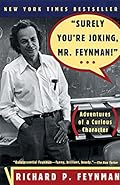
Richard Feynman tells this story in Surely You’re Joking, Mr. Feynman! After the war he was teaching at Cornell and felt burned out. He couldn’t get any research going, and offers kept coming in from places that assumed he would do great work, which made it worse.
So he decided to stop. He would play with physics the way he did as a kid, whenever he felt like it, without worrying whether it mattered. A few days later someone in the cafeteria tossed a plate in the air, and he noticed the plate wobbled at a different rate than it spun. He worked out the math for no reason except that it was fun. That got him thinking about how electron orbits move in relativity, and from there back into quantum electrodynamics. He later wrote that the diagrams and the rest of the work he won the Nobel Prize for came out of that fooling around with the wobbling plate. None of it was supposed to matter.
Keeping that kind of time in your week can do the same for you. The craft stays interesting, so you stay in it longer, and you keep finding things the paid version of the work would never have asked you to find. Some of them end up being the best parts of the paid work. Treat that as a side effect. If you protect the play only to mine it for work ideas, you’ve turned it back into the first kind of doing, with a deliverable and a deadline. Feynman got his ideas because he had stopped caring whether the plate led anywhere.
Final Thoughts
Turning your craft into your job is a good thing to do. It gives you stakes and real feedback, and you get better faster than you ever did on weekends. It also moves every hour of the craft into Aristotle’s first kind of doing, the kind that only counts when it is finished. Fifty years of research says what that does to the part of you that liked the work for its own sake. The fix is simple to say and hard to keep: protect a part of the craft that never has to pay. Put it on the calendar, give it different rules, let agents take the production reps, and keep it off the internet. Do it because that part of the work is good to do, and that was why you picked the craft in the first place.
If you want a room of people who will ask what you made this month that nobody paid for, MasteryLab is that room.
Frequently Asked Questions
What is the difference between energeia and kinesis?
Aristotle used the two words in Metaphysics Book IX to sort activities. Kinesis is a motion toward an end outside itself, like building a house, and it is incomplete until the end arrives. Energeia is an activity complete at every moment, like seeing or thinking, where doing it and having done it happen at once. Play and craft done for their own sake are energeia. Work done only to deliver something is kinesis.
Why does turning a hobby into a job make it less fun?
Decades of research on expected rewards show that when people expect a payoff for doing an activity they already enjoy, they spend less free time on it afterward. Going full-time makes every hour of the craft an hour that has to pay. You start only the projects you can finish and sell, you stop trying strange things, and the part of the work that felt like play gets squeezed out.
Does money always kill intrinsic motivation?
No. A 1999 meta-analysis of 128 studies by Deci, Koestner, and Ryan found the damage comes mainly from tangible rewards people expect for doing the task. Unexpected rewards and honest positive feedback did not lower interest. Trouble starts when the payoff becomes the reason for every hour you spend on the craft.
How do you keep loving your craft when it becomes your job?
Keep a regular block of time where nothing you make gets shipped, sold, billed, or posted. Give that block different rules: start things you may never finish and pick problems with no business case. Hand repeatable production work to agents or tools, and spend some of the hours they free on play. Keep some margin instead of filling every hour the job can buy.