Some Lunches Are Worth Owing For
By Derek Neighbors on October 6, 2026
Power vs. Virtue: The 48 Laws Examined
A year-long examination of Robert Greene's 48 Laws of Power through the lens of ancient virtue ethics. Some laws we affirm, some we reframe, some we reject entirely.
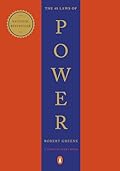
Law 39 was about stirring people up so they decide badly. Law 40 of the 48 Laws of Power is about money and gifts, and about who ends up owing whom.
This is the first law in a while where I agree with more than half of what Greene says. I agree with the part about strings and quality, and I reject the part about people. Greene wants you to owe nobody, and a person who pulls that off has closed most of the doors anyone could use to help them.
The Law: Despise the Free Lunch
Law 40: “Despise the Free Lunch.”
Greene’s judgment runs like this. Anything offered for free is dangerous, because it usually carries either a trick or a hidden obligation. “What has worth is worth paying for.” If you pay your own way, you stay clear of gratitude, guilt, and deceit. It is often wise to pay the full price, because excellence has no shortcuts. And be lavish with your money and keep it moving, because generosity is a sign of power and a magnet for it.
He then sorts the people who handle money badly into types. The greedy fish wants money so badly it swallows the hook. The bargain demon spends hours hunting a discount and pays for it in time and shoddy goods. The sadist uses money to keep other people waiting and dependent. The indiscriminate giver hands out gifts to be loved by everyone and ends up valued by no one.
Keep your eye on the reason in the middle of the judgment. Greene puts gratitude on the list of things to escape, right next to guilt and deceit.
The Tactical Truth
Most of the practical advice is right, and anyone who has bought software for a company has learned it the hard way.
The vendor’s free pilot is free for ninety days. On day ninety-one your team has built three workflows on it, nobody wants to rebuild them, and the renewal quote arrives. The free architecture assessment from a consulting firm ends with a recommendation that needs the consulting firm. The recruiter who takes your best engineer to dinner is paying for something. Free things at work usually have someone’s quarterly number attached, and Greene is right to tell you to find the number before you eat.
He is right about full price too. I have watched teams save money on the cheap contractor, the cheaper laptop, and the free tier, then pay for it three times over in rework. The clearest case right now is AI. A team runs its trial on the free tier of a model, gets a weaker model with tight limits, decides AI is overrated, and goes back to doing everything by hand. That is the bargain demon in its current form. Pay for the best model you can get and put it on the real work on day one.
Seneca, who wrote seven books on gifts and favors, agrees with more of this than you might expect. In On Benefits he says to be more careful choosing whom you owe a favor than whom you owe money. A loan gets paid off and ends. A favor stays with you, and you do not want to carry one for someone you do not respect.
So the strings are real, and full price is often the right price. The trouble starts with what Greene builds on those two facts.
The Character Cost
Greene does not stop at “check the strings.” He tells you to despise the free lunch so that you stay clear of gratitude, and that reason is where the law goes wrong.
Start with the act itself, before any bill comes due. A person who refuses to acknowledge help is giving a false account of themselves, as if they had built everything they have alone. That account is wrong on a day when it costs nothing, and the costs below come on top of it.
The first cost is that you become hard to help. A person who treats every offer as a trick turns down the free help along with the free trap. I have seen a senior engineer wave off a junior’s offer to pair on a bug, because taking the help felt like owing. I have seen new managers decline coffee with a peer who had done the job for five years, because they did not want to be in anyone’s debt in their first month. The help they refused was worth more than anything a vendor was selling them. Suspicion cannot tell the vendor from the colleague, so it refuses both.
Second, the ledger takes over your friendships. If you pay for everything so that you never owe, every relationship becomes an account that has to be kept at zero. Aristotle saw where that ends. In Nicomachean Ethics VIII he says complaints and quarrels come up mostly in friendships of utility, the ones where each side tracks what they gave and what they got. Friends who care about each other for their own sake do not fight over the balance, because nobody is keeping one. Greene’s rule turns every friendship into the utility kind and then insists it stay square. The colleague who returns every favor within the week, so nothing is ever left open, has very clean accounts and very few people who would call them at midnight.
Third, look at what Greene does with generosity. “Be lavish with your money” sounds like the opposite of a ledger, until you read his reason: generosity is a magnet for power. A gift given for that reason is a purchase, and the person receiving it is the thing being bought. People can tell. Most of us have been taken to a dinner that turned out to have an ask at the end, and we remember how the dinner tasted once the ask arrived. Generosity aimed at power fills a room with people who came for the food.
Fourth, the rule changes the person who follows it. If you believe nothing is ever given freely, you stop giving anything freely yourself, because in your picture of the world a free thing is a hook. Your own favors start to carry strings, since that is what you believe favors are. Greene warns you about the person handing out lunches with hooks in them, and his advice is a reliable way to become that person.
The fifth cost is the oldest, and Aristotle drew it himself without meaning to. His great-souled man, the person of megalopsychia in Nicomachean Ethics IV.3, likes to do favors and is ashamed to receive them, because giving marks the superior and receiving marks the inferior. He remembers the favors he did and forgets the ones done for him. Aristotle presents this as part of the portrait of a great man, and readers have been uneasy about that passage for a very long time. Greene took the most uncomfortable trait in the portrait and made it a law. The pride that cannot stand to owe tends to travel with the pride that cannot stand to be corrected or taught, and together they cost most in exactly the places where you need the help.
Software is the clearest counterexample to the whole law. This site runs on Jekyll. The code I write every day runs on Linux, Ruby, Git, and libraries written by thousands of people I will never meet, who gave their work away. That is the largest free lunch in the history of the trade. Some of it has strings, like a license or a company that hopes you will move to its cloud, and you should read the license. Most of it was given because people who are good at something like to give it away, and the teams I have seen refuse it on principle spent years paying for worse software.
The ARETE Alternative
Aristotle has the word Greene needed. It is eleutheriotes, usually translated as liberality, the virtue of being free with money in the right way. In Nicomachean Ethics IV.1 the liberal person gives to the right people, in the right amounts, at the right time, and does it with pleasure, or at least without pain. On one side sits the prodigal, who gives too much and to the wrong people, and Greene’s indiscriminate giver sits close to that vice. On the other side sits the stingy person, who gives too little and takes too much from the wrong sources.
Two parts of Aristotle’s account correct Greene. First, liberality covers taking as well as giving. The liberal person takes from the right sources and refuses the wrong ones, which is everything sound in Law 40: check where the lunch came from. His rule is to know whose lunch it is, and that leaves plenty of lunches worth eating. Second, the liberal person gives because giving well is good in itself, and Aristotle says liberality depends on what a person has. Someone who gives a little out of a little can be more liberal than a rich man who gives a lot. Greene’s lavish spender, giving to look powerful, would not pass Aristotle’s test at all, because the gift is aimed back at the giver.
That gives a working line between a gift and a hook. A gift is given for your sake and does not depend on a later yes, while a hook is a sale whose price shows up later. The colleague who offers to pair on your bug wants the bug fixed and you better at fixing it, and nothing about the offer changes if you never return the favor. The vendor’s pilot changes completely the day you say no to the renewal. Ask what happens if you say no to whatever comes next, and you will usually know which one you are holding.
Seneca covers the receiving end, which Greene leaves out entirely. (Law 13 was about the asking end, and why reminding people of past favors backfires.) Early in On Benefits he spends time on the three Graces, the old image of a favor passed from hand to hand and coming back around, the cycle the Greeks called charis. His point is that receiving is half of the virtue. He says the person who accepts a favor gladly has already paid the first installment on it. A gift given in order to get a return, in his view, was an investment from the start. Seneca keeps Greene’s caution about whom you owe, and then spends most of the work teaching you how to owe well.
Then there is autarkeia, self-sufficiency, which both Aristotle and the Stoics prized and which Law 40 imitates. The difference is that self-sufficiency means you do not need the gift in order to be whole. That is exactly what lets you accept one without being bought. A person who has to refuse every gift to stay free is less self-sufficient than one who can take a gift, say thank you, and stay the same person.
Socrates is the case that settles it. He took no fees. Xenophon reports that he thought people who charged for their company made themselves slaves to whoever paid them. The best conversation in Athens was a free lunch, and it was free so that the man giving it would stay free.
Before the practices, here is the end they serve. You want a team where help and good work move to wherever they are needed, between people who trust each other enough to let them move, and you want to be one of the hands they pass through. That takes giving and receiving without either one costing you your judgment: knowing who you owe, choosing them well, and being glad to owe them.
Find the string before you eat. For any free thing from someone with a number to hit, write down what they want in one line. The vendor wants the renewal. The recruiter wants your engineer. Then decide whether you want the lunch at that price. For a free pilot, write the exit plan before you sign up, while leaving is still cheap. You are judging the terms you can see, and nobody can read a giver’s heart. Deciding on the visible terms is enough, even if you guess wrong now and then.
Pay for what your work runs on. The model, the editor, the books, the training. If your craft runs on it eight hours a day, pay full price for the best version. Running your team on the free tier of the thing they use most is the bargain demon’s mistake. None of this conflicts with taking gifts gladly, because you pay the people who are selling and accept from the people who are giving.
Say thank you by name, the same week. That is Seneca’s first installment. “Your review caught the race condition in the retry loop, and it would have paged someone at 2am. Thank you.” Say it specifically, and in public where it fits. The thank-you leaves the debt open and tells the person you know you owe them and are glad to.
Let people help you. The next time a peer or a junior offers to pair, review, or walk you through something, say yes. Notice the flinch, the small feeling that now you owe them. Owing a good colleague is a fine thing to carry.
Give with no ask, and check it. Before you give something at work, like an introduction, a careful review, or an hour on someone’s problem, ask whether you would still give it if they never found out it came from you. If the answer is no, you are buying something. Be honest with yourself about what.
None of this depends on rank. The intern who turns down a senior engineer’s offer to walk through the codebase, because taking it feels like weakness, is following Law 40. So is the CEO who will not let a board member make an introduction because she does not want to owe him. The manager who picks up every team lunch so everyone remembers who paid is following the other half of it. And the junior who says “I have nothing to give back, so I would rather not take it” has the arithmetic wrong. Gratitude never depended on the means to repay. You owe the thanks and the use of what you were given, and a junior can pay both. Receiving well and giving cleanly are the same duty at every level.
One more, from my own desk. When a colleague gives me an hour of their time on a code review, that hour is a gift, and I want it spent on the judgment calls. So before I ask, Claude goes over the pull request first and catches the typos, the missing test, and the obvious bug. The person reviewing gets a change that is already clean and spends their hour on the questions only they can answer. Start with the model, and use it to make the human gifts you receive count for more.
Ancient Wisdom: the liberal hand and the first installment
Aristotle gives the whole frame in Nicomachean Ethics IV. Chapter 1 is eleutheriotes, a virtue that governs taking as well as giving and is measured against what you have. Chapter 3 is the great-souled man, ashamed to receive, and it is worth reading as a warning as much as a model. Book VIII adds that the friendships full of complaints are the ones where both sides keep score.
Seneca’s On Benefits is the longest ancient work on gifts, and it is mostly about the person on the receiving end. Choose whom you owe with care, he says, and then owe them gladly. Gratitude in his account is part of what makes a person free, because the grateful person is not trying to get out from under anyone.
Xenophon’s Memorabilia gives the portrait of Socrates refusing fees. Read it next to Greene. Both men wanted to stay free of other people’s claims. Greene gets there by paying for everything, and Socrates got there by giving his best work away.
Lewis Hyde is not ancient, but The Gift belongs on this list. His argument is that a gift keeps its value only while it keeps moving. Hold onto it, or turn it into a sale, and something goes out of it. Anyone who has watched an open source project thrive because people passed their fixes back has seen that argument work.
The Test
When did you last accept help at work and not pay it back within the week? If you cannot remember, ask yourself why owing someone feels so uncomfortable.
Who do you owe right now? Are you glad to owe them, or are you counting the days until you can square it?
Look at the last three things you gave at work. Which of them had an ask waiting behind them?
What do you use every day that you are still running on the free tier, and what is that costing you in work you redo by hand?
And the one that decides: if everyone you work with forgave every favor you owe them tomorrow, would you feel lighter, or would you feel like you had lost something? If the answer is lighter, Law 40 has been running you for a while.
Final Thoughts
Greene is right that free things from people with a number to hit come with hooks, and right that good work is worth paying full price for. He is wrong that freedom means owing nobody. A person who owes nobody has turned down most of the help, teaching, and friendship that would have made them better, and has usually started giving with hooks of their own.
Aristotle’s liberal person takes from the right sources and gives to the right people, gladly, and Seneca’s grateful person owes well and stays free. Socrates went further and gave away the best thing he had so that nobody could own him. Check the strings, pay for your tools, and then let the people worth owing give you something.
Law 41 is next, and it is about stepping into a great man’s shoes.
Learning to take help as well as give it is part of the craft. That is what MasteryLab is for.