Muddy the Water and You Fish Blind
By Derek Neighbors on September 28, 2026
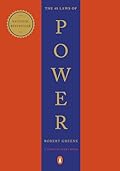
Power vs. Virtue: The 48 Laws Examined
A year-long examination of Robert Greene's 48 Laws of Power through the lens of ancient virtue ethics. Some laws we affirm, some we reframe, some we reject entirely.
Law 38 was about how much of yourself you let a room see. Law 39 of the 48 Laws of Power is about what happens when someone in the room decides to find out by poking you.
The series plan files this one as a law to oppose, even though half of it is good advice. Greene tells you to stay calm, and he is right about that. Then he tells you to make the other person lose their temper on purpose, and that half costs more than it wins. The cost lands on the person doing the stirring.
The Law: Stir Up Waters to Catch Fish
Law 39: “Stir Up Waters to Catch Fish.”
Greene’s judgment goes like this. Anger and emotion are strategically counterproductive, so you must always stay calm and objective. But if you can make your enemies angry while you stay calm yourself, you gain a decided advantage. Put them off balance. Find “the chink in their vanity” through which you can rattle them, and “you hold the strings.”
The title is an old Chinese military saying. Muddy the water and the fish cannot see the net.
His lead story is Napoleon and Talleyrand in January 1809. Napoleon came back from Spain convinced his foreign minister was plotting against him, and in front of his other ministers he raged at Talleyrand for half an hour, finishing with a line history kept: “You are shit in a silk stocking.” Talleyrand stood there and took it without a flicker. On his way out he remarked to the others that it was a pity so great a man had been so badly brought up. Greene treats that half hour as the start of Napoleon’s slide. The emperor showed the room he could be moved, and the man who stayed still came out ahead. I will come back to this story, because it can be read the other way.
The Tactical Truth
Anger that someone else set off, or anger far out of proportion to its cause, makes people decide badly, and I have never met anyone who disputes that. The person who stays level in a heated room has an edge, and the edge is real. They hear more, and they still have their judgment after the other side has spent theirs.
Provocation works too. In board prep, someone asks the engineering lead a question built to make him defensive, and the defensive answer becomes the story of the meeting. In a pull request thread, one comment lands on a senior engineer’s pride and the next forty minutes go to who is right instead of what the code should do. I have done it myself, asked the needling question in a review because I knew it would get a rise, and for about an hour after I got the rise it felt like winning.
Aristotle wrote the manual for this, which is worth knowing before anyone calls Greene a cynic. In the Rhetoric he defines anger as a desire, mixed with pain, for revenge for a slight that was plain to see. Then he spends a chapter sorting slights into contempt, spite (getting in someone’s way for no gain to yourself), and insult. Anyone who has read that chapter can manufacture a slight, and Law 39 runs on exactly that: anger follows the slight, and the slight is something you can make.
So the calm half of the law is sound, and the provoking half does work. What Greene skips is what you get when it works.
The Character Cost
First, what counts as the move. A hard question does not break this law. A code review that says “this will lose data” can make someone angry, and so can a true answer they did not want to hear. The test is what you were aiming at. Law 39 aims at the other person’s anger so that their judgment fails. An honest question aims at the truth, and any anger that follows is a side effect you would have avoided if you could.
Then the act itself, before any bill comes due. Working someone’s temper on purpose treats their judgment as a lever for you to pull. That is a wrong done to a person with a mind of their own, and it would stay wrong even if every trade below came out in your favor. The costs make it a bad deal on top of that.
The saying is about muddy water, so start there. The fisherman stirs the river so the fish cannot see him, and he is standing in the same river. Once it is brown, nobody can see the bottom, including him.
That is the first and biggest cost, and it is the one Greene never mentions. You provoke a colleague to win a meeting, and what you won is a decision made on a worse version of their judgment. The engineering lead in that board prep knew something about the migration plan. He was going to say it. Instead he spent his five minutes defending himself, the board heard a defensive man, and the thing he knew went unsaid. The person who asked the needling question walked out ahead and walked out less informed than they came in. If you run the company, you are the one who needed what he knew.
Aristotle saw this from the other side. In the first chapter of the Rhetoric, before he gets to the catalogue of slights, he says it is wrong to stir a judge to anger or envy or pity, because it is like bending a carpenter’s rule before you measure with it. You needed a straight edge, you bent it on purpose to win the argument, and now every measurement you take with it is off. When the colleague you provoked is the one whose judgment you rely on, you have bent your own ruler.
The second cost is to the part of them you provoked. Plato divides the soul into reason, appetite, and thumos, the spirited part, the part that gets angry. In the Republic he gives thumos a job. It is reason’s ally, the part that rises against injustice and then comes back when reason calls it, like a sheepdog to the shepherd. It is the part of a good engineer that bristles when the numbers in the deck are wrong. Law 39 finds that dog and sets it barking at nothing. Do it enough and the dog stops coming when called, and the person you trained that way is someone you work with.
The third cost is the room. Provoke one engineer in a design review and every engineer in the next review arrives braced. Some of the most useful things anyone says in a company are half-formed doubts: “I am not sure, but I think the retry logic is in the wrong place.” Sentences like that only get said out loud in a room where nobody is fishing. Once people know someone in the room pokes for weak spots, they bring finished positions and leave the doubts at their desks. I wrote about the fear version of this in Law 17. Law 39 gets there by a quieter road, and the silence it produces is the same.
The fourth cost is to your calm. Greene’s calm is a loaded weapon, which means it still has an enemy in it. You are as angry as you were, and you have handed the anger to the other person to carry while you keep the aim. I wrote in April about calling your own anger righteous, and this is the other half of that essay. A person who stays level only so the other side will blow up is still running on the fight, and the steadiness disappears the day there is nobody to beat.
The last cost is the list. “Find the chink in their vanity” is an instruction to keep an inventory of the people around you, sorted by where they bruise. Law 33 was about that inventory and what it does to the person keeping it. And the list does not hold. People learn. The colleague you rattled in March has a prepared answer by June, so the next provocation has to go further, and the one after that further again. Now read the Napoleon story the other way. A dressing-down in front of the other ministers was itself an attempt to rattle a man in public. Napoleon was the one stirring, Talleyrand refused to be stirred, and the room watched the man holding the stick lose control.
Under all five sits the cost Plato would put first. Law 39 puts your reason to work for the wish to win. The part of you that should decide what is worth doing spends its day finding where other people bruise, and a mind used that way for long enough gets very good at it and forgets its other job.
The ARETE Alternative
Hesiod and Aristotle each supply a word Greene needed.
Hesiod opens Works and Days by correcting himself. He had thought there was one kind of eris, strife. There are two. One is cruel and breeds war and quarrels, and no one loves it. The other is good for people. It wakes even the lazy man to work, because he sees his neighbor getting rich from plowing and planting and wants the same. The potter envies the better potter, Hesiod says, and the builder envies the builder.
That is the correction for Law 39 in a few lines. There is a way to stir the water, and it is aimed at the work: a better version put in front of the team, the pull request that does the migration in one pass, the benchmark posted where people can see it. The engineer who sees it goes back to their desk a little jealous and a lot more awake, and nobody’s judgment got bent on the way. Hesiod’s kind of stirring lands on the craft, which can take it, and leaves the person alone.
The second word is Aristotle’s. In Nicomachean Ethics IV.5 he names a virtue for anger, praotes, good temper. The good-tempered person is angry at the right things, with the right people, in the right way, at the right time, and for the right length of time. He is clear that the deficiency is a vice as well. A person who is never angry at the things that deserve it, who lets their friends be insulted and says nothing, is slavish, he says, and a fool. praotes means your anger answers to your judgment, and so does your calm.
Greene gets this part backwards. Calm earns the name virtue when it keeps your judgment working, and calm held out as bait has none of that in it. The same half hour of standing still can be praotes or a trap, and the difference is whether you were trying to see clearly or trying to make someone else stop seeing.
Then there is the other side of the river, when you are the one being stirred. The Stoics had apatheia, freedom from being carried off by a passion. It means you stop handing your judgment to whoever speaks loudest, and it does not mean you stop feeling. Epictetus puts it in one line in the Enchiridion. When someone provokes you, it is your own opinion that provoked you. The insult only lands if you agree that you were insulted. That cuts both ways. Being provoked does not excuse the answer you gave. What you said while rattled is still yours, and “he set me off” is an explanation you would never accept from someone on your own team.
Seneca has the demonstration. In On Anger he tells how Cato was pleading a case when a man named Lentulus, a known brawler, spat in his face. Cato wiped it off and said, “I will swear to anyone, Lentulus, that people are wrong when they say you have no mouth on you.” The joke is that “having a mouth” meant having nerve. Cato did not counterattack or save anything up for later, and the case went on. That is calm with no hook in it, and it is harder than Talleyrand’s, because Talleyrand had something to win.
Before the practices, the end they serve. You want a room where people’s judgment stays straight, including yours, because the decisions made in it are only as good as the measurements taken there. Every practice below protects the ruler.
Argue the claim, not the pride. Before you post the comment or ask the question, reread it and ask whether it would still land if the other person had no ego at all. If your point needs them rattled to win, it is not winning on the merits, and you will find that out later, in production.
Ask what you lose if they answer calmly. This is the test for when you catch yourself reaching for the needle. If a calm answer would hurt your case, the case is the problem. If a calm answer would not hurt it, you do not need the needle.
Cool the room on purpose. When someone else is heated, restate their point better than they did before you disagree with it. “You are saying the migration has to run in batches because the table is too busy to lock. Is that right?” It takes twenty seconds, it straightens the ruler, and half the time you find out they were right. Your part is the restatement and your own tone. Whether they cool off is theirs, and if they stay hot you have still done your job.
Stir the good strife. If the team needs waking up, do it with the work. Ship the better version or post the number, and let the potter be jealous of the potter. Nobody has to lose their temper for the bar to go up.
When you are the target, name it once. “That sounded aimed at getting a reaction, so here is my answer to the question underneath it.” Then answer it, plainly, and let the heat run out on its own. Naming the move one time takes the fun out of it. Naming it every time turns into a fight of its own.
This duty does not come with rank. The staff engineer who needles juniors in code review is running Law 39. So is the new hire who baits the tech lead in the retro, and the contractor who picks at a client’s pride on the kickoff call. The exec in board prep has more reach, and the move and the cost are the same at every level.
One more, from my own desk. When a thread has gone hot and I am about to reply, I paste the thread into Claude and ask it one question: what is the actual claim each person is making? The model does not take the bait, because it has no pride to hit, and it hands back the argument with the heat taken out. Most of the time the two sides are closer than the thread made them look, and I write a better reply. Start with the model there too, and use it to clear the water before you step in.
Ancient Wisdom: the potter and the bent ruler
Hesiod’s two strifes are the oldest version of the argument, and still the cleanest. Strife is going to happen in any group that wants to be good at something. The only choice is which kind you feed. Feed the kind that makes the potter go back to his wheel, and starve the kind that makes him go after the other potter.
Plato gives the reason provocation is so effective and so costly. In Republic IV thumos sides with reason against appetite, and it is at its best when it is angry at something that is really wrong. A person whose thumos has been set off by a planted slight is using their best part on your behalf. You have borrowed their sense of justice to win your argument, and it takes a while to come back.
Aristotle gives both halves, and they fit together. The Rhetoric shows how anger is made, and he allows a speaker to show an audience that a real slight is a slight. What the first chapter forbids is stirring passion about things outside the case, which bends the judge like a ruler. Anger that fits the facts is allowed, and anger manufactured to stand in for the facts is exactly what Law 39 recommends. The Ethics gives the virtue, praotes, anger that answers to judgment, and says the person with no anger at all has a flaw of their own.
Seneca goes furthest. On Anger calls anger a brief madness and argues that no one should ever use it as a tool, in themselves or in anyone else. He had watched Caligula up close and would go on to advise Nero. He knew what it looked like when a powerful man kept a list of other people’s weak spots and pressed them for sport, and he did not think the man pressing was the winner.
Epictetus supplies the defense. You cannot stop anyone from stirring, and you can still refuse to let them muddy your judgment. His line in the Enchiridion is the one to keep for the next pull request comment written to get a rise: nobody provokes you without your own judgment going along.
The Test
Think about the last argument you won at work. Did you win it, or did the other person lose their temper?
If it was the second, go back and find out what they would have said if they had stayed calm. Ask them. That answer is the information you traded for the win, and you may not like how much it was worth.
Then look at the list you are carrying. Do you know which of your colleagues bristle at being called junior, which ones hate being interrupted, which ones get defensive about their estimates? If you know it because you have used it, Law 39 has been running on you for a while.
Four questions to run before the next heated meeting.
When I ask a hard question, am I trying to learn the answer or trying to see them flinch?
What was the last good idea I heard from someone who was angry at the time? If I cannot think of one, what am I doing to the rooms I am in?
Where does my team compete over the work, and where do they compete over each other? Which of those did I stir last?
And the one that decides: if everyone I work with stayed perfectly calm for a month, would I win more arguments, or fewer?
Final Thoughts
Greene is right that anger makes people decide badly, and right that the calm person has the edge. He is wrong about what to do with the edge. Using it to rattle someone else wastes the one thing calm is for, which is seeing clearly, and it wastes it for everyone in the river, including you.
Aristotle had the better use for calm. Keep your judgment straight, be angry when something deserves it and for exactly as long as it deserves it, and never bend someone else’s ruler to win a measurement. Hesiod had the better use for strife. Aim it at the work, where it makes the potter better, and never at the potter.
Muddy water hides the net from the fish for about a minute. Then the fisherman is standing in brown water with the rest of them, and the river he needed to read is the one he wrecked.
Law 40 is next, and it is about the free lunch.
Keeping your judgment straight in a hot room takes practice. That is what MasteryLab is for.