Techne (τέχνη): Meaning, Definition & Modern Application
TEKH-nay
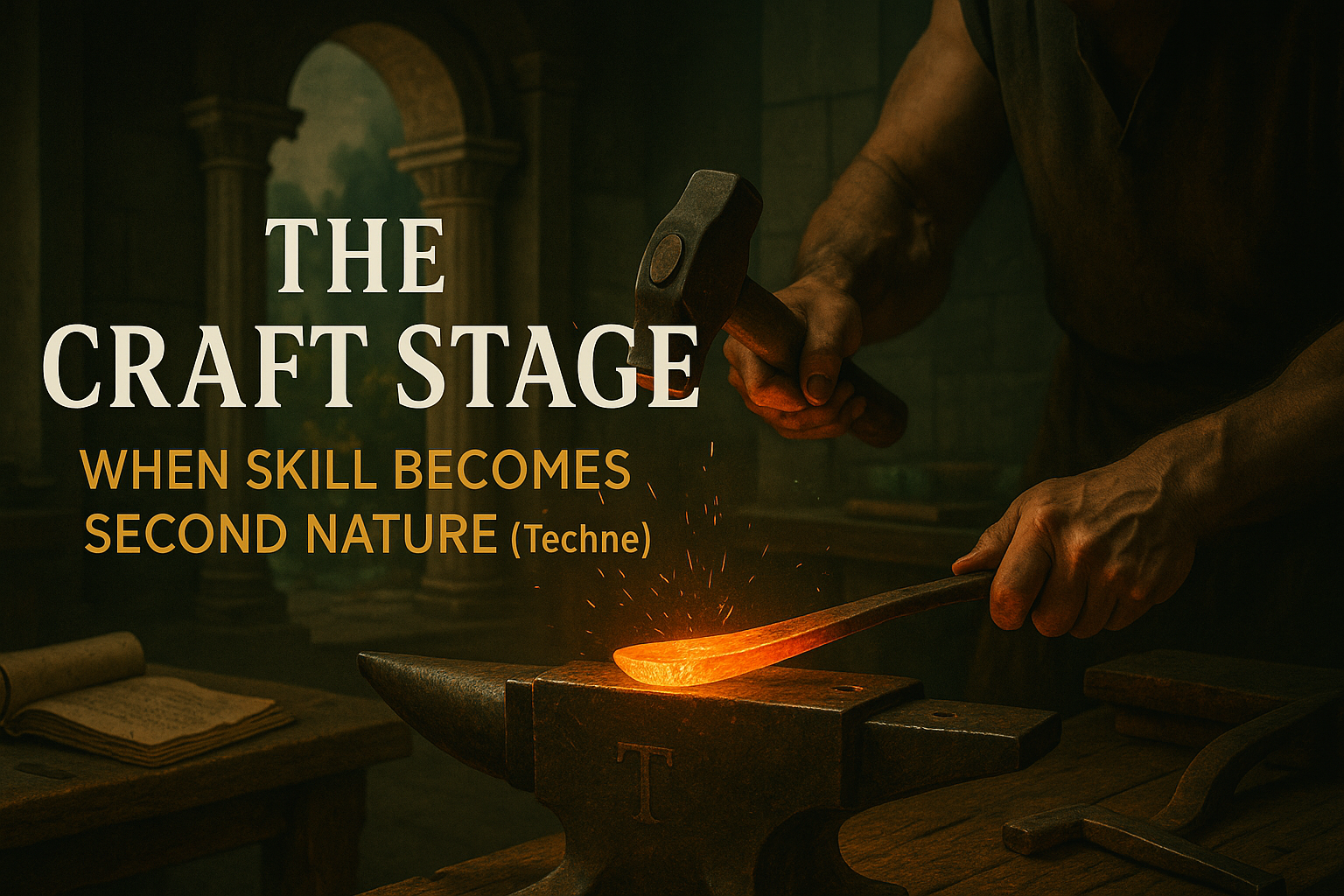
The systematic knowledge and skill required to produce something well—craft, art, or applied expertise. For Aristotle, techne bridges theoretical knowledge and practical action, representing the reasoned capacity to make or create according to true understanding.
Etymology
From the Greek techne, meaning “art,” “craft,” or “skill.” The root gives us “technique,” “technology,” and “technical.” In Greek thought, techne described any systematic knowledge applied to production, from shipbuilding to medicine to rhetoric. Aristotle ranked it between mere experience (empeiria) and theoretical knowledge (episteme): the craftsman knows both what works and why it works, enabling them to teach others and adapt to new situations.
Modern Application
You develop techne when you move beyond mere competence to true mastery of your craft. Study the principles underlying your work, not just its procedures—understand why excellence looks the way it does. Your leadership gains authority when others recognize you've paid the price of deep skill, not just accumulated credentials.
How to Practice Techne
Select one skill central to your work and commit to understanding its underlying principles, not just its techniques. Read the foundational texts in your field, study the masters who shaped your craft, and practice deliberately at the edge of your current ability. Teach what you learn to someone else; teaching reveals the gaps between procedural knowledge and genuine understanding. Set a six-month skill development goal that stretches beyond your current level and track your progress weekly. Mastery is not a credential; it is a relationship with your craft that deepens through sustained, principled practice. Aristotle ranked techne between mere experience (empeiria) and theoretical knowledge (episteme): the craftsman knows both what works and why it works, enabling them to teach others and adapt to new situations. Test whether your skill has reached the level of techne by asking two questions. Can you explain to a novice why your methods work, not merely that they work? Can you adapt when familiar techniques fail in novel situations? If either answer is no, your knowledge has not yet reached the level of genuine craft.
Frequently Asked Questions
What is techne in Greek philosophy?
Techne is the Greek concept of systematic skill or craft knowledge, the reasoned capacity to produce something well. For Aristotle, it bridges theory and practice, representing expertise that understands both what works and why, enabling adaptation and teaching. Aristotle ranked it between mere experience and theoretical knowledge, because the person with techne can both perform and explain their craft.
What does techne mean?
Techne means art, craft, or systematic skill. It is the root of technique, technology, and technical. It describes not mere competence but the deep, principled understanding of a craft that enables consistent excellence and the ability to teach others. In Greek thought, techne applied to any domain of skilled production, from shipbuilding and medicine to rhetoric and governance.
How do you practice techne?
You develop techne by studying the principles underlying your craft, practicing deliberately at the edge of your ability, and teaching what you learn to others. Move beyond procedural knowledge to genuine understanding of why excellence looks the way it does in your domain. Test your mastery by attempting to adapt your methods to novel situations; if you can only follow procedures but cannot improvise, your knowledge has not yet reached the level of true techne.
What is the difference between techne and episteme?
Techne is productive knowledge aimed at making or creating things well. Episteme is theoretical knowledge aimed at understanding why things are the way they are. A carpenter has techne of woodworking; a physicist has episteme of material properties. Both involve understanding, but their aims differ. Techne asks "how do I make this excellently?" while episteme asks "why does reality work this way?"