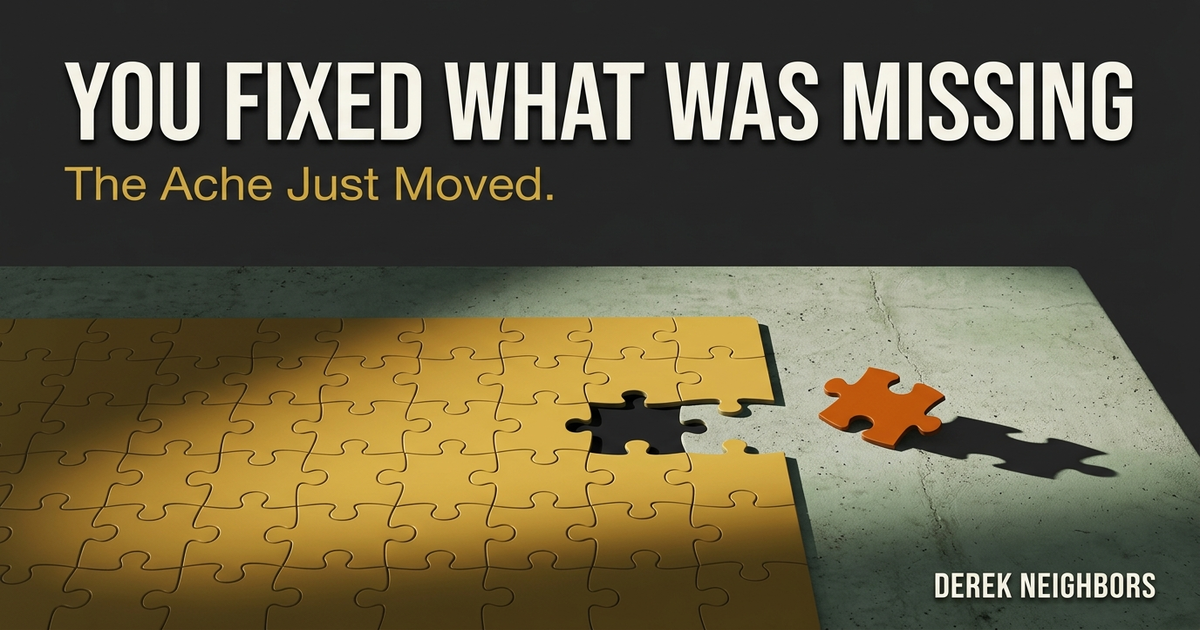
Poros (πόρος): Meaning, Definition & Modern Application
PO-ros
A way through, passage, or resource that enables movement past obstacles. In philosophy, the capacity to find means, solutions, or paths forward when confronted with difficulty or apparent impossibility.
Etymology
From the Greek poros, meaning passage, ford, or way through, derived from the root per- (to pass through, to cross). Originally referred to physical crossings like river fords or mountain passes. The term evolved to encompass any means of passage, including wealth and resources (poroi as revenues), and finally intellectual resourcefulness or the discovery of solutions to problems.
Deep Analysis
The concept of poros occupies a crucial position in Greek thought, serving as the antithesis to aporia, that state of being without passage that Socrates famously induced in his interlocutors. While much philosophical attention has been given to aporia as a pedagogical tool, the positive concept of poros, the discovery or possession of a way through, deserves equal examination.
In Plato’s Symposium, Poros appears as a deity, the son of Metis (cunning wisdom) and the father of Eros through his union with Penia (poverty or need). This mythological framing reveals something essential about the Greek understanding: resourcefulness is born from wisdom but creates love and desire through its encounter with lack. The philosophical implication is that poros does not exist in isolation. It emerges precisely in response to need, to the experience of being blocked.
Aristotle’s treatment of poros appears most directly in his economic and political writings, where poroi refers to revenues or means of support for the state. Yet this practical usage illuminates the broader philosophical meaning: poros concerns the question of how an entity, whether individual or collective, acquires what it needs to flourish. In the Nicomachean Ethics, the practically wise person (phronimos) demonstrates poros through their capacity to identify the right means toward good ends. Phronesis itself might be understood as the intellectual virtue that generates poros in ethical matters.
The relationship between poros and techne merits careful attention. Technical knowledge provides established passages through particular domains of challenge. The carpenter has poros for working wood; the physician has poros for treating disease. Yet poros transcends mere technical competence. The deepest poros involves finding passages where no established path exists, what we might call creative or innovative resourcefulness.
This creative dimension connects poros to kairos, the opportune moment. True resourcefulness often involves recognizing when a passage opens, a window of possibility that requires swift action. The passages through obstacles are not always available. They appear, and the resourceful person must be prepared to move through them.
The Stoics, while not using poros as a technical term, embodied its spirit in their doctrine of working with what is given. Marcus Aurelius repeatedly emphasizes that obstacles contain their own solutions: “The impediment to action advances action. What stands in the way becomes the way.” This Stoic formulation captures the poros mentality perfectly. The obstacle is not separate from the passage; properly understood, it reveals the passage.
A tension exists in the concept between receiving and creating passages. Sometimes poros is discovered, a pre-existing path revealed to the seeker. Other times poros is constructed, built through effort and ingenuity where no path previously existed. The Greeks seem to have held both meanings simultaneously, suggesting that the distinction may be less important than the orientation: the person of poros approaches obstacles expecting that passage is possible and commits to finding or making it.
The ethical dimensions of poros become apparent when we consider what counts as a legitimate passage. Not every way through is honorable. The deceptive person might find ways around obstacles through manipulation or fraud. The Greeks would likely distinguish between poros proper and its corruptions. True poros, aligned with virtue, finds passages that do not compromise integrity or harm others unjustly. This connects poros to the broader Greek concern with excellence: the best resourcefulness achieves its aims through means that are themselves admirable.
For contemporary application, poros offers a powerful reframe. Rather than categorizing situations as possible or impossible, we might ask whether we have found the passage yet. This shifts the question from a static judgment to a dynamic inquiry. It also distributes responsibility: if no passage has been found, further seeking is required, not resignation.
The cultivation of poros requires what we might call resource sensitivity: the ongoing awareness of what means are available and how they might be combined or deployed. This sensitivity must be paired with creative confidence, the belief that passages exist even when they are not immediately visible. Together, these capacities enable the practical wisdom that navigates from need to fulfillment, from aporia to euporia.
Modern Application
When you face an impasse, poros reminds you that your task is not to wish the obstacle away but to discover the passage through it. You cultivate poros by treating every blocked path as an invitation to creative problem-solving. This resourcefulness becomes your defining leadership quality when others see only walls.
Historical Examples
Themistocles at Salamis demonstrates poros at civilizational scale. When the Persian army under Xerxes invaded Greece in 480 BCE, Athens faced apparent annihilation. The land routes were lost after Thermopylae. Themistocles found the passage that others missed: the narrow strait of Salamis, where Persian numerical superiority became a liability. According to Herodotus, Themistocles had prepared this passage years earlier by convincing Athens to build a navy. His resourcefulness lay not just in the moment of crisis but in creating future passages before they were needed.
Xenophon’s leadership of the Ten Thousand offers another striking example. When the Greek mercenaries found themselves stranded deep in Persian territory after the death of Cyrus and the treacherous murder of their generals, they faced what seemed like certain death. Xenophon, then a relatively young and inexperienced participant, emerged to help find the passage home. As recorded in the Anabasis, he repeatedly discovered ways through: over mountains the Persians assumed impassable, through hostile territories via negotiation and strategic retreat, across rivers using improvised methods. His genius was treating each impossible obstacle as a problem admitting solution.
Demosthenes, the orator, exemplifies poros in personal development. Plutarch records that as a young man, Demosthenes had a speech impediment and weak delivery. Rather than accepting these limitations as final, he found passages through his deficits. He practiced speaking with pebbles in his mouth to strengthen his articulation. He declaimed by the seashore to build vocal power against the waves. He studied in an underground room, having shaved half his head so shame would prevent him from emerging before he was ready. Where natural talent was absent, constructed passage took its place.
How to Practice Poros
Begin each morning by identifying one current obstacle that feels impassable. Write it down in concrete terms.
Ask the poros questions: What resources have I not yet considered? Who has crossed this type of barrier before? What would passage look like if it existed?
Create a resource inventory. List every asset at your disposal: skills, relationships, knowledge, time, capital, influence. Review this inventory against your obstacle.
Practice micro-poros daily. When you encounter small frustrations, pause before reacting. Ask: What is the passage here? Train yourself to see ways through minor annoyances before tackling major barriers.
Study historical passages. Read biographies of leaders who found ways through seemingly impossible situations. Note their methods, not just their outcomes.
Reframe language. Replace “I can’t” with “I haven’t found the way through yet.” Replace “impossible” with “the passage is hidden.”
Seek collaboration. When stuck, present your obstacle to trusted advisors not for sympathy but for fresh perspective on potential passages.
Review weekly: Which obstacles did you navigate? Which remain? What patterns emerge in your successful passages?
Application Examples
A startup faces a cash crisis with payroll due in two weeks and no immediate funding prospects. The founder has exhausted traditional investor channels and bank lending options seem closed.
Poros demands expanding the definition of resources. Revenue acceleration, customer prepayments, strategic partnerships, or even temporary pivots may represent passages invisible to those focused only on conventional funding routes.
You want to pursue an advanced degree but family obligations and financial constraints make traditional full-time enrollment impossible. The goal seems foreclosed.
Poros reveals that the apparent binary of ‘enroll or don’t’ obscures numerous passages: part-time programs, online credentials, employer sponsorship, phased approaches, or alternative learning paths that achieve the underlying goal.
A team leader faces a critical deadline but loses two key team members unexpectedly. The remaining team lacks specific skills needed to complete the project.
Poros thinking shifts from mourning lost resources to mapping available ones: cross-training possibilities, external contractors, scope adjustments, or redefining success criteria. The passage exists; finding it requires releasing attachment to the original plan.
Two department heads have incompatible positions on a strategic initiative. Each believes their approach is essential and compromise seems to mean failure for both.
Poros in negotiation involves discovering passages that transcend the stated positions. Often the apparent impasse dissolves when underlying interests are surfaced, revealing ways through that neither party initially conceived.
A professional seeks to transition into a new industry but lacks direct experience. Every job posting requires qualifications they don’t possess, and recruiters won’t return calls.
Poros demands creative passage-making: adjacent moves, bridge roles, volunteer work, portfolio projects, or relationship-building that creates paths where formal channels remain closed. The front door is not the only entrance.
Common Misconceptions
Many assume poros means optimism or positive thinking. This fundamentally misreads the concept. Poros is not about believing things will work out; it is about actively seeking and creating passages through obstacles. A person with true poros might be deeply pessimistic about any given passage succeeding while still committing to the search. The orientation is practical, not emotional.
Another error confuses poros with having abundant resources. Wealthy individuals or well-funded organizations may actually demonstrate less poros than their constrained counterparts. Poros is the capacity to find ways through with whatever is available. Those who have always had obvious passages often never develop the skill of finding hidden ones. Penia, poverty, was Poros’s lover in Plato’s myth for good reason: need generates resourcefulness.
Some treat poros as mere cleverness or cunning. While Metis, cunning intelligence, is indeed the mother of Poros in mythology, the concept encompasses more than tricks or shortcuts. True poros includes ethical dimension: finding passages that do not compromise integrity. The con artist may navigate obstacles, but through corrupted means that the Greeks would distinguish from genuine resourcefulness.
I discovered poros the hard way, when every door I tried to open had been locked. Years ago, I was working with a company that had painted itself into a corner. They had committed to a major product launch, but three weeks before the deadline, their primary technical lead quit without notice. The team came to me looking for a miracle, and I had nothing.
What I learned in those weeks changed how I think about obstacles permanently. We didn’t find a replacement technical lead. That passage was genuinely closed. But in our desperation, we discovered other passages. A junior developer had been quietly building related skills. A former contractor was available for two weeks. A feature we thought was essential turned out to be removable without customer impact. The launch happened, imperfect but successful.
I now teach teams to conduct what I call ‘resource inventories’ before panic sets in. When you feel blocked, you’ve usually narrowed your vision to a single type of solution. Poros demands peripheral vision. What resources exist that you’ve been ignoring? What combinations haven’t you tried?
The hardest part of practicing poros is the emotional work. When you’re stuck, the last thing you want to do is calmly assess available passages. You want to complain, blame, or give up. I’ve found that the discipline of asking ‘what is the passage here?’ before any other response creates a different kind of leader. Not someone who pretends obstacles don’t exist, but someone who treats them as puzzles rather than verdicts.
My experience has taught me that passage-finding is a skill that improves with practice. The more obstacles you navigate, the more quickly you recognize the shape of hidden passages in new situations. This is why I encourage leaders to take on constrained challenges deliberately. Work with limited budgets. Accept impossible timelines occasionally. Each navigation builds your poros capacity for when the stakes truly matter.
Frequently Asked Questions
What is the difference between poros and euporia?
Poros refers to the passage, resource, or way through itself, while euporia describes the state of having found that passage or possessing abundant resources. Poros is the bridge; euporia is the experience of crossing it successfully.
How does poros relate to aporia in Greek philosophy?
Poros and aporia form a philosophical pair. Aporia is the state of being without passage, the experience of impasse or perplexity. Poros represents the breakthrough or discovery that resolves aporia. Together they describe the cycle of intellectual and practical struggle followed by resolution.
How can I develop poros as a leadership skill?
Develop poros by systematically expanding your resource awareness and practicing creative problem-solving under constraints. Study how others have navigated similar obstacles, build diverse networks that offer varied perspectives, and cultivate the habit of asking 'what passage exists?' before concluding something is impossible.