Aporia (ἀπορία): Meaning, Definition & Modern Application
ah-po-REE-ah
A state of puzzlement or impasse where contradictory arguments appear equally valid, leading to productive perplexity. In Socratic method, the recognition that one's assumed knowledge has failed.
Etymology
From Greek a- (without) and poros (passage, way through), literally meaning ‘without passage’ or ‘pathless.’ The term evolved from describing physical impassability to intellectual deadlock. Plato used it to describe the bewilderment Socrates induced in interlocutors, while Aristotle employed it methodologically to identify genuine philosophical problems requiring resolution.
Deep Analysis
The philosophical power of aporia lies in its paradoxical nature: it is simultaneously an ending and a beginning, a collapse of false knowledge that creates the conditions for genuine understanding. To grasp its significance requires moving beyond the simple definition of ‘puzzlement’ into the methodological and existential dimensions that Greek thinkers explored.
In Plato’s early dialogues, aporia functions as the dramatic climax of Socratic inquiry. The Meno provides the paradigmatic case. When Meno confidently defines virtue, Socrates subjects each definition to rigorous examination through the elenchus, revealing internal contradictions. Meno eventually compares Socrates to a torpedo fish that numbs everything it touches. Crucially, Socrates does not treat this numbness as failure. He insists that Meno is now ‘better off’ for recognizing his ignorance than he was in his false confidence.
This reveals the first dimension of aporia: its purgative function. The Greek medical tradition spoke of catharsis as the expulsion of harmful substances. Socratic aporia operates similarly on the intellectual level, purging unfounded opinions (doxa) that masquerade as knowledge (episteme). The discomfort of aporia is the discomfort of having comfortable illusions stripped away.
Aristotle transformed aporia from a Socratic outcome into a philosophical method. In the Metaphysics, he argues that one must begin philosophical inquiry by surveying the aporiai, the genuine puzzles and competing positions on a question. ‘For those who wish to get clear of difficulties it is advantageous to state the difficulties well,’ he writes. For Aristotle, a problem that generates no aporia is either trivial or not yet properly understood. The depth of a philosophical question can be measured by the strength of the aporia it produces.
This methodological use reveals something profound about the relationship between aporia and phronesis, practical wisdom. The practically wise person does not eliminate uncertainty but rather learns to navigate it productively. In the Nicomachean Ethics, Aristotle repeatedly acknowledges that ethical questions resist mathematical precision. The phronimos, the person of practical wisdom, acts well precisely because they have experienced the genuine difficulty of moral choice and developed judgment through that experience.
The Pyrrhonian Skeptics took aporia in a more radical direction. For Sextus Empiricus, the goal was epochē, suspension of judgment, achieved through recognizing that opposing arguments on any question could be equally balanced. But whereas Socratic aporia was transitional, a stage on the way to knowledge, Pyrrhonian aporia became a permanent dwelling place. The Skeptics argued that accepting aporia as final actually produced ataraxia, tranquility, by freeing one from the anxiety of defending uncertain beliefs.
This creates a productive tension for the practitioner. Is aporia a passage or a destination? The answer depends on the domain of inquiry. In technical matters, aporia should spur further investigation. In existential matters, where certainty may be impossible, aporia might be the honest resting place. The wisdom lies in knowing which applies.
The connection between aporia and aletheia (truth) is also significant. The Greek understanding of truth as ‘unconcealment’ suggests that reality must be actively disclosed against a background of hiddenness. Aporia marks the moment of recognizing that concealment, the moment when what seemed clear reveals itself as obscure. Without this recognition, inquiry never begins.
For leadership, aporia challenges the cult of confidence. Modern management literature often treats uncertainty as a problem to be overcome through better data or clearer vision. The Greek tradition suggests otherwise: genuine leadership requires the courage to acknowledge when one is genuinely puzzled, and the intellectual honesty to resist premature resolution. The leader who has never experienced aporia has never engaged seriously with the difficulty of their situation.
Modern Application
When you encounter genuine confusion in your leadership, resist the urge to manufacture false clarity. Your willingness to sit in uncertainty, to acknowledge what you do not know, creates space for authentic discovery. The leader who can say 'I am genuinely puzzled by this' invites others into collaborative thinking rather than performative agreement.
Historical Examples
The trial of Socrates in 399 BCE exemplifies aporia as a civic provocation. Plato’s Apology presents Socrates explaining that his reputation for wisdom began when the oracle at Delphi declared no one wiser. Puzzled by this, Socrates interrogated those reputed to be wise, consistently revealing that they could not withstand examination. His interlocutors experienced aporia, and many resented it. The charges against Socrates, corrupting the youth and impiety, were essentially accusations of spreading aporia, of making people question what they thought they knew. His execution demonstrated that societies often prefer false certainty to productive perplexity.
Aristotle’s approach to the problem of motion reveals aporia as methodological rigor. In the Physics, he surveys the aporiai generated by Zeno’s paradoxes, particularly the puzzle of how Achilles can overtake the tortoise if he must first reach every point the tortoise has passed. Rather than dismissing these as sophistries, Aristotle treats them as genuine difficulties requiring resolution. His solution involving the distinction between potential and actual infinity emerges precisely from honoring the aporia rather than evading it. As Aristotle notes in the Topics, ‘To untie a knot one must first know how it is tied.’
Plutarch records how the Spartan king Agesilaus II encountered productive aporia in diplomacy. When the Persian satrap Tissaphernes demanded that Sparta abandon Greek cities in Asia Minor, Agesilaus initially prepared for war. But envoys presented arguments for peace that genuinely complicated his certainties about Spartan honor and practical strategy. According to Plutarch, Agesilaus suspended his planned offensive for three months, using the time to strengthen alliances and prepare resources. His willingness to dwell in strategic aporia rather than act precipitously allowed him to launch a more effective campaign when he finally moved. The episode illustrates how acknowledged uncertainty can be tactically superior to forced confidence.
How to Practice Aporia
Start each week by identifying one assumption in your leadership that you have never questioned. Write it down and spend fifteen minutes listing reasons it might be wrong.
Track moments when you feel intellectually stuck. Rather than pushing through, pause and articulate precisely what makes the problem difficult. Name the competing considerations that create the impasse.
Seek out conversations with people who disagree with you. When you encounter a strong counterargument, resist immediately defending your position. Instead, say: ‘That genuinely challenges my thinking. Let me sit with it.’
Review your decisions monthly. For each major choice, ask: ‘Where did I experience real uncertainty? Did I honor that uncertainty or paper over it?’
Practice the Socratic exercise of definition. Take a concept you use daily, such as ‘leadership’ or ‘success,’ and attempt to define it precisely. When you find contradictions or gaps, note them without resolving them immediately.
Before important meetings, write down what you do not understand about the situation. Share at least one genuine question with your team, not a leading question, but an authentic expression of perplexity.
Application Examples
A CEO faces conflicting data about a major acquisition. Financial models suggest strong returns, but cultural due diligence reveals significant integration risks. Each analysis seems rigorous, yet they point to opposite conclusions.
Aporia here is not a failure of analysis but a recognition of genuine complexity. The executive who names this impasse honestly can engage advisors in collaborative problem-solving rather than forcing premature certainty.
You have always believed in radical honesty, yet you face a situation where complete transparency would devastate someone you love without producing any benefit. Your ethical commitments seem to contradict each other.
This aporia reveals that your principle was never as simple as you assumed. Sitting with the contradiction deepens your understanding of what honesty actually requires.
A team leader discovers that two high performers have fundamentally incompatible working styles. Both are valuable; neither is wrong. Every attempted compromise has failed.
Aporia forces the leader to question whether ‘team harmony’ is always achievable or even desirable. Some productive tensions cannot be resolved, only managed with clear-eyed acceptance.
A mentor realizes that their most successful mentees often ignored their advice, while those who followed it precisely achieved mediocre results. Their theory of mentorship is contradicted by their evidence.
This aporia suggests that effective mentorship may be less about transmitting wisdom and more about provoking independent thinking, even rebellion.
A compliance officer discovers that strictly following regulations would cause significant harm to vulnerable clients, while bending them would serve justice but violate professional duties.
Aporia here exposes the limits of rule-based ethics. It demands engagement with the particular situation rather than mechanical application of principles.
Common Misconceptions
Many assume aporia indicates intellectual failure. The opposite is true. Arriving at genuine aporia through rigorous inquiry demonstrates sophisticated understanding. Those who never experience it have either engaged with trivial questions or failed to think carefully enough to discover the real difficulties.
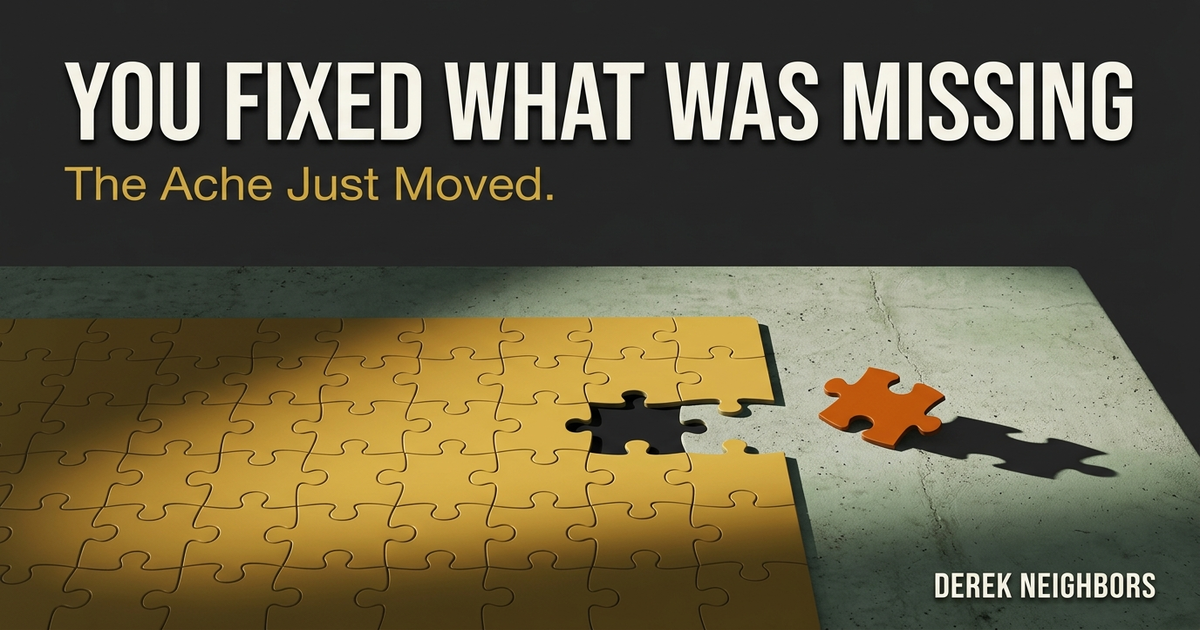
A second error treats aporia as purely negative, a problem to escape as quickly as possible. This misses its productive dimension. Socrates compared himself to a midwife: aporia is the labor pain that precedes intellectual birth. Rushing past it prevents the emergence of genuine insight. The philosopher who lingers in aporia often sees what the impatient thinker misses.
Some confuse aporia with indecision or paralysis. Aporia is a specific epistemic state, not a personality trait or decision-making failure. A leader can acknowledge genuine intellectual puzzlement while still acting decisively based on available evidence and practical necessity. Recognizing you do not fully understand a situation does not prevent you from responding to it.
I spent years as an agile coach believing I had answers. My job, I thought, was to diagnose organizational dysfunction and prescribe solutions. Teams came to me stuck, and I unstuck them. Clean. Simple. Effective.
Then I encountered a team that broke my frameworks. They had tried everything I would have suggested. Nothing worked. And when I sat with them, really sat with them, I realized I had no idea what to do. The honest response was: ‘I am genuinely puzzled.’
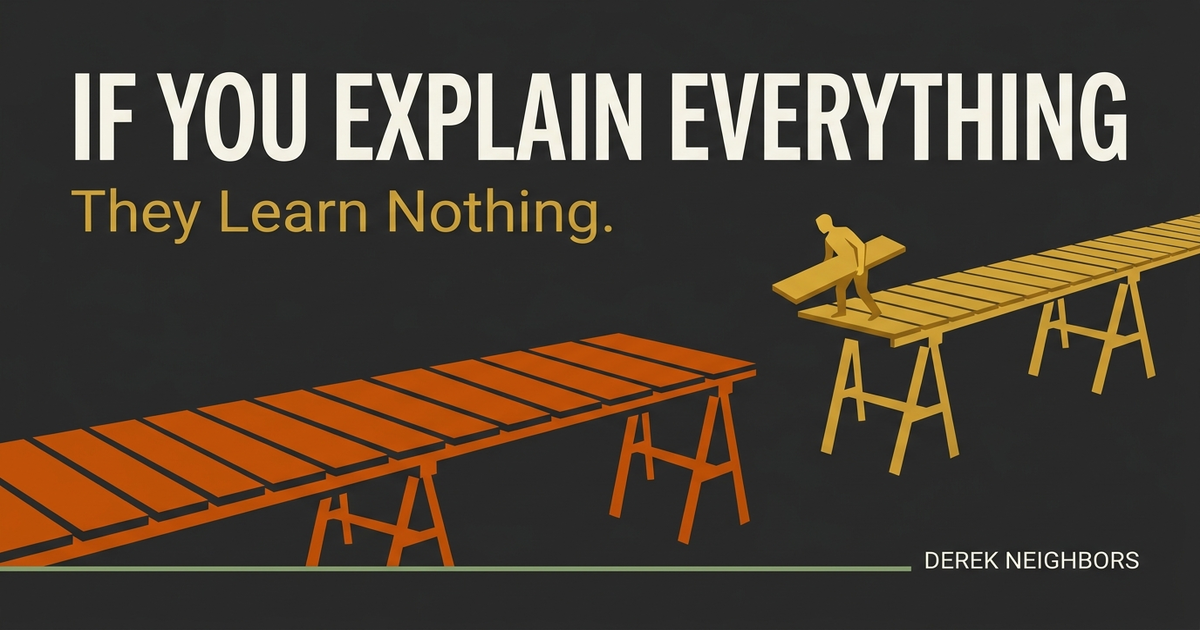
What happened next transformed my practice. The team leaned in rather than dismissing me. My admission of aporia gave them permission to stop pretending they understood their own situation. We mapped out exactly why we were stuck, naming the competing forces that made every option inadequate. We did not solve the problem that day. But we understood it differently.
I now believe that most coaching failures come from premature resolution. We rush past aporia because it feels like incompetence. Clients pay for answers, not puzzlement. But the most valuable thing I can offer is often the disciplined refusal to pretend I know when I do not.
Practically, I have learned to distinguish productive aporia from lazy confusion. Productive aporia emerges from rigor. You have thought hard, gathered evidence, tested assumptions, and still find yourself at an impasse. Lazy confusion just means you have not done the work.
I now explicitly name aporia in sessions. ‘I notice we have hit a genuine impasse. Let us map it rather than resolve it.’ This simple move changes the dynamic entirely. Leaders who felt pressure to have answers discover the relief of shared perplexity. And often, the map itself reveals the way forward.
Frequently Asked Questions
What is aporia in philosophy?
Aporia is a state of genuine intellectual puzzlement where one recognizes that previously held beliefs are inadequate or contradictory. In Socratic dialogues, it marks the productive moment when false confidence dissolves and authentic inquiry becomes possible.
How is aporia different from confusion?
Ordinary confusion is unfocused and uncomfortable. Aporia is a specific, philosophically productive state where you recognize exactly why you are stuck. It emerges from rigorous examination rather than from lack of information, and it opens pathways to deeper understanding.
Why did Socrates use aporia in his teaching?
Socrates believed that recognizing one's ignorance was the first step toward wisdom. By leading interlocutors into aporia through questioning, he stripped away false certainties and created the intellectual humility necessary for genuine learning.