Philochrematia (φιλοχρηματία): Meaning, Definition & Modern Application
fee-lo-kray-mah-TEE-ah
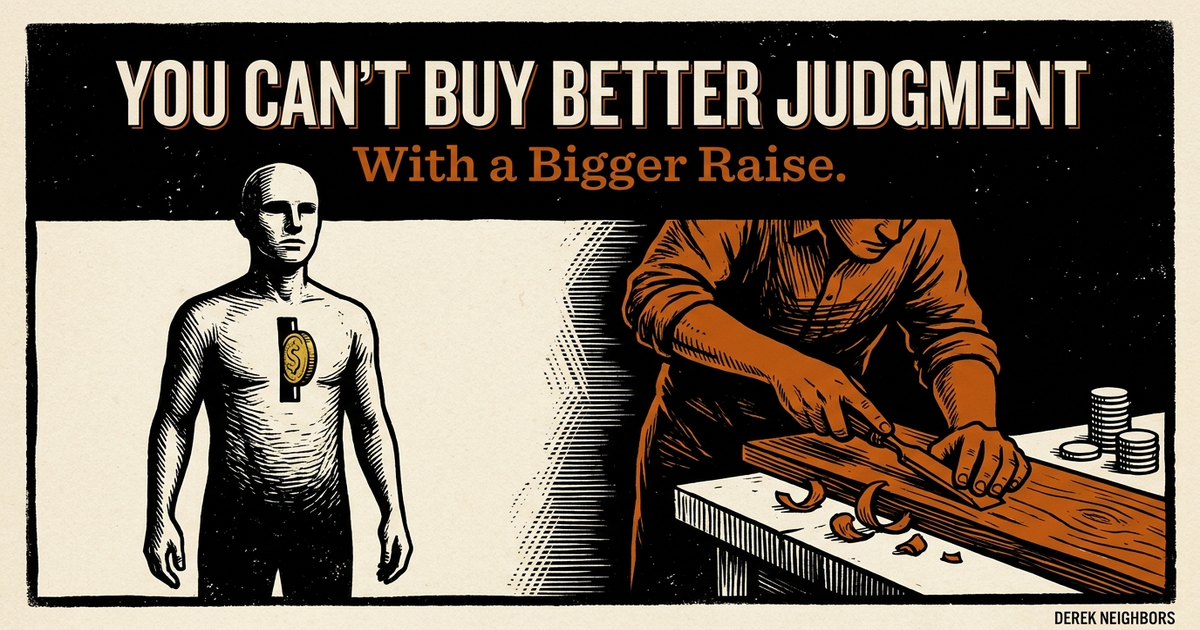
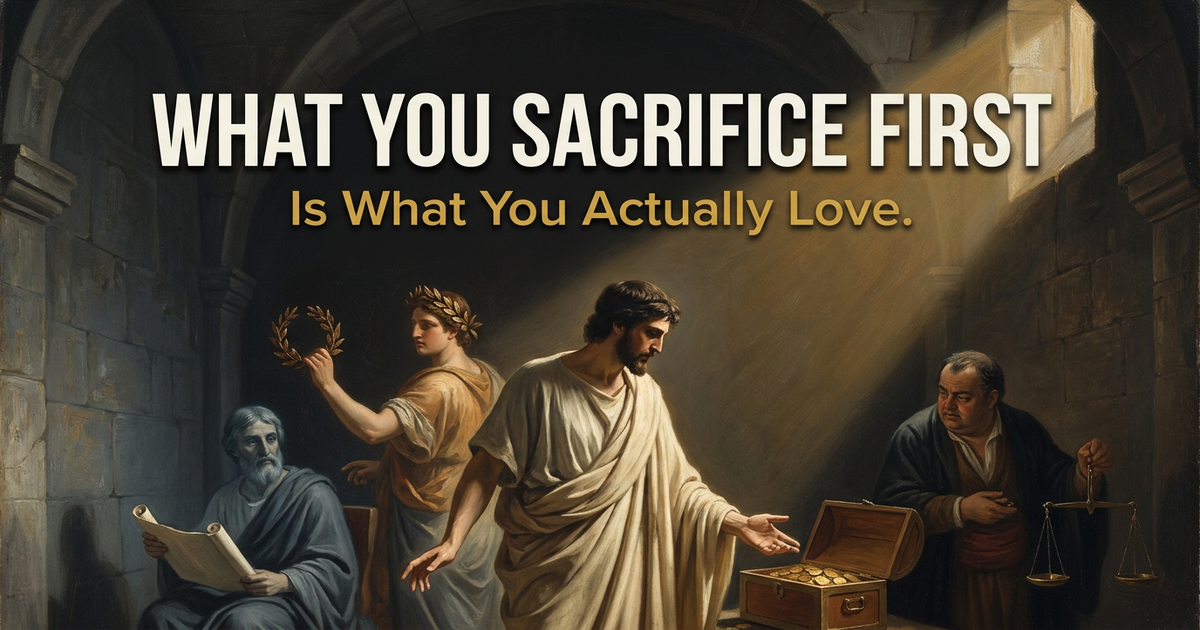
The excessive love of money and material wealth, viewed by ancient philosophers as a corruption of the soul that subordinates virtue and wisdom to the pursuit of possessions.
Etymology
Derived from philos (loving, fond of) combined with chrēmata (money, goods, possessions, from chraomai, to use or need). The compound emerged in classical Greek discourse to name the specific vice of wealth-obsession. Unlike neutral terms for commerce, philochrematia carried explicit moral censure, marking the pathological attachment to acquisition over use.
Deep Analysis
Plato’s treatment of philochrematia in the Republic establishes its foundational importance for understanding both individual corruption and political decay. In his tripartite psychology, the soul’s rational, spirited, and appetitive elements must maintain proper hierarchy. When the appetitive element, whose natural object includes wealth, dominates reason, the soul falls into disorder. The oligarchic personality type emerges precisely from this corruption: a person who has made the money-loving part sovereign, who evaluates all things by the standard of acquisition.
Aristotle deepens this analysis in the Politics and Nicomachean Ethics by distinguishing between two forms of wealth-getting. The natural form, oikonomia, concerns household management and the acquisition of goods genuinely useful for living well. The unnatural form, chrematistike, pursues unlimited accumulation as an end in itself. This distinction proves philosophically crucial. Money, Aristotle observes, is a human invention designed to facilitate exchange. Its value is conventional, not natural. When someone makes the accumulation of this conventional measure the purpose of life, they mistake the instrument for the end.
The psychological mechanism behind philochrematia reveals something profound about human desire. Money, unlike other objects of appetite, has no natural limit. You can eat only so much food, wear only so many garments. But money’s abstraction allows infinite accumulation without satiation. Aristotle identifies this as the vice’s peculiar danger: it promises security and fulfillment while structurally preventing satisfaction. The lover of money has chosen an infinite pursuit, guaranteeing perpetual lack.
Seneca addresses philochrematia from the Stoic perspective with characteristic directness. In his letters to Lucilius, he observes that the problem lies not in wealth itself but in the soul’s orientation toward it. A wise person may possess great wealth without being possessed by it. Yet Seneca acknowledges how rare this proves in practice. Wealth exercises a gravitational pull on attention, and the soul habituated to acquisition finds it increasingly difficult to attend to wisdom, virtue, or the common good.
The connection between philochrematia and political corruption receives extensive treatment in ancient sources. Thucydides’ analysis of Athens’s decline traces the city’s growing philochrematia, the substitution of commercial for civic virtue. When citizens evaluate policy primarily by its effects on their private wealth, the polis loses its capacity for genuine deliberation about the good. Plato’s account of regime decay follows a similar logic: the degeneration from aristocracy to oligarchy occurs precisely when the love of money displaces the love of excellence.
The vice also reveals tensions within ancient thought about self-sufficiency. Autarkeia, the ideal of needing little, appears to contradict legitimate provision for oneself and one’s household. Aristotle addresses this by insisting on the difference between enough and too much. The virtuous person seeks sufficient external goods to support the activities that constitute flourishing but recognizes that excessive wealth becomes an obstacle rather than an aid. Beyond a certain threshold, the management of possessions consumes the time and attention required for philosophy, friendship, and civic participation.
What makes philochrematia particularly insidious is its capacity for rationalization. The money-lover can always construct plausible justifications: provision for family, preparation for misfortune, resources for future generosity. These justifications contain genuine goods, which is precisely why they prove so effective at concealing the underlying disorder. The philosophical task is not to reject these goods but to examine whether they function as reasons or as rationalizations for unlimited acquisition.
The ancient treatment of philochrematia challenges modern assumptions about economic motivation. Contemporary economics often treats wealth-maximization as rationally self-evident, requiring no explanation. The philosophical tradition inverts this assumption: why would anyone make the accumulation of a conventional measure the organizing principle of their existence? The answer points toward deeper pathologies, the fear of death and contingency, the substitution of having for being, the attempt to secure significance through possession rather than excellence.
Modern Application
When you find yourself measuring success primarily in financial terms or feeling anxiety about wealth accumulation beyond genuine need, you are encountering philochrematia's pull. Examine whether your financial goals serve your deeper purpose or have become the purpose itself. The antidote lies not in poverty but in restoring money to its proper role as instrument rather than master.
Historical Examples
Crassus, the wealthiest man in late Republican Rome, exemplifies philochrematia’s ultimate trajectory. Plutarch details how his wealth, acquired through fire-sales of burning properties, slave trading, and silver mines, never produced satisfaction. Despite possessing fortune beyond calculation, Crassus craved military glory to match his commercial success, leading him to the disastrous Parthian campaign. His death at Carrhae, where legend holds the Parthians poured molten gold down his throat, became a moral emblem of wealth-love’s self-destruction. Plutarch explicitly connects his insatiable acquisition to his military overreach: the same disposition that could never possess enough also could not accept sufficient honor.
Diogenes of Sinope, the Cynic philosopher, represents the radical counter-position. Plutarch and Diogenes Laertius record his encounters with Alexander the Great, where the philosopher, living in a ceramic jar, asked only that the world’s most powerful man step aside and stop blocking his sunlight. Diogenes deliberately practiced poverty not from necessity but as philosophical demonstration that human flourishing requires nothing that money can provide. His reported statement, ‘the love of money is the mother-city of all evils,’ directly addresses philochrematia as a root corruption.
The Athenian statesman Pericles navigated the tension more complexly. Thucydides portrays him as personally incorruptible, refusing the bribes that other politicians accepted readily. Yet Pericles directed Athenian policy toward the acquisition of empire and treasury, the collective philochrematia that would eventually corrupt the democracy. His famous funeral oration celebrates Athenian wealth and power alongside virtue and wisdom, an unstable combination that his successors could not maintain. After Pericles’ death, Thucydides shows how leaders increasingly appealed to citizens’ financial interests rather than their civic virtue, the political manifestation of the very love of money Pericles had personally rejected.
How to Practice Philochrematia
Begin each morning by writing down one thing you value that cannot be purchased. Make this practice concrete and specific, not abstract.
Track your mental attention to money throughout the day. Note when financial concerns intrude on unrelated activities. Count these intrusions for one week to establish your baseline.
Review your calendar and spending from the past month. Calculate the ratio of time and resources devoted to wealth accumulation versus wisdom cultivation, relationships, and service. Adjust one concrete allocation this week.
Practice deliberate generosity with increasing discomfort. Give away something that produces a slight pang, then sit with that feeling. Examine what the pang reveals about your attachment.
Conduct a monthly inventory: List your possessions in one column and their genuine use in another. For items unused in six months, ask whether ownership itself has become the satisfaction.
Seek one conversation weekly about values, meaning, or purpose that contains zero financial content. Notice if this proves difficult.
Before any significant purchase, wait 72 hours and ask: Am I buying utility or chasing the feeling of acquisition? The delay exposes the difference between need and compulsion.
Application Examples
A founder faces a choice between selling her company for substantial personal wealth or maintaining independence to pursue a mission she believes matters. The acquisition offer triggers weeks of obsessive calculation, portfolio projections, and lifestyle fantasies that crowd out strategic thinking.
Philochrematia reveals itself not in the decision but in how the financial dimension colonizes all other considerations, making genuine evaluation impossible.
A professional earning well above his needs finds himself unable to enjoy vacations, meals, or time with family without calculating their cost and comparing alternatives. His financial security is objectively established, yet the habit of monetary evaluation has become compulsive.
The disorder has migrated from the balance sheet to the psyche, transforming all experience into transactions and preventing genuine presence.
An executive team, despite achieving profitability, continues to pressure for cost-cutting that hollows out product quality and employee morale. When pressed, they cannot articulate what financial target would constitute ‘enough’ because no such limit exists in their thinking.
Philochrematia in leadership becomes organizational cancer, optimizing for an infinite metric while destroying the finite goods that justify the enterprise.
A city council debates public investment in parks and cultural institutions. The discussion reduces entirely to economic impact studies and property value effects, with no member able to articulate a civic good that transcends monetary measurement.
When philochrematia captures civic discourse, the political community loses its capacity to deliberate about anything that cannot be priced.
Common Misconceptions
Many assume philochrematia applies only to the extremely wealthy, as if someone of modest means cannot have a disordered relationship with money. The ancient sources consistently identify the disposition, not the quantity possessed, as the issue. A person obsessing over small sums demonstrates the same corruption as the billionaire accumulating beyond all use.
Another error conflates philochrematia with financial prudence or the legitimate desire for security. Aristotle explicitly distinguished between proper household management and pathological accumulation. The vice lies not in attending to material needs but in making wealth the measure of all value. A person can be financially responsible without organizing their entire existence around acquisition.
Some readers interpret the philosophical critique of money-love as endorsing poverty or economic naivety. This misses the sophistication of the ancient analysis. Aristotle and Seneca both acknowledged that external goods, including moderate wealth, support flourishing. The target is not money itself but the soul’s disordered attachment to it, the substitution of having for being, the infinite pursuit that guarantees perpetual dissatisfaction.
I spent the first decade of my career convinced that financial metrics were the most honest measures of value. Revenue, profit margins, valuation multiples, these numbers seemed objective in ways that talk of purpose or culture never could. What I did not recognize was how this conviction shaped everything I saw and could not see.
The turning point came during a consulting engagement with a company that had optimized relentlessly for shareholder value. By every financial measure, they were succeeding. Yet the organization felt hollow. Talented people were leaving. Customer relationships had become purely transactional. Innovation had stalled because no one would invest time in anything without immediate return. The CEO kept asking what was wrong, and I kept looking at the financials, which looked fine.
It took months to recognize that the problem was the very framework I was applying. The organization had developed collective philochrematia. They could no longer perceive, let alone pursue, any good that resisted quantification. Their strategic conversations had become elaborate financial modeling exercises. Their hiring evaluated only revenue potential. Their culture celebrated only deals closed and margins improved.
I now ask leadership teams a diagnostic question: What would you do differently if money were not a factor? The first response is usually dismissive, some version of ‘but money is always a factor.’ That dismissal is the symptom. The inability to even imagine evaluation on non-financial grounds reveals how thoroughly wealth-thinking has captured the imagination.
The antidote I have found most effective is not arguing against financial considerations but expanding the frame of evaluation. What are you optimizing for beyond money, and how would you know if you were succeeding? The question sounds simple, but for organizations and individuals deep in philochrematia’s grip, it proves genuinely difficult. That difficulty is where the work begins.
Frequently Asked Questions
What is philochrematia in Greek philosophy?
Philochrematia is the excessive love of money and material wealth, considered a serious vice by Greek philosophers including Plato and Aristotle. It describes not the practical use of money but the disordered attachment that makes wealth accumulation an end in itself rather than a means to living well.
How is philochrematia different from pleonexia?
While both involve excess, philochrematia specifically targets the love of money and possessions, whereas pleonexia is the broader vice of wanting more than one's share of any good, whether wealth, honor, or pleasure. Philochrematia is one manifestation of the overreaching disposition that pleonexia names.
How can I overcome philochrematia?
Ancient philosophers recommended cultivating autarkeia (self-sufficiency), practicing deliberate generosity, and regularly examining whether your pursuit of wealth serves genuine needs or has become compulsive. The goal is not poverty but right relationship with material goods, using them as instruments for flourishing rather than treating acquisition as the purpose of life.