Kainotomia (καινοτομία): Meaning, Definition & Modern Application
kai-no-to-MEE-ah
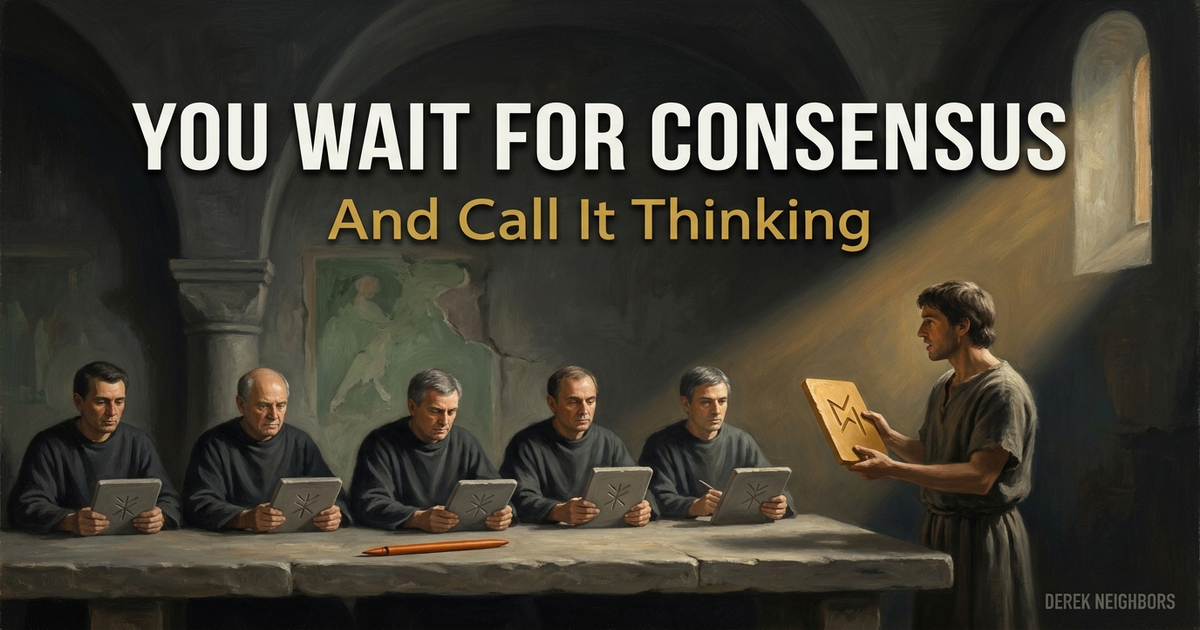
The introduction of novelty or innovation, literally 'cutting new.' In ancient Greek thought, often viewed with suspicion as disruption to established order, yet recognized as necessary for adaptation and progress.
Etymology
Derived from kainos (new, fresh, unprecedented) and temnein (to cut). The compound literally means ‘cutting new ground’ or ‘making a new incision.’ Originally used in mining contexts for opening new shafts, it evolved to describe any introduction of novelty into established systems, whether political, artistic, or philosophical.
Deep Analysis
The Greek relationship with kainotomia reveals a profound tension that modern innovation discourse has largely forgotten. While contemporary culture fetishizes disruption, the ancient Greeks approached novelty with what we might call productive suspicion. This was not mere conservatism but a sophisticated understanding that genuine innovation carries both promise and peril.
Thucydides provides our most illuminating source for this ambivalence. In his account of the Corcyraean revolution, he describes how kainotomia in language itself preceded moral collapse: ‘Words changed their ordinary meaning and took that which was now given them.’ Innovation in meaning became the vehicle for innovation in ethics, and not for the better. The Athenians’ restless philokainia (love of novelty) appears in Thucydides as both their greatest strength and fatal weakness. Their willingness to innovate made them formidable; their inability to stop innovating led to the Sicilian disaster.
Plato’s treatment deepens this complexity. In the Republic and Laws, he expresses profound wariness about innovation in music and education, arguing that changes in artistic forms inevitably produce changes in political character. Yet Plato himself was among the greatest innovators in human intellectual history, creating entirely new modes of philosophical inquiry. This apparent contradiction resolves when we understand that Plato distinguished between innovation that serves truth and innovation that serves appetite. The philosopher must innovate in pursuit of wisdom; the city must resist innovation in pursuit of pleasure.
Aristotle offers a more measured perspective in his Politics. He acknowledges that innovation in law, medicine, and other arts has clearly improved human life, making the case against all innovation untenable. Yet he cautions that laws derive authority partly from habituation, and frequent change weakens this authority even when individual changes represent improvements. Here we find the essential insight: innovation operates within a system of established trust, and each innovation draws upon that trust even as it potentially depletes it.
The relationship between kainotomia and kairos proves essential for practical application. Innovation requires not only the capacity to envision what does not yet exist but the timing to introduce it effectively. The same innovation that fails in one moment succeeds in another. This temporal dimension explains why genuine innovators must also be astute observers of context. They cut new ground precisely where and when cutting serves purpose.
Kainotomia also connects to andreia (courage) in ways that reveal the psychological demands of innovation. To introduce genuine novelty requires facing resistance, often from those whose authority derives from mastery of current methods. The innovator must possess not only vision but the fortitude to withstand opposition, criticism, and the very real possibility of failure. Aristotle’s treatment of courage as the mean between recklessness and cowardice applies directly: the innovator must be bold enough to act on insight yet prudent enough to recognize when conditions make success possible.
The relationship to techne (craft knowledge) presents another dimension. Innovation rarely emerges from ignorance of tradition. The innovator who does not understand what exists cannot meaningfully improve upon it. This explains why the greatest innovations typically come from deep practitioners who have mastered existing methods before transcending them. Kainotomia without techne produces mere novelty; techne without kainotomia produces stagnation.
Perhaps most profound is the connection between kainotomia and metanoia (transformative change of mind). Genuine innovation requires first an internal transformation: the capacity to see beyond current assumptions and imagine genuinely different possibilities. This internal work precedes and enables external innovation. The leader who seeks to innovate without first transforming their own understanding merely rearranges familiar elements rather than creating something truly new.
The paradox at the heart of kainotomia remains generative for contemporary reflection: systems require stability to function, yet stability without adaptation leads to obsolescence. The Greeks understood that wisdom lies not in resolving this tension but in navigating it skillfully. The excellent leader cultivates the discernment to know when established practices serve genuine goods and when they merely serve habit, when innovation represents genuine improvement and when it is restlessness that never becomes a better practice.
Modern Application
When you recognize that sustainable excellence requires periodic reinvention, you engage with kainotomia. Rather than clinging to methods that once served you, you cultivate the discernment to know when established practices have become obstacles. You cut through comfortable routines not for novelty's sake, but because genuine leadership demands the courage to pioneer what does not yet exist.
Historical Examples
Cleisthenes of Athens offers perhaps the most consequential example of kainotomia in political history. Around 508 BCE, facing a city fractured by factional loyalty to aristocratic families, he introduced revolutionary reforms that reorganized Athenian citizenship around geographic rather than kinship ties. This was genuinely unprecedented innovation, cutting new ground in political organization. Aristotle, in his Constitution of Athens, emphasizes both the radical novelty of these reforms and their success in creating more stable democratic institutions. Cleisthenes succeeded because his innovation addressed a genuine structural problem rather than simply imposing novelty.
Themistocles demonstrates kainotomia in military strategy during the Persian invasion of 480 BCE. Herodotus recounts how Themistocles persuaded Athens to invest its silver windfall in a massive naval fleet, an innovation that transformed Athens from a land power into a naval empire. When the Persians invaded, Themistocles pioneered the strategy of abandoning Athens entirely to fight at Salamis. Both moves required the courage to break with established approaches and the wisdom to recognize when circumstances demanded genuinely new responses.
Philip II of Macedon exemplifies kainotomia in military organization. According to Diodorus Siculus, Philip revolutionized Macedonian warfare by developing the sarissa-armed phalanx and integrating cavalry, infantry, and siege warfare in unprecedented ways. His innovations built upon existing Greek military knowledge while transcending it. Notably, Philip did not innovate for novelty’s sake but to solve specific tactical problems he had observed during his years as a hostage in Thebes. His success came from combining deep understanding of traditional methods with the insight to see beyond them.
How to Practice Kainotomia
Start each week by identifying one ‘sacred cow’ in your work or leadership practice. Examine why this approach exists and whether it still serves its original purpose.
Track your innovations in a dedicated journal. Note not only what you changed but why, what resistance you encountered, and what results emerged. Review quarterly to identify patterns in where your innovative instincts prove sound.
Seek out one perspective weekly that challenges your assumptions. Read outside your field. Engage with critics rather than dismissing them. Innovation requires friction with opposing ideas.
Practice ‘creative destruction’ exercises: Take a process that works adequately and redesign it from first principles. Even if you return to the original, this exercise builds your capacity for genuine innovation.
Develop your tolerance for uncertainty. Each day, make one decision faster than feels comfortable. Innovation requires acting before all information arrives.
Conduct monthly ‘assumption audits.’ List five beliefs that guide your current practice. Challenge each with the question: ‘What if the opposite were true?’ This prevents the calcification that innovation must eventually break through.
Application Examples
A manufacturing company has used the same production process for fifteen years with consistent results. A new engineer proposes a completely redesigned workflow that would require six months of disruption but promises thirty percent efficiency gains.
Kainotomia demands evaluating whether the promised improvement justifies the real cost of disrupting proven systems. Innovation must earn its place against established success.
You have followed the same morning routine for years, but it no longer energizes you. Rather than simply disrupting it with random changes, you systematically identify which elements serve their purpose and which have become mere habit.
Personal innovation requires the same discernment as organizational change: preserving what genuinely works while cutting away what merely persists through inertia.
A newly promoted director inherits a team with established processes the previous leader developed. Despite seeing potential improvements, she spends her first ninety days understanding why current approaches exist before proposing any changes.
Kainotomia exercised prematurely destroys the trust that makes future innovation possible. Understanding precedes legitimate transformation.
A professor recognizes that traditional lecture formats fail to engage students effectively. Rather than abandoning lectures entirely for untested methods, she introduces targeted innovations while preserving elements that facilitate deep learning.
Sustainable innovation often combines new approaches with proven foundations rather than wholesale replacement.
A couple married for twenty years realizes their communication patterns have become stale and defensive. Instead of dramatic relationship overhauls, they introduce small innovations: new questions, different contexts for difficult conversations, deliberate breaks from routine.
Even intimate systems require periodic kainotomia, though the innovation that transforms relationships often appears modest from outside.
Common Misconceptions
Many assume kainotomia celebrates any form of change or disruption. The Greek understanding was far more discriminating. Innovation that does not improve upon existing practice was viewed as hubris, a dangerous overreach that destabilizes without building better. The modern equation of innovation with virtue would have puzzled ancient thinkers.
Another error conflates kainotomia with the rejection of tradition. Genuine innovation typically emerges from deep engagement with existing knowledge, not ignorance of it. The innovator who dismisses tradition as outdated usually produces shallow novelty rather than meaningful improvement. Kainotomia requires understanding what you seek to surpass.
People often believe innovation requires dramatic, visible change. The Greek term carries connotations of cutting, incision, and opening. Often the most significant innovations prove quite targeted: a precise adjustment to a complex system that produces cascading improvements. The compulsion to make innovation visible often leads to performative changes that accomplish little.
I spent years in the agile software community watching teams worship innovation for its own sake. Every sprint brought new frameworks, new tools, new methodologies. Teams would barely understand one approach before leadership demanded they adopt something newer. The results were predictable: exhaustion, cynicism, and paradoxically, genuine stagnation beneath the surface churning.
My understanding of kainotomia shifted when I worked with a team that had used the same basic process for three years. Their competitors called them dinosaurs. Their results called them exceptional. When I asked the team lead about their resistance to newer methods, she said something that stuck with me: ‘We change things all the time. We changed five things last month. But we changed them because we understood why they weren’t working, not because someone published a blog post about something shiny.’
That distinction transformed my coaching practice. I stopped asking teams ‘What could you innovate?’ and started asking ‘What do you understand well enough to improve?’ The difference sounds subtle but proves profound. The first question generates lists of things people read about. The second generates genuine insight about actual problems.
I now see kainotomia as a privilege that must be earned through understanding. When I encounter a system or practice that seems ripe for disruption, my first question is whether I truly understand why it exists in its current form. Nine times out of ten, patient investigation reveals wisdom I initially missed. The tenth time, my innovation succeeds precisely because I understood what I was replacing.
The hardest lesson has been learning when not to innovate. My natural tendency pulls toward change. Sitting with a functional system that could theoretically be better feels like failure of imagination. But I have learned that constant innovation creates its own dysfunction. Teams need periods of stability to master their current approaches. Leaders who cannot resist the urge to innovate often prevent the very excellence their innovations aim to create.
Frequently Asked Questions
What is kainotomia in Greek philosophy?
Kainotomia refers to the introduction of novelty or innovation, literally meaning 'cutting new.' Ancient Greeks viewed it ambivalently: potentially valuable for adaptation, yet dangerous when it destabilized proven traditions. It required careful judgment about when change serves genuine improvement versus mere restlessness.
How does kainotomia differ from modern innovation?
Modern culture celebrates innovation uncritically, assuming novelty equals progress. The Greek understanding demanded that innovation prove its worth against established wisdom. Kainotomia was not valued for its own sake but judged by whether it genuinely improved upon what existed, requiring the innovator to carry the burden of proof.
How can leaders practice kainotomia responsibly?
Responsible kainotomia requires first understanding deeply what you seek to change. Leaders must distinguish between genuine insight that improves upon tradition and restless dissatisfaction that destroys without building better. The key lies in combining the courage to pioneer with the wisdom to preserve what works.