Dynamis vs Energeia: Key Differences in Greek Philosophy
Dynamis and energeia form one of Aristotle’s most fundamental distinctions: the difference between what you could be and what you are actively being. Every capacity you possess but do not exercise remains dynamis. The moment you put it into action, it becomes energeia. Understanding this gap between potential and actuality is the key to turning talent into performance.
Definitions
Dynamis
(δύναμις)
DOO-nah-miss
The inherent capacity or potential power within a thing to become what it is meant to be. In Aristotle’s metaphysics, dynamis represents the latent possibility that precedes actualization (energeia)—the acorn’s power to become an oak, the student’s potential to become a master.
Energeia
(ἐνέργεια)
en-ERG-ay-ah
The state of being at work, actuality, or the full realization of potential. In Aristotle’s metaphysics, energeia is the complement to dynamis—where dynamis is the power to become, energeia is the becoming itself made actual. The oak tree is the energeia of the acorn’s dynamis.
Key Differences
| Aspect | Dynamis | Energeia |
|---|---|---|
| State of Being | Dynamis is the state of potential, the capacity to act or become something that has not yet been realized. | Energeia is the state of actuality, the active exercise of a capacity in the present moment. |
| Temporal Orientation | Dynamis points forward. It describes what could happen, what you might become, what lies dormant. | Energeia exists in the present. It describes what is happening now, what you are actively doing and being. |
| Visibility | Dynamis is hidden. Others cannot see your potential directly; they can only infer it from past performance or assess it through testing. | Energeia is visible. Active excellence manifests in observable action and tangible outcomes. |
| Value | Dynamis holds value as raw material for development. Potential matters because it represents unrealized capability. | Energeia holds value as realized excellence. Aristotle argued that actuality is prior to and more valuable than potentiality. |
State of Being
Dynamis is the state of potential, the capacity to act or become something that has not yet been realized.
Energeia is the state of actuality, the active exercise of a capacity in the present moment.
Temporal Orientation
Dynamis points forward. It describes what could happen, what you might become, what lies dormant.
Energeia exists in the present. It describes what is happening now, what you are actively doing and being.
Visibility
Dynamis is hidden. Others cannot see your potential directly; they can only infer it from past performance or assess it through testing.
Energeia is visible. Active excellence manifests in observable action and tangible outcomes.
Value
Dynamis holds value as raw material for development. Potential matters because it represents unrealized capability.
Energeia holds value as realized excellence. Aristotle argued that actuality is prior to and more valuable than potentiality.
When to Apply Each Concept
When to Choose Dynamis
Think in terms of dynamis when assessing what is possible, whether for yourself, your team, or a situation. It is the lens for talent identification, strategic planning, and recognizing untapped capability. When you sense that someone or something has more to give, you are perceiving dynamis. The practical question then becomes: what would it take to convert this potential into active performance?
When to Choose Energeia
Think in terms of energeia when evaluating actual performance and when doing the work itself. Energeia is the standard that matters because potential without activation produces nothing. When you need to assess what someone actually contributes (rather than what they could contribute), you are using the lens of energeia. The practical question is: are you actively exercising your best capabilities right now?
Frequently Asked Questions
What is the difference between dynamis and energeia?
Dynamis is potentiality, the capacity to be or do something. Energeia is actuality, the active realization of that capacity. Aristotle used the example of a builder: when not building, the builder possesses dynamis (the skill exists but is dormant). When actively constructing, the builder exercises energeia (the skill is in action). The distinction reveals that having a capability and using it are fundamentally different states.
Why did Aristotle prioritize energeia over dynamis?
Aristotle argued that actuality is prior to potentiality in multiple senses. Logically, you can only understand potential by reference to the actual (you understand what an acorn could be by knowing what an oak is). Temporally, actual beings produce potential beings. And in value, the active exercise of excellence is more complete than the mere capacity for it. A musician who never plays possesses dynamis but has not achieved the purpose of their skill.
How do dynamis and energeia relate to personal development?
Your development consists of converting dynamis into energeia, turning potential capabilities into actual performance through practice and effort. Identifying your dynamis tells you what to develop. Measuring your energeia tells you how far you have come. The gap between the two represents your growth edge, the frontier where deliberate effort produces the most significant transformation.
Can you have energeia without dynamis?
No. Energeia requires prior dynamis. You cannot actualize a capacity you do not possess. However, exercising energeia can develop new dynamis, creating capabilities you did not previously have. A person who begins running develops cardiovascular capacity (new dynamis) through the act of running (energeia). This reciprocal relationship is why active engagement accelerates growth.
Articles Exploring Dynamis or Energeia (14)
If Your Team Falls Apart Without You, You Already Failed
Greene says make people dependent on you to secure your position. The Greeks say build people who stand on their own. One creates leverage that requires constant maintenance. The other creates organizations that grow stronger whether you're in the room or not.
Why Arguing Your Point Is Always a Losing Strategy
For the second time in this series, Greene and the ancient philosophers agree. Demonstrate, don't argue. But they agree for different reasons, and the difference reveals whether you're performing power or practicing excellence.
You Stopped Growing and Didn't Even Notice
You can look back ten years and barely recognize who you were. You can acknowledge enormous personal transformation. And yet, right now, you believe you're basically done becoming. Psychology calls this the end of history illusion. The Greeks called it the opposite of flourishing.
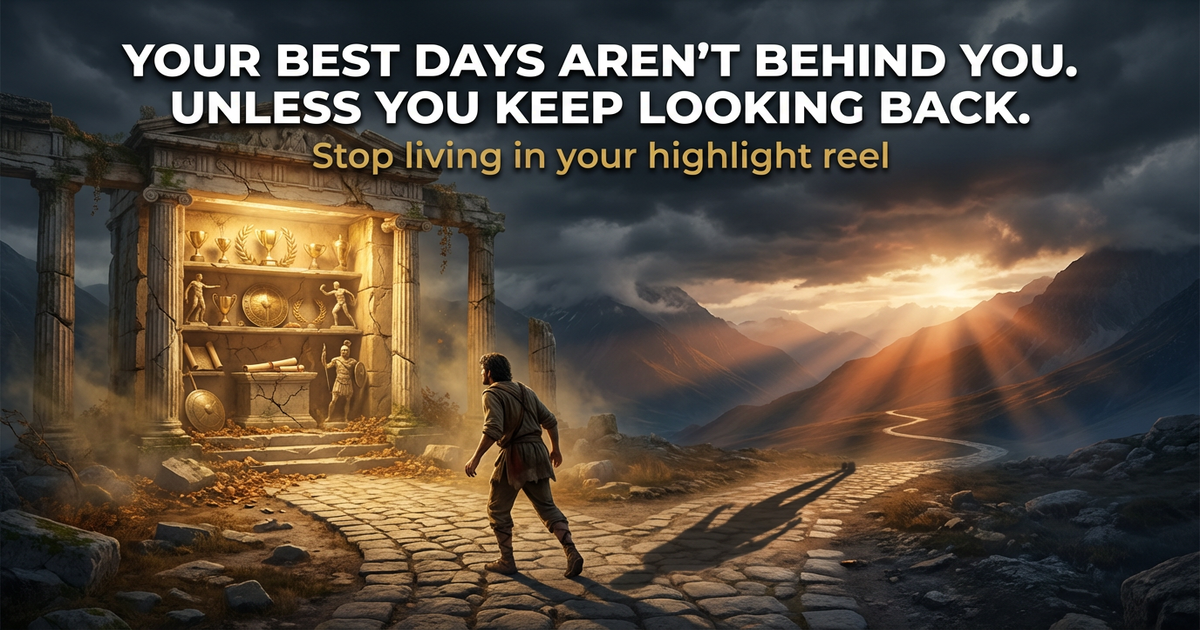
Your Best Days Aren't Behind You. Unless You Keep Looking Back.
The glory days trap isn't about memory. It's about identity. Living in the past is a form of self-protection that guarantees self-limitation.
Most People Need a Crisis to Try Their Hardest. That's a Character Flaw.
Crisis unlocks extraordinary performance. But needing crisis to access your best means your best isn't really yours. It belongs to whatever circumstances happen to arrive.

What If Your 'Personal Best' Is Actually Your Personal Belief?
Everyone treats their personal best as an objective measurement. But what if it's actually a prophecy? What if the limit you keep hitting is the limit you keep expecting to hit?

You're Not Getting Ready. You're Hiding.
Preparation is the most sophisticated form of procrastination. It feels productive. It looks responsible. And it keeps you exactly where you are.

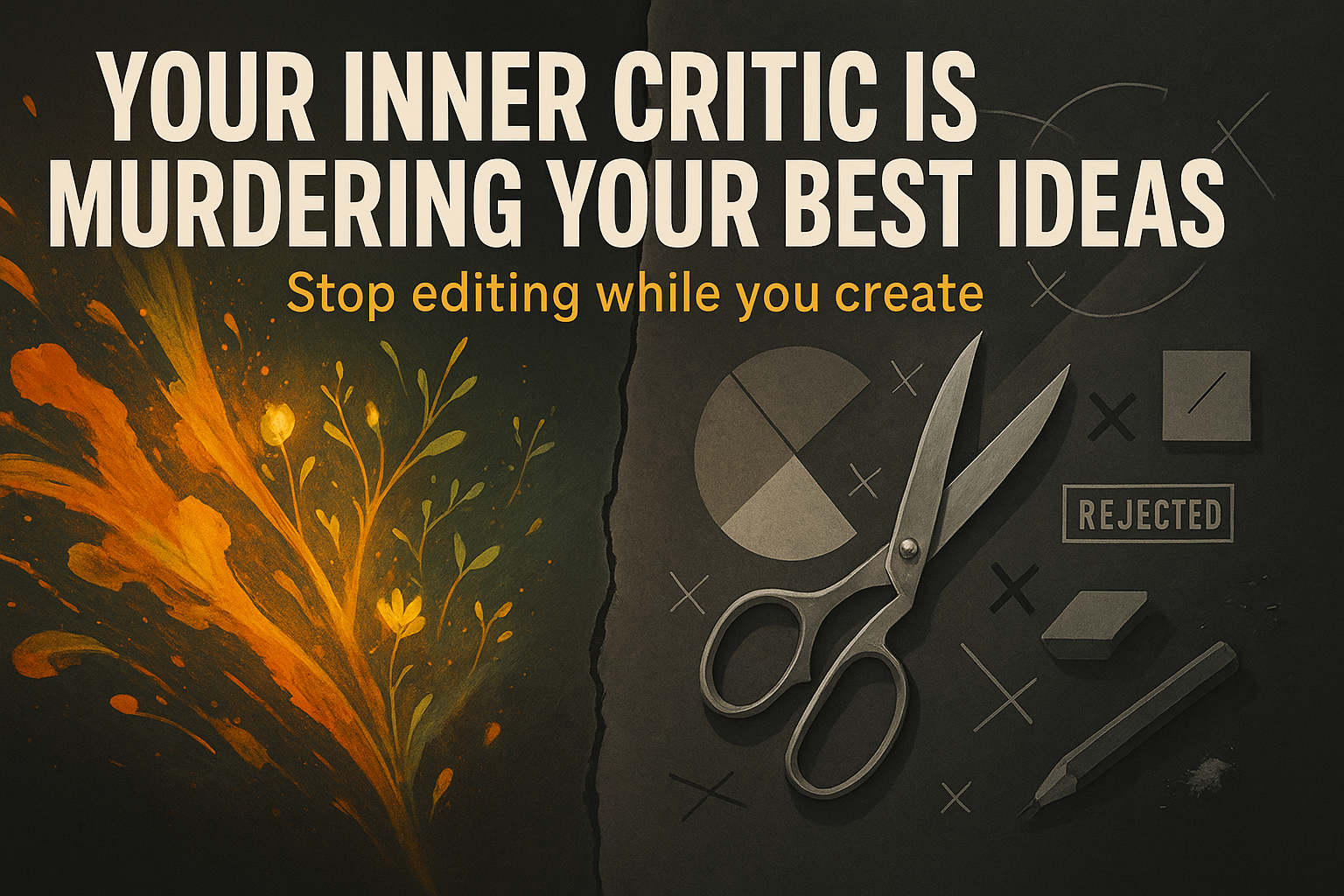
Your Inner Critic Is Murdering Your Best Ideas in the Crib
Your inner critic isn't the enemy. But letting it judge while you create guarantees mediocrity. Excellence requires opposite mindsets—and knowing when to deploy each.
Stop Waiting for Flow - Start Training It Like Every Other Skill
You can spend another year waiting for flow to happen, or you can spend the next 12 weeks training it like the ancient Greeks did, systematically, progressively, relentlessly.

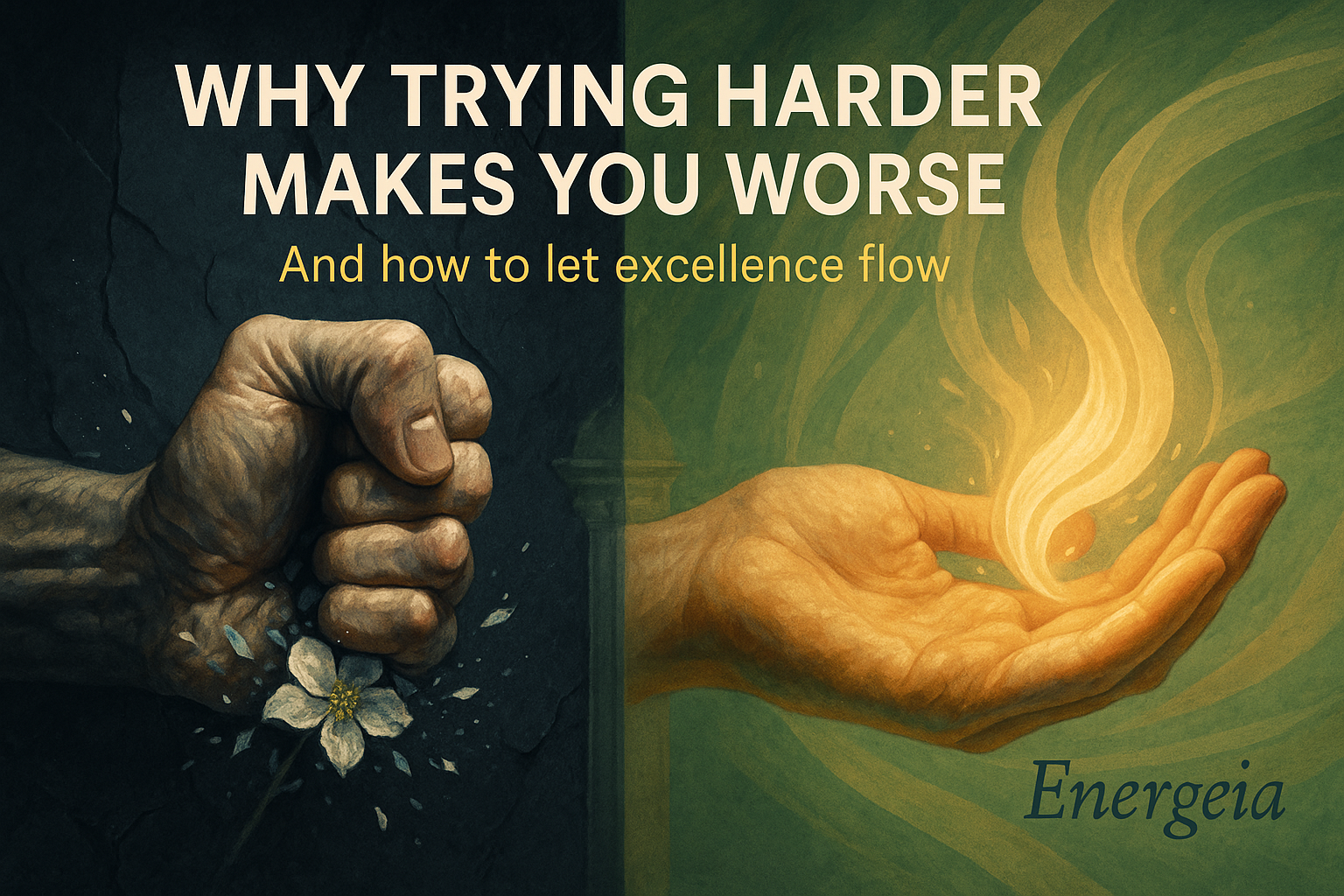
Why Trying Harder Makes You Worse (And How to Let Excellence Flow)
You built the conditions. You trained your attention. Now stop trying so hard. The excellence you're forcing toward shows up when you allow it to emerge.
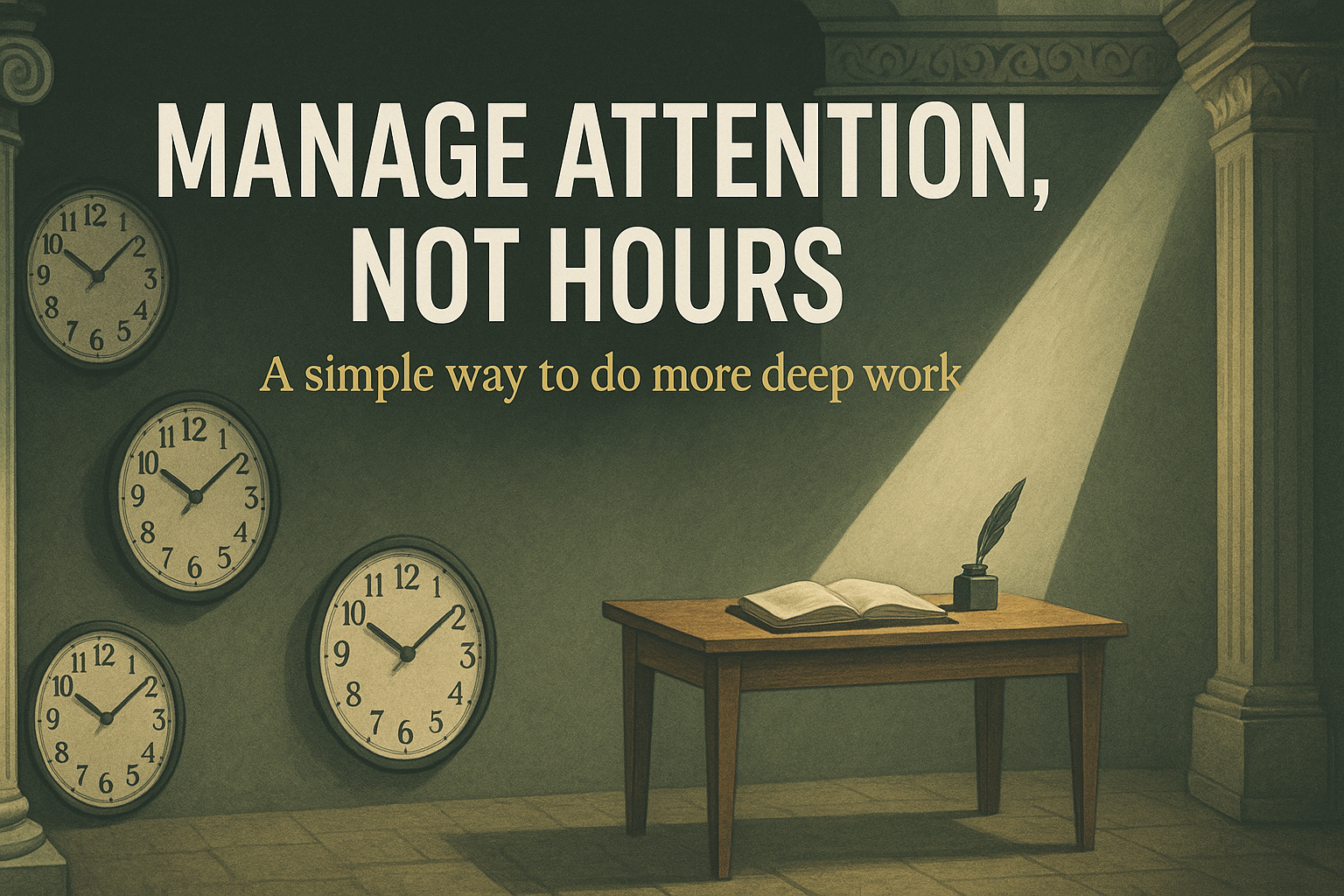
Manage Attention, Not Hours: How to Do Work That Matters
You don't need more hours, you need cleaner attention. When you defend attention, deep work shows up and the needle finally moves.
Stop Chasing Flow. Build It.
Flow doesn't show up when you beg it. It shows up when you remove what blocks it. The people who hit flow states most aren't gifted, they're disciplined about building the right conditions.
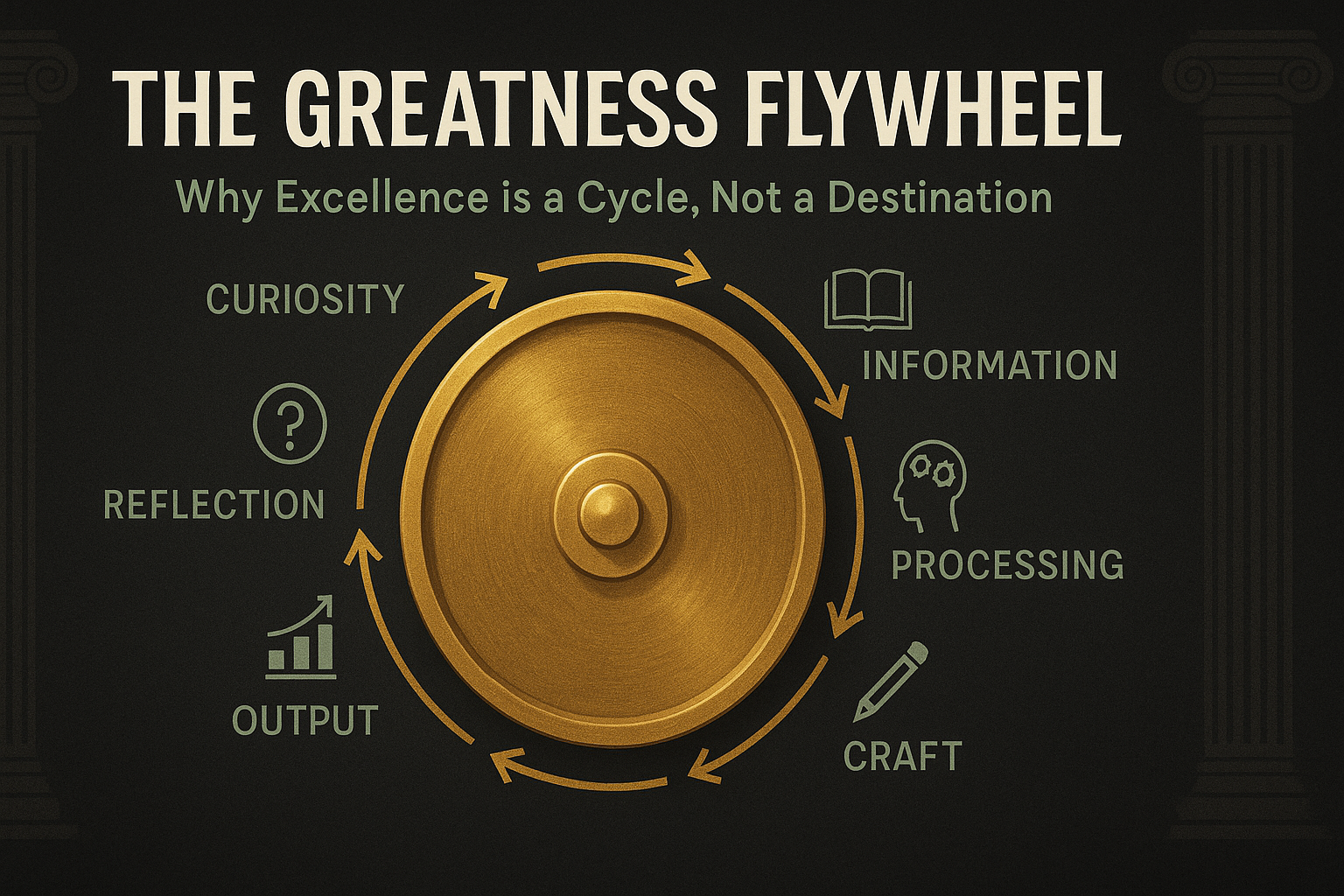
The Greatness Flywheel: Why Excellence is a Cycle, Not a Destination
Excellence isn't a destination you arrive at once and maintain through willpower. Excellence is a flywheel. The six-stage cycle that transforms ancient Greek wisdom into systematic excellence methodology.
The Position vs. Trend Mindset: Why Your Trajectory Matters More Than Your Current Location
The fundamental difference between position thinking (comparing to others) and trend thinking (tracking your own trajectory). Why your direction matters more than your location.