Ataraxia (ἀταραξία): Meaning, Definition & Modern Application
ah-tah-rak-SEE-ah
A state of serene calmness and freedom from mental disturbance, anxiety, or emotional turmoil. Central to Epicurean and Stoic philosophy, ataraxia represents the tranquil mind that remains unshaken by external circumstances or internal passions.
Etymology
From a- (without) and tarache (disturbance, trouble), literally “without disturbance” or “undisturbed.” Pyrrho of Elis, the founder of Skepticism, first championed ataraxia as the highest good, arguing that suspending judgment about uncertain matters produces inner peace. Epicurus adopted the concept as central to his ethics: ataraxia comes from understanding what truly threatens you (very little) and what merely seems threatening (most things). The Stoics incorporated it into their vision of the sage who remains tranquil amid chaos.
Deep Analysis
Three major philosophical traditions claimed ataraxia as their goal, and the differences in how they pursued it reveal three fundamentally different theories about what disturbs the human mind.
The Pyrrhonist Skeptics, following Pyrrho of Elis in the third century BCE, argued that mental disturbance arises from holding opinions about the way things really are. When you commit to a belief about reality, you create the conditions for anxiety: the fear of being wrong, the frustration when reality contradicts your belief, the anger when others disagree. Pyrrho’s prescription was radical: suspend judgment about everything that is not immediately self-evident. Stop claiming to know things you do not know. Sextus Empiricus, writing several centuries later, recorded the Pyrrhonist claim that ataraxia follows suspension of judgment “like a shadow follows a body.” You do not achieve tranquility by solving your problems. You achieve it by recognizing that most of what disturbs you is your own judgment about your problems rather than the problems themselves.
Epicurus offered a different diagnosis. In his Letter to Menoeceus and the Principal Doctrines, he argued that mental disturbance has two primary sources: fear of the gods and fear of death. Eliminate these fears through correct understanding, and ataraxia follows. The gods, Epicurus taught, are blissful beings who have no interest in punishing or rewarding humans. Death is simply the dissolution of atomic structure, which means there is no afterlife to fear. Most of the anxiety that people carry through their lives is based on false beliefs about what threatens them. Correct the beliefs, and the anxiety dissolves. Epicurus also argued that most desires are either natural and unnecessary (like luxury food) or neither natural nor necessary (like fame). The person who limits their desires to what is natural and necessary, principally food, shelter, friendship, and philosophical conversation, needs very little and therefore has very little to fear losing.
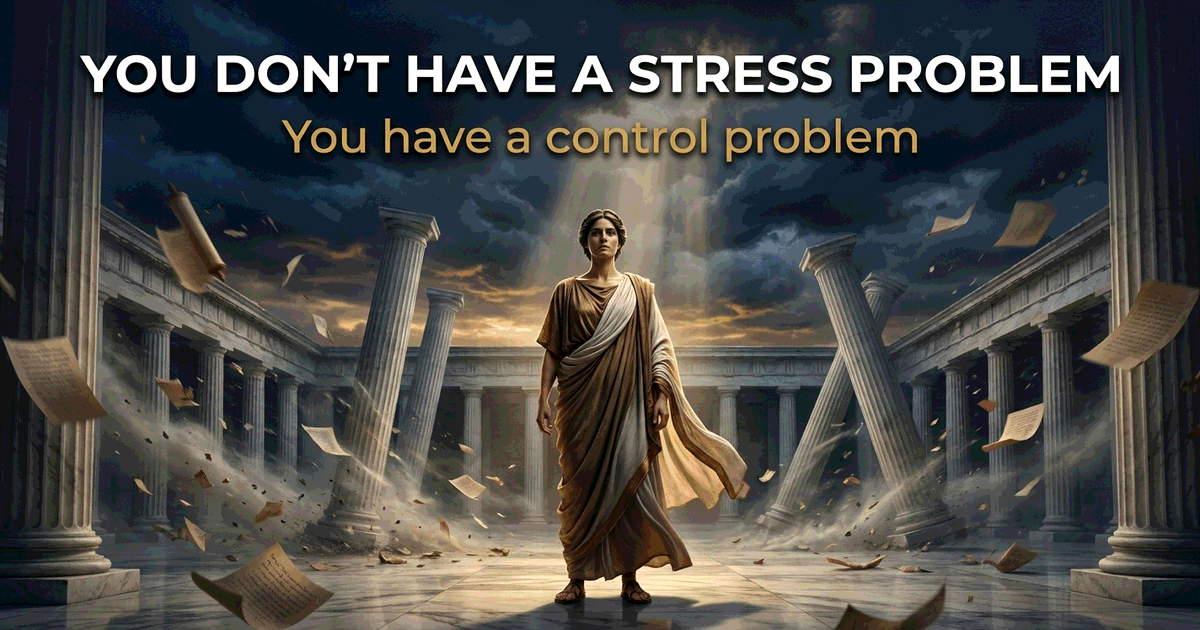
The Stoics, particularly Marcus Aurelius and Epictetus, rooted their pursuit of ataraxia in the dichotomy of control. Disturbance arises when you treat things outside your control as though they should conform to your wishes. The weather, other people’s opinions, the outcome of your efforts, your own physical health, these are all external to your faculty of choice (prohairesis). When you invest emotional energy in demanding that external things go your way, you guarantee disturbance because external things frequently do not go your way. The Stoic path to ataraxia is not suspension of judgment (Pyrrho) or reduction of desire (Epicurus) but the correct identification of what is genuinely within your power and the deliberate release of everything else.
The paradox at the center of ataraxia is that it comes through engagement with difficulty, not through avoidance. The person who retreats from the world to escape anxiety has not achieved ataraxia. They have achieved withdrawal, which is a different thing. Genuine tranquility is tested and developed in precisely the conditions that would normally produce disturbance: conflict, loss, uncertainty, and pressure. Marcus Aurelius wrote the Meditations while commanding armies on the Danube frontier, dealing with plague, treachery, and the constant pressure of governing an empire in crisis. His ataraxia was not the product of a quiet life. It was forged in conditions of extreme difficulty and sustained through daily philosophical practice.
The relationship between ataraxia and prosoche (attention to self) is direct and practical. Prosoche is the practice of observing your own mental states with vigilant attention. Ataraxia is one of the fruits of that practice. When you develop the habit of noticing your judgments before they produce emotional reactions, you create a space in which tranquility can operate. The disturbed mind is a mind that has been hijacked by judgments it did not examine. The tranquil mind is a mind that examines each judgment before granting it the power to disturb.
Eudaimonia and ataraxia are related but distinct. Eudaimonia is the comprehensive flourishing that comes from living virtuously. Ataraxia is the specific component of that flourishing that pertains to inner peace. You can pursue eudaimonia through vigorous, even strenuous activity while maintaining ataraxia throughout. The athlete competing at the highest level, the leader navigating a crisis, the parent managing a family through difficulty, each can experience profound tranquility even in the midst of intense effort because their tranquility is rooted in the quality of their judgments rather than the comfort of their circumstances.
Modern Application
When crisis erupts around you, ataraxia becomes your competitive advantage—the still center from which clear decisions emerge. You cultivate this unshakeable calm not by avoiding difficulty, but by training yourself to distinguish between what you can control and what you cannot. Practice returning to this inner stillness before every high-stakes conversation or decision.
Historical Examples
Pyrrho of Elis, who traveled with Alexander the Great to India and encountered the gymnosophists (naked philosophers) there, returned to Greece with a practice of imperturbability that astonished his contemporaries. Diogenes Laertius records that Pyrrho maintained his composure in situations that would terrify most people. When a ship he was traveling on was caught in a violent storm and the passengers panicked, Pyrrho pointed to a pig on the ship that continued eating calmly and said that this was the state a wise person should maintain. Whether the anecdote is precisely historical or illustrative, it captures the Pyrrhonist conviction that disturbance comes not from events but from our judgments about events. The pig was undisturbed because it lacked the capacity for anxious judgment, not because it was brave.
Epicurus practiced ataraxia while suffering from kidney stones, a condition that caused him extreme pain for years before his death in 270 BCE. In his final letter, written to Idomeneus on his deathbed, Epicurus wrote: “On this blissful day, which is also the last of my life, I write this to you. My continual sufferings from strangury and dysentery are so great that nothing could increase them, but I set against them all the gladness of mind at the remembrance of our past conversations.” This letter is one of the most striking demonstrations of ataraxia in the historical record: a man in extreme physical agony maintaining tranquility through the deliberate cultivation of joy in philosophical friendship.
Boethius wrote The Consolation of Philosophy while imprisoned and awaiting execution by the Ostrogothic king Theoderic around 524 CE. The work, structured as a dialogue with Lady Philosophy, is a sustained meditation on ataraxia in the face of the most extreme circumstances. Boethius, who had been one of the most powerful men in the Western world, used his imprisonment to examine the foundations of human disturbance: attachment to fortune, fear of death, and confusion about the nature of genuine happiness. The Consolation became one of the most widely read books in Western civilization for the next thousand years, demonstrating that the pursuit of inner tranquility under extreme pressure produces insights that transcend the circumstances of their creation.
How to Practice Ataraxia
Before your next high-stakes meeting or decision, spend five minutes in deliberate stillness. Close your eyes and systematically release each source of anxiety by asking: “Is this within my control?” For what is not, practice acceptance. For what is, plan your response. Build a daily stillness practice of ten minutes where you sit with whatever thoughts and feelings arise without acting on them. Over time, this trains your mind to maintain calm under pressure rather than achieving it only in quiet moments. When you notice inner turbulence, treat it as a signal to slow down rather than speed up. Epicurus taught that most of what we fear never materializes, and what does materialize is rarely as devastating as we imagined. Test this by writing down your anxieties each morning and reviewing them at the end of the week to see how many proved warranted. Practice the Pyrrhonian technique of suspending judgment when you lack sufficient information rather than filling the gap with worry. Create a pre-decision ritual where you return to stillness before every significant choice. The goal is to make equanimity your default operating state rather than an occasional achievement.
Application Examples
A startup founder learns that her biggest competitor has just raised ten times her funding. Her team looks to her for a response. She feels the initial surge of anxiety, then examines the judgment producing it: the competitor’s funding does not alter her product, her customers, or her team’s capability. She redirects her attention to the variables she controls and resumes work with her strategy unchanged.
Ataraxia in business is not the absence of competitive pressure. It is the capacity to feel the pressure without allowing it to distort your judgment or redirect your effort toward reactive rather than strategic action.
A woman receives an unexpected medical diagnosis that requires significant lifestyle changes but is not life-threatening. Her initial response is catastrophic thinking: imagining worst-case scenarios, grieving her old lifestyle, feeling victimized by circumstance. After sitting with the news for a day, she examines her judgments. The diagnosis changes her circumstances, not her character. The lifestyle changes are inconvenient, not devastating. She develops a plan and moves forward.
Ataraxia does not prevent the initial emotional reaction. It prevents the initial reaction from becoming a sustained state of disturbance. The gap between the first wave of anxiety and the settled response is where ataraxia operates.
During a company all-hands, an employee publicly criticizes the CEO’s recent decision with visible anger and detailed objections. The room goes silent. The CEO’s instinct is defensive justification. Instead, he thanks the employee for the candor, acknowledges the specific concerns that have merit, and commits to revisiting the decision with additional input. The meeting continues without the tension escalating.
Public challenge is one of the most common triggers for leadership disturbance. The leader who has cultivated ataraxia can absorb public criticism without the defensive reaction that typically escalates conflict and shuts down honest feedback.
A teenager tells her father, during an argument, that she hates him and wishes she had a different family. The father feels the words like a physical blow. He sits with the feeling for ten seconds before responding. He knows the statement is the product of adolescent frustration, not genuine conviction. He says, calmly, that he loves her and is willing to talk when they have both cooled down.
Ataraxia in relationships means allowing painful words to reach you emotionally without allowing them to command your response. The father felt the pain. His tranquility was not in avoiding the feeling but in preventing the feeling from dictating his reply.
Common Misconceptions
Ataraxia is often mistaken for emotional numbness, as though the goal is to stop feeling altogether. The Greek philosophical traditions that pursued ataraxia were explicit that certain feelings are appropriate and valuable. Epicurus treasured the pleasure of friendship. The Stoics cultivated rational joy. Pyrrho valued philosophical inquiry. The target is not feeling in general but specifically the irrational disturbance that arises from false judgments about what threatens you. Another common error is treating ataraxia as withdrawal from engagement. The Stoic sages who pursued ataraxia were some of the most active public figures in the ancient world. Marcus Aurelius governed an empire. Seneca navigated Roman politics. Epictetus ran a school. Their tranquility was maintained not by avoiding difficulty but by engaging with it from a position of correct judgment. A third misconception confuses ataraxia with indifference to outcomes. You can care deeply about results while maintaining tranquility about the process. The distinction is between investing your best effort, which you control, and attaching your wellbeing to the outcome, which you do not.
My natural disposition is toward anxiety. I have spent most of my life scanning for threats, anticipating problems, and maintaining a low-grade state of alertness that I mistook for vigilance. It took me years to understand that this state was not making me more effective. It was consuming energy that could have been directed toward the work itself.
The practice that made the biggest difference was absurdly simple: writing down my anxieties each morning and reviewing them at the end of the week. After three months of this practice, the pattern was undeniable. Over 90% of the things I worried about never happened. The remaining 10% were manageable when they arrived and bore almost no resemblance to the catastrophic scenarios I had imagined. The data did not eliminate my anxiety. It gave me evidence to present to myself when the next wave arrived.
The deeper shift came through a practice I borrowed from the Stoics: distinguishing between what I can influence and what I cannot. Every morning, I sort the day’s concerns into two categories. The first category gets my attention and effort. The second category gets acknowledged and released. The release is not passive resignation. It is the active decision to stop investing emotional energy in things that will not respond to that investment. The energy I recover from releasing what I cannot control is then available for the things I can.
I still experience anxiety regularly. Ataraxia, for me, is not the absence of disturbance. It is the speed of recovery. Where I once spent days ruminating over a lost client or a negative review, I now spend hours, sometimes less. The disturbance arrives, I examine the judgment producing it, I determine what I can influence, and I act on that. The rest I release. This practice has not made me calmer by temperament. It has made me more functional under pressure, which is what I believe the Stoics were actually describing.
Frequently Asked Questions
What is ataraxia in Greek philosophy?
Ataraxia is the Greek concept of serene calmness and freedom from mental disturbance. Central to Epicurean and Stoic philosophy, it represents the tranquil mind that remains unshaken by external circumstances. Pyrrho, Epicurus, and the Stoics all valued it as a mark of the wise person. Pyrrho of Elis first championed ataraxia as the highest good, arguing that suspending judgment about uncertain matters produces inner peace. Epicurus built on this by teaching that understanding what truly threatens you, which is very little, frees you from the anxiety that dominates most lives.
What does ataraxia mean?
Ataraxia literally means "without disturbance" or "undisturbed," from *a-* (without) and *tarache* (disturbance). It describes the state of inner tranquility where the mind remains calm regardless of external chaos or internal emotional pressure. The word conveys not passive numbness but active equanimity, a mind that has trained itself to remain steady because it has accurately assessed what deserves concern and what does not. This trained calm becomes a practical advantage in high-pressure situations where clear thinking matters most.
How do you practice ataraxia?
You cultivate ataraxia through daily stillness practice, distinguishing what you can control from what you cannot, and training yourself to release attachment to uncontrollable outcomes. Before high-stakes moments, practice deliberate calm. Over time, this tranquility becomes accessible under pressure. Begin each day by identifying the things causing you anxiety and sorting them into what you can influence and what you cannot. For the uncontrollable, practice deliberate release. For the controllable, make a plan and act. Epicurus recommended keeping a journal of fears to demonstrate, over time, how few of them ever materialized.
What is the difference between ataraxia and apatheia?
Ataraxia is freedom from mental disturbance and anxiety, a state of undisturbed tranquility. Apatheia is freedom from destructive passions and irrational emotional reactions. Ataraxia emphasizes the absence of disturbance; apatheia emphasizes mastery over passion. Both describe inner peace through different lenses. Ataraxia was central to the Epicurean and Skeptic traditions, while apatheia was primarily a Stoic aspiration. In practice, developing one often supports the other, as mastering your passions reduces mental disturbance, and cultivating tranquility makes it easier to keep irrational impulses in check.