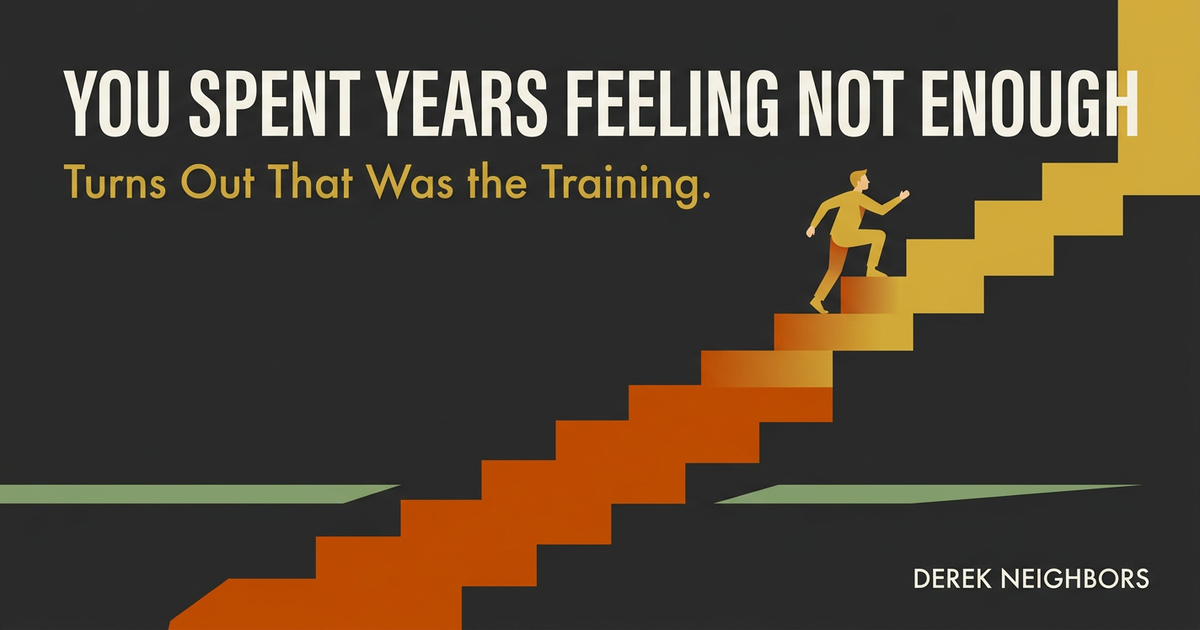
Endeia (ἔνδεια): Meaning, Definition & Modern Application
EN-day-ah
A state of lack, want, or deficiency, particularly the absence of what is necessary for proper function or flourishing. In Greek philosophy, endeia represents the condition that precedes acquisition and often motivates the pursuit of virtue or knowledge.
Etymology
Derived from the Greek root en- (in, within) combined with dein (to lack, to need), forming endeia to denote an internal state of insufficiency. The term evolved from describing material poverty to encompassing spiritual, intellectual, and moral deficiency. Plato used it extensively to describe the soul’s lack that drives eros toward beauty and wisdom.
Deep Analysis
In Plato’s Symposium, the figure of Eros is described as the child of Poros (Resource) and Penia (Poverty, closely related to endeia). This mythological genealogy reveals a profound philosophical insight: desire itself is born from lack. Without endeia, there would be no movement toward the good, no striving toward excellence, no eros that pulls the soul upward toward beauty and wisdom.
This understanding inverts our typical relationship with deficiency. Modern culture treats lack as a problem to be eliminated, a condition of embarrassment to be hidden. The Greek philosophical tradition recognized endeia as the engine of human development. Socrates’ famous declaration of ignorance in the Apology represents the embrace of endeia as philosophical method. By acknowledging what he did not know, Socrates positioned himself to pursue wisdom authentically, unlike the sophists who claimed completeness they did not possess.
Aristotle’s treatment of endeia in the Nicomachean Ethics connects it to the doctrine of the mean. Virtue exists between excess and deficiency, with endeia representing one pole of vice. Courage, for instance, is the mean between rashness (excess) and cowardice (deficiency). Yet this schema contains a subtle paradox: recognizing one’s endeia of courage is itself a form of wisdom, the beginning of the journey toward the mean.
The Stoics complicated this picture further. For thinkers like Epictetus, material endeia belonged to the category of adiaphora, things indifferent to genuine happiness. The only true lack that mattered was deficiency in virtue and wisdom. Yet they acknowledged that this philosophical endeia, properly understood, was universal and permanent. Even Marcus Aurelius, emperor of Rome, wrote his Meditations as exercises in recognizing and addressing his own ongoing deficiencies.
The relationship between endeia and pleonexia (the grasping for more) illuminates a critical distinction. Pleonexia represents a pathological response to lack, the attempt to fill inner emptiness through external accumulation. True philosophical engagement with endeia moves differently. It acknowledges the lack, investigates its nature, and responds with appropriate action toward genuine fulfillment rather than compensatory grasping.
Plato’s Phaedrus presents endeia as the precondition for philosophical eros. The soul recognizes in beautiful things a reminder of the Forms it once knew and has since forgotten. This recognition is simultaneously an awareness of lack and a movement toward fulfillment. The philosopher, in Plato’s telling, is one who remains perpetually aware of this endeia and perpetually in pursuit of what is lacking.
For leadership, this analysis yields uncomfortable implications. The leader must cultivate awareness of deficiency while projecting confidence. This is not contradiction but integration. Genuine authority emerges not from the pretense of completeness but from the honest pursuit of excellence. Those who lead from acknowledged endeia create cultures where growth is possible because learning is valued above appearance.
The tension between endeia and autarkeia (self-sufficiency) reveals the full complexity of the concept. The Stoics sought autarkeia as freedom from external dependence while acknowledging ongoing endeia in wisdom and virtue. This apparent paradox resolves when we recognize that self-sufficiency concerns the external world while endeia concerns the internal journey. You can be independent of circumstance while remaining profoundly aware of your need for continued growth.
Ultimately, endeia forces a confrontation with human finitude. We are incomplete beings, lacking in knowledge, virtue, and wisdom. The philosophical question is not how to escape this condition but how to respond to it. The response shapes character, direction, and ultimately, the quality of a life.
Modern Application
Recognizing your endeia is the first step toward genuine growth. When you honestly assess where you fall short in skill, character, or understanding, you create the conditions for real development rather than comfortable stagnation. Use your awareness of lack not as a source of shame but as a compass pointing toward what you must pursue next.
Historical Examples
Socrates built his entire philosophical method on acknowledged endeia. In Plato’s Apology, when the oracle at Delphi proclaimed him the wisest man in Athens, Socrates understood this paradoxically: his wisdom consisted in knowing he knew nothing. He spent his life approaching those who claimed expertise, exposing their false knowledge through questioning, and demonstrating that true philosophical pursuit begins with honest acknowledgment of ignorance. His endeia was not humility theater but genuine epistemological method.
Demosthenes, the great Athenian orator, provides a striking example of endeia transformed through askesis. According to Plutarch’s account in Lives, Demosthenes was born with a speech impediment and weak constitution, deficiencies that seemed to preclude the political career he desired. Rather than accept these limitations or compensate through other means, he directly addressed his endeia. He practiced speaking with pebbles in his mouth to improve articulation, recited verses while running uphill to build respiratory strength, and shaved half his head to prevent himself from appearing in public until his preparation was complete. His acknowledged deficiency became the foundation of his eventual excellence.
Marcus Aurelius, despite his position as emperor, filled his Meditations with acknowledgments of endeia. In Book 1, he catalogs what he received from others, implicitly revealing what he lacked and needed to learn: patience from his grandfather, modesty from his mother, philosophical seriousness from his tutors. Throughout the work, he reminds himself repeatedly of his failures of temper, his lapses in perspective, his ongoing struggle with basic Stoic principles. The most powerful man in the known world wrote private exercises in confronting his own insufficiencies.
How to Practice Endeia
Begin each morning by identifying one specific area of lack in your current capabilities. Write it down without judgment or excuse. Ask yourself: What skill am I missing? What knowledge gap is holding me back? What character trait needs development?
Conduct a weekly ‘deficiency audit’ of your professional performance. Review recent decisions, conversations, and outcomes. Note where you wish you had possessed greater wisdom, patience, or expertise. These gaps are not failures but navigational data.
Seek feedback actively from those who observe your work. Ask specifically: Where do you see me falling short? What capability would make me more effective? Record responses without defensiveness.
Track your identified deficiencies in a journal. For each lack, specify one concrete action you will take to address it. Review monthly to assess whether acknowledged gaps are closing or persisting.
Practice sitting with discomfort when lack becomes apparent. Resist the impulse to rationalize or minimize. Instead, let the awareness of deficiency generate genuine motivation for change.
Application Examples
A startup founder realizes her company has grown beyond her management capabilities. Rather than hiring executives who will not challenge her, she acknowledges the endeia in her leadership skills and brings in experienced operators who can teach her while running critical functions.
Endeia becomes productive when acknowledged publicly rather than compensated for secretly. The founder’s honesty about her gaps created conditions for genuine organizational growth.
A father notices his teenage daughter has stopped confiding in him. Instead of blaming her withdrawal on adolescence, he examines his own endeia: his inability to listen without solving, his discomfort with emotional complexity, his reflexive judgment.
Personal relationships often suffer not from the other’s faults but from our unacknowledged deficiencies. Endeia in relational skills requires the same honest assessment as professional gaps.
A newly promoted executive inherits a team with specialized technical knowledge she lacks. She resists the temptation to assert authority through pretended expertise and instead openly acknowledges her technical endeia while demonstrating strength in strategic thinking and people development.
Leadership endeia, when acknowledged, transforms from vulnerability into trust-building honesty. The team respects authenticity more than pretended omniscience.
A senior professor, after decades of teaching the same material, recognizes his growing endeia in current research methods and technological tools. He enrolls as a student in a junior colleague’s workshop, accepting temporary role reversal.
Endeia does not respect seniority or past achievement. The willingness to become a learner again, regardless of status, separates those who continue growing from those who calcify.
An experienced marathon runner, consistently finishing mid-pack, finally admits her endeia in mental discipline rather than continuing to blame physical limitations. She invests in sports psychology and meditation practice, addressing the actual gap.
We often misidentify the nature of our endeia, addressing symptoms while ignoring root causes. Honest diagnosis precedes effective remedy.
Common Misconceptions
Many assume endeia signals permanent inadequacy, a fixed condition that reveals fundamental limitation. The Greek understanding was precisely opposite: endeia describes a current state that creates conditions for movement. Lack is not destiny but starting point.
Another error confuses endeia with false modesty. Some people perform acknowledgment of gaps while secretly believing themselves complete. This theatrical humility provides social benefits without the discomfort of genuine self-confrontation. True endeia involves actual uncertainty, real awareness of missing capability, not strategic self-deprecation.
A third misconception treats all forms of lack as equivalent. Aristotle distinguished between material deficiency, which circumstances might address, and deficiency in virtue or wisdom, which requires sustained effort and proper habituation. Confusing these categories leads to misdirected remedies: attempting to fill spiritual lack with material acquisition, or treating character deficiency as mere skill gap.
I spent years in the agile community watching teams perform retrospectives that identified the same problems repeatedly. Velocity issues, communication breakdowns, technical debt. The pattern fascinated me until I realized these teams were practicing acknowledgment without acceptance. They could name their gaps but not truly face them.
The breakthrough came when I started asking a different question: not ‘What went wrong?’ but ‘What capability are we missing that makes this keep happening?’ The shift from event to endeia transformed everything.
One team I coached had struggled with estimation for eighteen months. Sprint after sprint, they missed commitments. The retrospectives produced the same observations: stories were too big, requirements unclear, interruptions too frequent. All true. All useless.
When I pushed them to name the actual endeia, the room went quiet. Finally, the tech lead spoke: ‘We don’t actually know how to estimate. We’ve been guessing and hoping for years.’ The admission was painful but productive. Within two months, they had developed genuine estimation skills because they had finally named what they lacked.
I apply this in my own practice constantly. When a coaching engagement stalls, I ask myself: What am I missing here? What capability gap is preventing breakthrough? Sometimes it is a technique I have not learned. Sometimes it is patience I have not developed. Often it is a perspective I have not considered.
The hardest part is not identifying endeia but sitting with it long enough to respond wisely rather than reactively. My instinct, like most people’s, is to fill the gap immediately with whatever is available. Experience has taught me that premature filling often compounds the original lack. Better to acknowledge the endeia fully, understand its nature, and then pursue the right remedy with intention.
Frequently Asked Questions
What is endeia in Greek philosophy?
Endeia refers to a state of lack, want, or deficiency. In Greek philosophy, particularly in Plato's work, it describes the fundamental condition of incompleteness that drives humans to seek what they need, whether material goods, knowledge, or virtue.
How is endeia different from poverty?
While endeia can include material poverty, its philosophical meaning extends to any form of insufficiency: intellectual ignorance, moral weakness, or spiritual emptiness. The Greeks understood it as a universal human condition, not merely an economic state.
Why is recognizing endeia important for growth?
You cannot pursue what you do not know you lack. Endeia creates the necessary precondition for eros (desire) and philomatheia (love of learning). Acknowledging deficiency honestly is the starting point for all genuine development.