Sophrosyne vs Enkrateia: Key Differences in Greek Philosophy
Both sophrosyne and enkrateia involve managing your desires, but they represent fundamentally different relationships with those desires. Enkrateia is fighting yourself to do the right thing. Sophrosyne is no longer needing to fight because your desires have been aligned with reason. The distinction reveals whether you are controlling yourself through effort or have genuinely transformed your character.
Definitions
Sophrosyne
(σωφροσύνη)
soh-froh-SOO-nay
Self-mastery and moderation. The discipline to regulate yourself internally when nothing external compels you to continue.
Enkrateia
(ἐγκράτεια)
en-KRAH-tay-ah
The mastery of self through the power of will over impulse and appetite. For Aristotle and the Stoics, enkrateia represents the disciplined control where reason governs desire, distinct from sophrosyne in that the struggle against temptation remains consciously felt.
Key Differences
| Aspect | Sophrosyne | Enkrateia |
|---|---|---|
| Internal Experience | Sophrosyne involves a harmonious soul where desires naturally align with reason. The temperate person wants what is good. | Enkrateia involves an internal struggle where reason overrides desire. The self-controlled person wants what is bad but chooses not to act on it. |
| Level of Development | Sophrosyne represents a higher stage of character development. It indicates that virtuous habits have reshaped your desires themselves. | Enkrateia represents an earlier stage. It indicates strength of will but shows that the underlying desires have not yet been transformed. |
| Effort Required | Sophrosyne operates with relative ease. When your character is well-formed, the right choice feels natural rather than forced. | Enkrateia requires ongoing effort. Each decision involves a conscious battle between what you want and what you know is right. |
| Stability | Sophrosyne is stable because the person's desires support right action. There is no internal force pulling toward excess. | Enkrateia is less stable because it depends on continued willpower. Fatigue, stress, or emotional upheaval can overwhelm self-control. |
Internal Experience
Sophrosyne involves a harmonious soul where desires naturally align with reason. The temperate person wants what is good.
Enkrateia involves an internal struggle where reason overrides desire. The self-controlled person wants what is bad but chooses not to act on it.
Level of Development
Sophrosyne represents a higher stage of character development. It indicates that virtuous habits have reshaped your desires themselves.
Enkrateia represents an earlier stage. It indicates strength of will but shows that the underlying desires have not yet been transformed.
Effort Required
Sophrosyne operates with relative ease. When your character is well-formed, the right choice feels natural rather than forced.
Enkrateia requires ongoing effort. Each decision involves a conscious battle between what you want and what you know is right.
Stability
Sophrosyne is stable because the person's desires support right action. There is no internal force pulling toward excess.
Enkrateia is less stable because it depends on continued willpower. Fatigue, stress, or emotional upheaval can overwhelm self-control.
When to Apply Each Concept
When to Choose Sophrosyne
Aim for sophrosyne as a long-term developmental goal. Through sustained practice, reflection, and habit formation, you can reshape your desires so that moderation becomes your default rather than your discipline. When you notice that healthy choices require decreasing effort, you are developing sophrosyne.
When to Choose Enkrateia
Practice enkrateia as an immediate strategy when your desires conflict with your values. It is the starting point for anyone working to change behavior. When you know what you should do but do not want to do it, enkrateia is the virtue that gets you through. Honor it as a genuine strength while recognizing that character development can eventually reduce the need for it.
Frequently Asked Questions
What is the difference between sophrosyne and enkrateia?
Sophrosyne is temperance or moderation, a state where your desires naturally align with reason and you want what is genuinely good. Enkrateia is self-control, the capacity to override bad desires through willpower. Aristotle considered sophrosyne the superior state because the temperate person has transformed their character, while the self-controlled person is still fighting their own impulses.
Is enkrateia a virtue in Greek philosophy?
Aristotle considered enkrateia praiseworthy but not a full virtue. It demonstrates strength of will and commitment to doing right, which puts it above weakness (akrasia). However, it falls short of true virtue because the desires themselves remain disordered. Enkrateia is an important stepping stone toward sophrosyne rather than the final destination.
How do you develop sophrosyne from enkrateia?
The path from enkrateia to sophrosyne runs through sustained practice. By consistently choosing right action despite contrary desires, you gradually reshape those desires through habit. Over months and years, what once required willpower becomes natural preference. Aristotle's insight was that virtue is formed through repetition, and repeated virtuous action transforms not only behavior but the underlying desires that drive behavior.
Articles Exploring Sophrosyne or Enkrateia (27)
Why Arguing Your Point Is Always a Losing Strategy
For the second time in this series, Greene and the ancient philosophers agree. Demonstrate, don't argue. But they agree for different reasons, and the difference reveals whether you're performing power or practicing excellence.
If You Have to Assert Your Authority, You've Already Lost It
The meeting goes quiet when a leader pulls rank. They think they won. The room knows better. The ancient Stoics understood that the highest expression of power isn't exercising it. It's choosing not to. The Greek concept of prohairesis reveals why the leaders with the most authority are the ones who almost never use it.
Why Building Your Reputation Is a Waste of Time
Greene says guard your reputation with your life. The Greeks say build character worth remembering. One requires constant maintenance. The other requires consistent choices. The difference explains why some reputations survive scrutiny and others collapse the moment the spotlight shifts.
The Most Powerful Thing You Can Say Is Nothing
For the first time in this series, Greene and the ancient philosophers agree. Say less. Mean more. But they agree for different reasons, and the difference reveals everything about power versus virtue.
Hats, Haircuts, and Tattoos: Why You're Making Every Decision at the Wrong Speed
Most people spend 45 minutes choosing a Netflix show and 20 minutes choosing a mortgage. The problem isn't indecision. It's miscalibration. Phronesis (practical wisdom) demands matching speed to stakes.

The Difference Between Grit and Stubbornness (One Builds Character, One Destroys It)
Angela Duckworth made grit famous. She didn't explain when it becomes stubbornness. The Stoics knew: prohairesis (moral choice) distinguishes persistence that builds character from ego that refuses to accept reality.
Concealing Your Intentions Isn't Clever. It's Exhausting.
Greene's Law 3 conflates wisdom with manipulation. Strategic silence is phronesis. Active deception is a cognitive tax that compounds into exhaustion and isolation.
Most People Need a Crisis to Try Their Hardest. That's a Character Flaw.
Crisis unlocks extraordinary performance. But needing crisis to access your best means your best isn't really yours. It belongs to whatever circumstances happen to arrive.
Your Goals Aren't Too Big. Your Sacrifices Are Too Small.
You don't have an ambition problem. You have a payment problem. Everyone wants the dream. Almost no one wants to pay what it actually costs.

If You Want to Lead, You Don't Get to Have "Your" Problems Anymore
Leadership is not just influence. It is load. If everything becomes your emergency, the system is broken. Fix it with decision clarity, steady presence, and practical restraint.

Most Success Is Just Avoiding Obvious Mistakes
Everyone's chasing brilliance while tripping over obvious errors. The uncomfortable truth about success isn't that you need to be smarter. You need to stop being dumb.
Hard Work Stops Some People. Uncertainty Stops Everyone Else.
Andy Weir posted chapters of The Martian to his blog for 10 years. 3,000 readers. No validation. No proof it mattered. Then the breakthrough. The separator isn't talent or work ethic, it's tolerance for uncertainty.
Why Do Smart People Overcomplicate Everything?
The Greeks understood something we've forgotten, true wisdom reveals itself through simplicity, not complexity. Intelligence is finding the simple truth, not creating elaborate frameworks.
Delayed Gratification Isn't Self-Control. It's the Foundation of All Virtue.
Everyone got the marshmallow test wrong. They turned it into a success predictor. The Stoics understood the real truth 2,000 years ago: delayed gratification isn't about outcomes, it's about character.
Forgiveness Isn't About Them. It's the Most Selfish Thing You Can Do.
Every minute you spend resenting someone is energy you're not using to build your life. The Stoics knew what we forgot: forgiveness releases you from the prison, not them from consequences.
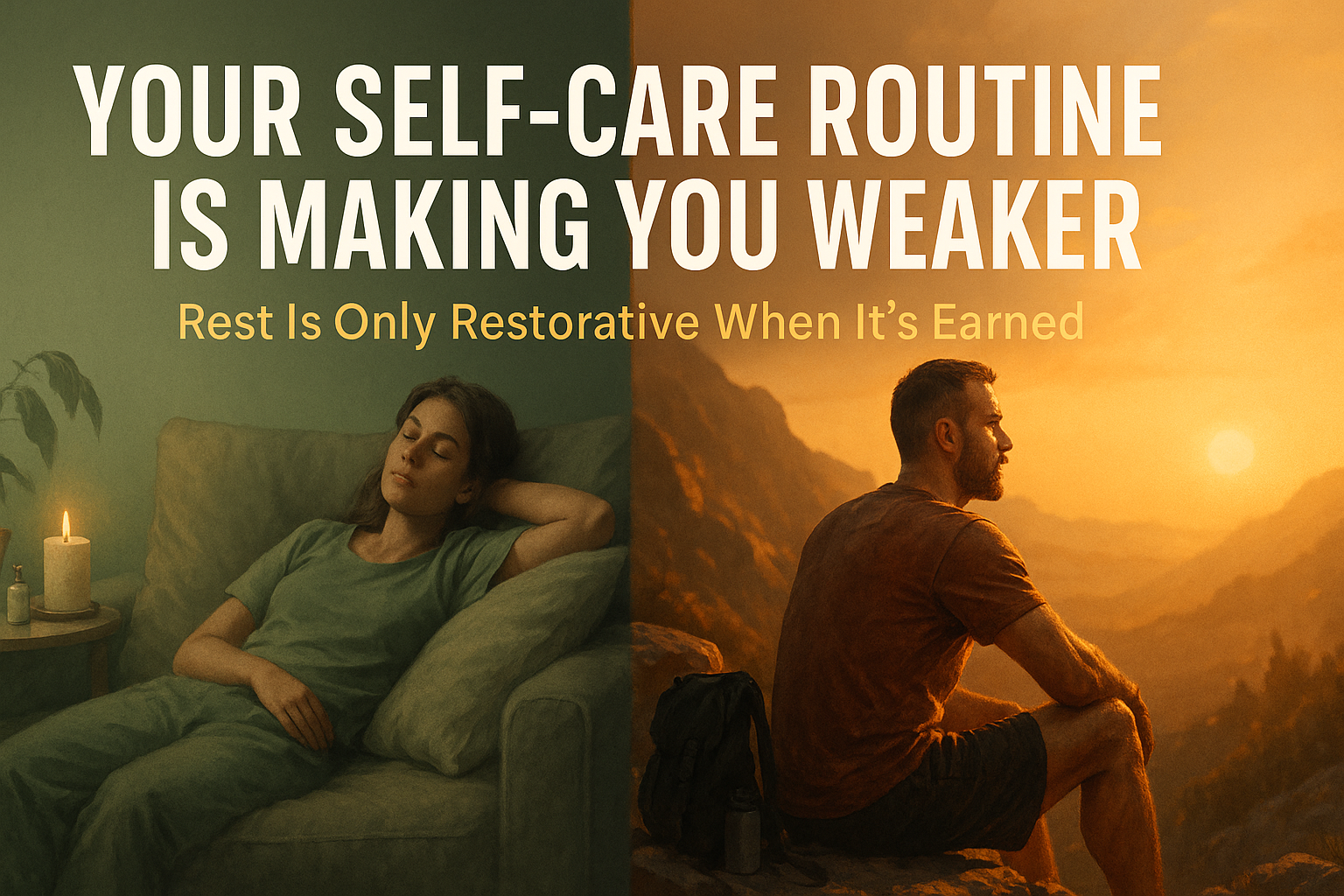
Your Self-Care Routine Is Making You Weaker
Modern self-care culture produces people who need more support to handle less challenge. Rest is only restorative when preceded by genuine exertion. Without the depletion, there's nothing to restore.
You're Not Less Talented. You're Less Focused.
What looks like exceptional talent is usually exceptional attention. The people crushing it aren't more gifted, they've just built the character discipline to ignore everything except what matters most.
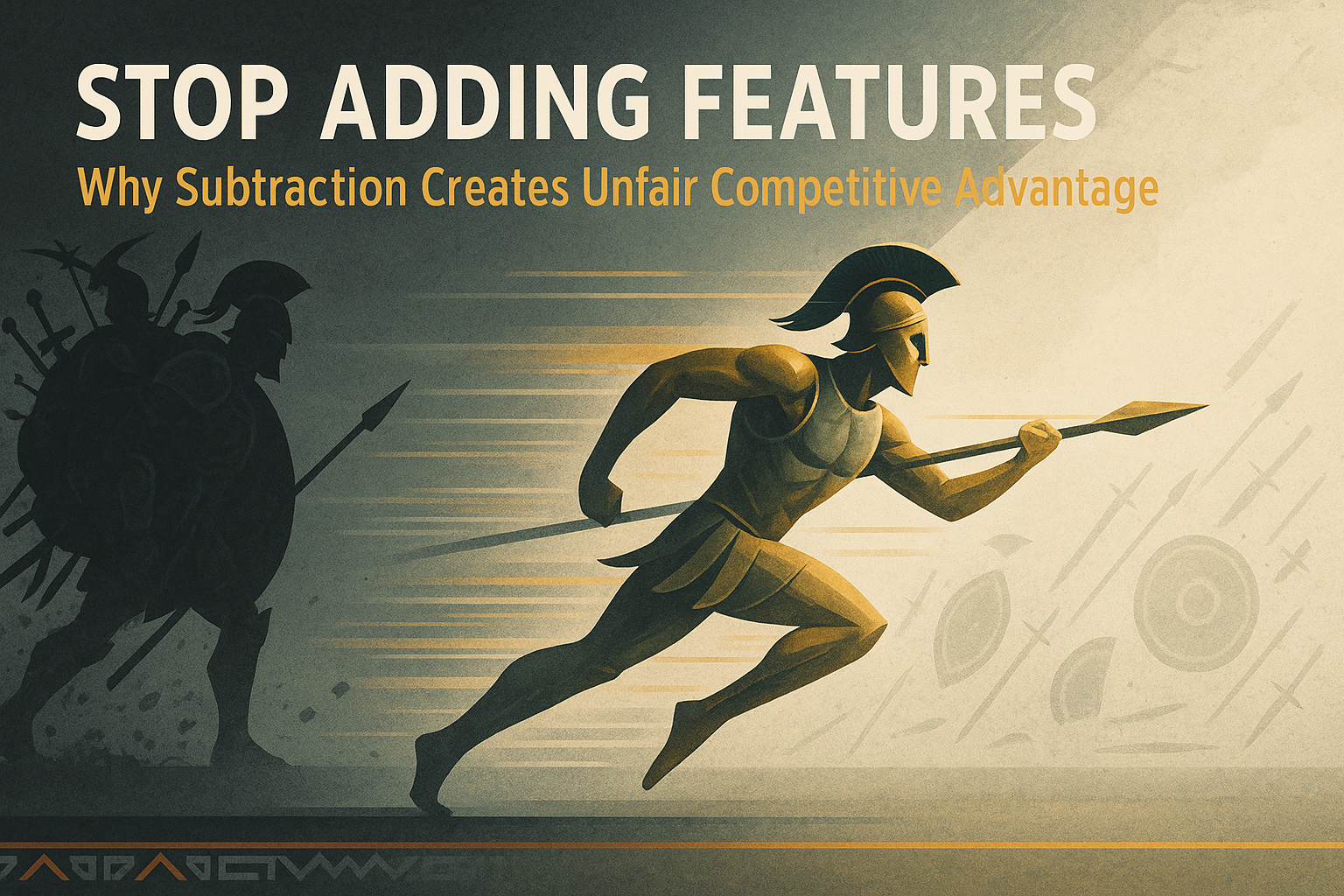
Stop Adding Features: Why Subtraction Creates Unfair Competitive Advantage
Every feature you add slows every decision. Every process you maintain steals focus. While everyone accumulates complexity, strategic subtraction creates unfair competitive advantage. The lighter you are, the faster you move.
Stop Following Your Passion. Start Building Excellence.
Passion is self-focused and fleeting. Excellence through service is other-focused and enduring. The Greeks never told anyone to follow their passion. They built character through craft. Here's why that matters for your work.
Stop Chasing Flow. Build It.
Flow doesn't show up when you beg it. It shows up when you remove what blocks it. The people who hit flow states most aren't gifted, they're disciplined about building the right conditions.
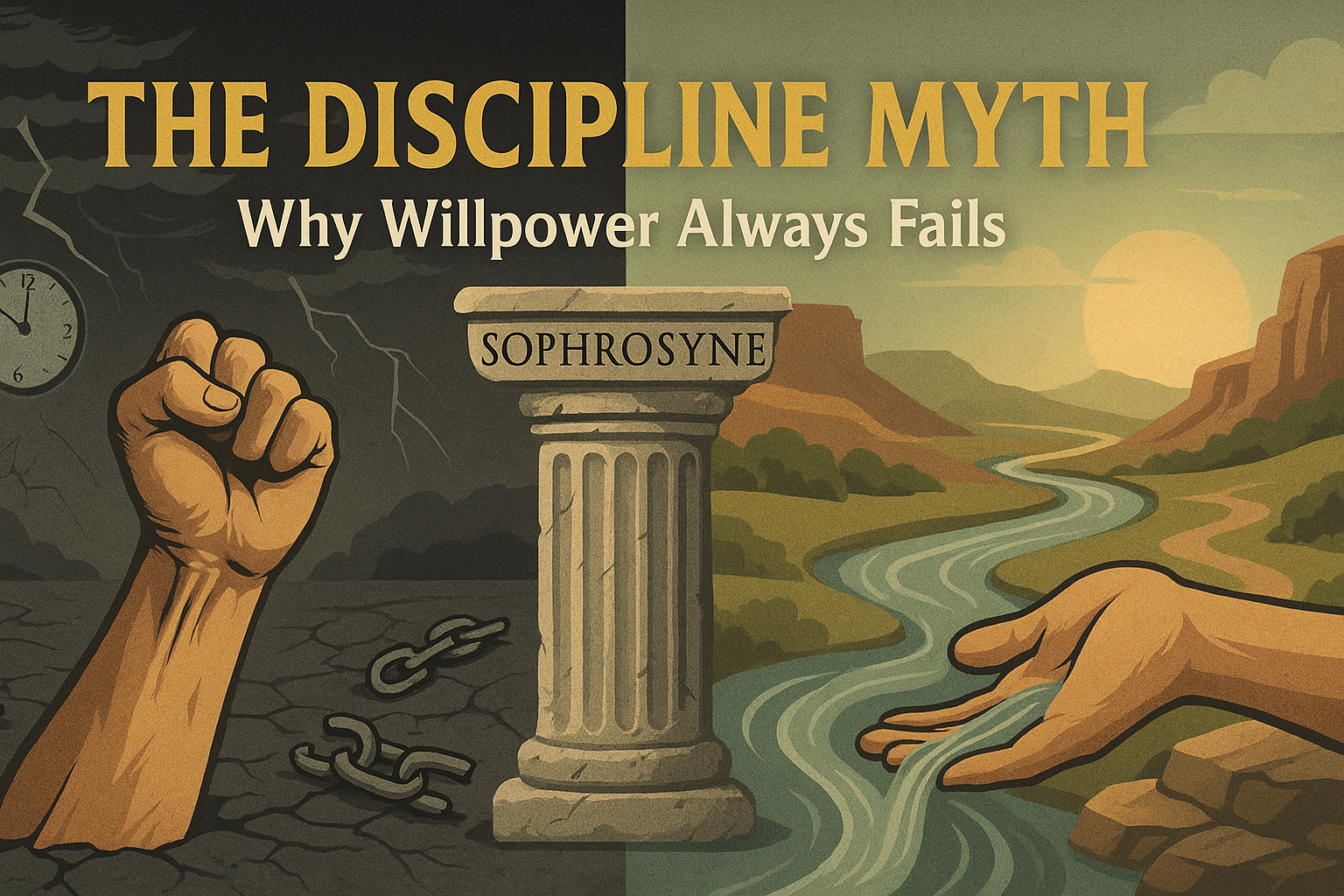
The Discipline Myth: Why Willpower Always Fails
Most people think discipline means forcing yourself to do things you don't want to do. This fundamental myth keeps people trapped in cycles of failure and self-recrimination.
The Position vs. Trend Mindset: Why Your Trajectory Matters More Than Your Current Location
The fundamental difference between position thinking (comparing to others) and trend thinking (tracking your own trajectory). Why your direction matters more than your location.

The Completion Paradox: Why Finishing Matters More Than Starting
You don't have a motivation problem. You have a completion problem. Every unfinished project is evidence that you can't trust yourself to follow through. Here's how to build the character that finishes what it starts.
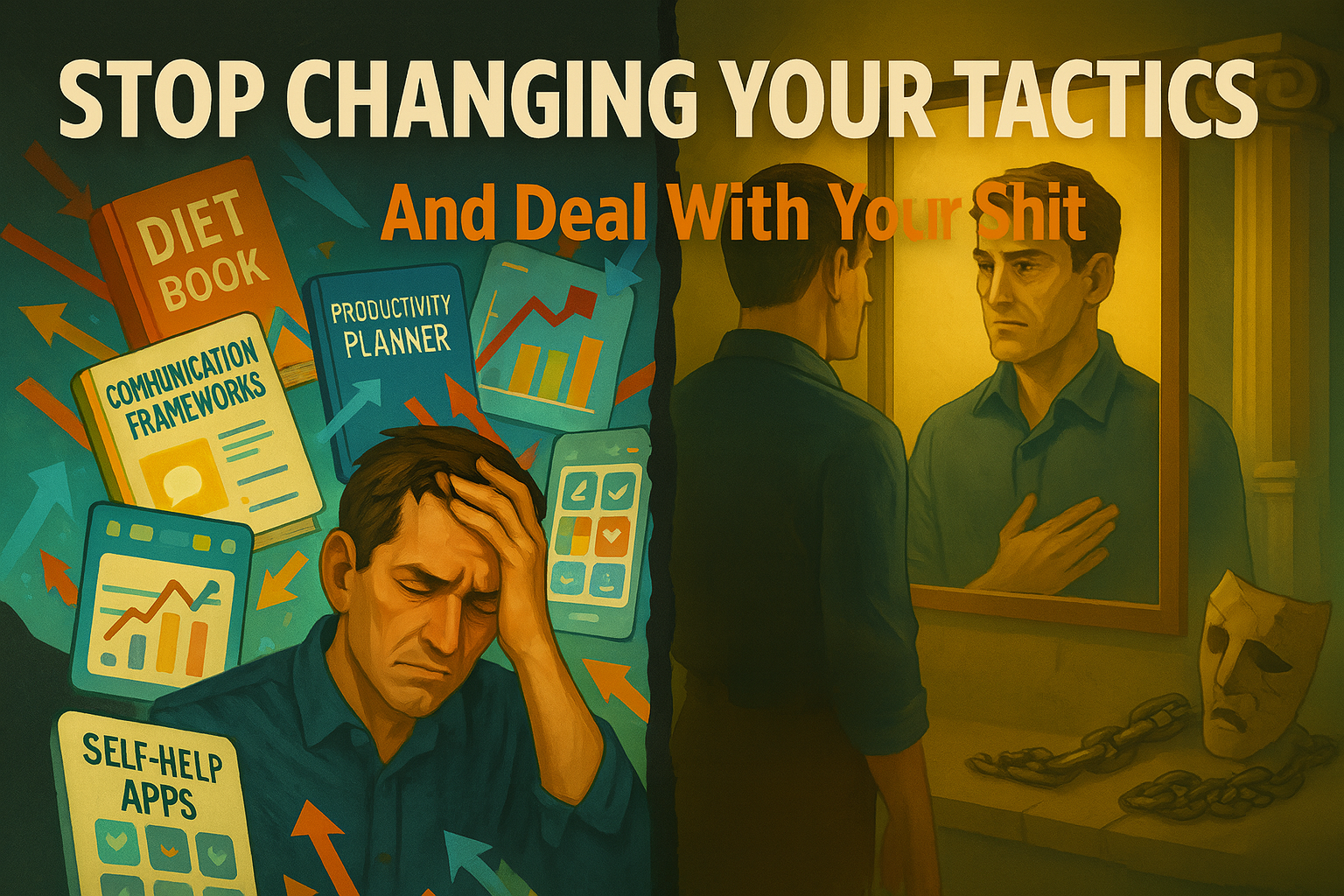
Stop Changing Your Tactics and Deal With Your Shit
You're not struggling with willpower. You're not lacking the right system. You're protecting the disease by treating the symptoms.
The Optimization Trap: Authentic Self-Knowledge vs. Sophisticated Avoidance
How intelligent people use optimization as sophisticated avoidance, creating elaborate systems to avoid simple transformations. Includes the 5-question diagnostic framework.
The Comfort Zone Sophistication: When Optimization Becomes Elaborate Avoidance
Intelligence can become a barrier to growth when it creates sophisticated comfort zones. Here's how to recognize when your optimization becomes elaborate avoidance, and what to do about it.
The Problem Solver's Paradox: How Winners Create Value Through Solutions
The most indispensable people aren't those who avoid problems, they're those who actively seek them out and solve them effectively. Here's the framework for building that rare and valuable skill.