Autarkeia (αὐτάρκεια): Meaning, Definition & Modern Application
ow-TAR-kay-ah
Self-sufficiency. The capacity to stand on your own capability, meeting challenges through developed competence rather than chronic dependency on external support.
Etymology
From autos (self) and arkein (to suffice, to be enough), literally “self-sufficiency” or “being enough for oneself.” Aristotle considered autarkeia a defining feature of eudaimonia: the flourishing life lacks nothing essential. For the Stoics and Cynics, self-sufficiency meant independence from external goods. Diogenes the Cynic demonstrated radical autarkeia by living with virtually no possessions, showing that genuine freedom comes from needing less rather than acquiring more.
Modern Application
You develop autarkeia by building skills and judgment that don't require constant rescue. In leadership, your job is to cultivate this quality in others. Every problem you solve for your team is capability they never develop. Every struggle you let them work through builds the self-sufficiency that makes them genuinely capable.
How to Practice Autarkeia
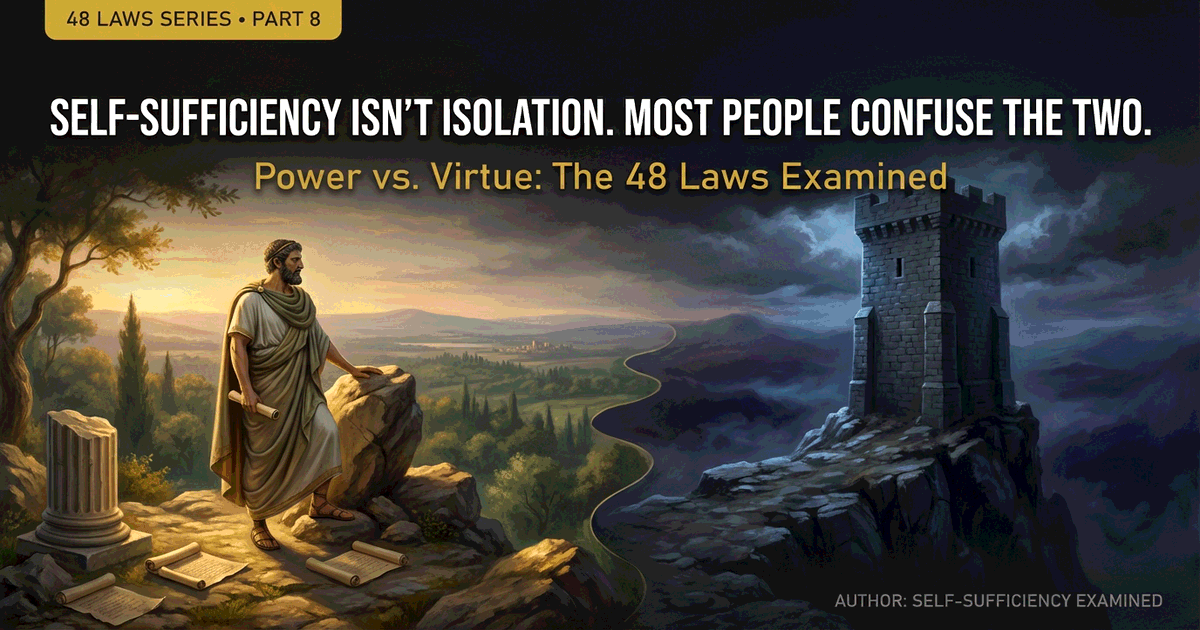
Identify one area where you chronically depend on others for what you should be able to handle yourself. Develop that capability over the next sixty days through deliberate practice. When tempted to ask for help prematurely, first exhaust your own resources and attempt a solution. As a leader, resist the urge to rescue your team from productive struggle. When someone brings you a problem, ask what solutions they have considered before offering yours. Build the habit of developing competence in advance of needing it. Self-sufficiency is not isolation; it is the baseline of capability from which genuine collaboration becomes possible. Each week, take on one task you would normally delegate or avoid, and work through it completely on your own. Track where you feel most dependent and design a specific learning plan to close that gap. Diogenes demonstrated that freedom increases as your needs decrease. Audit your current dependencies and ask which ones serve your growth and which ones enable avoidance. The goal is not to refuse all help but to ensure that when you do collaborate, you bring genuine capability to the partnership rather than transferring your burden to someone else.
Frequently Asked Questions
What is autarkeia in Greek philosophy?
Autarkeia is the Greek concept of self-sufficiency, the capacity to meet challenges through developed competence rather than chronic dependency. Aristotle considered it a defining feature of *eudaimonia*, arguing that the flourishing life lacks nothing essential. The Stoics and Cynics valued it as the foundation of genuine freedom. Diogenes the Cynic demonstrated radical autarkeia by living with virtually no possessions, illustrating that true independence comes from reducing your needs rather than increasing your resources.
What does autarkeia mean?
Autarkeia means self-sufficiency or being enough for oneself, from *autos* (self) and *arkein* (to suffice). It describes the developed competence that allows you to stand on your own capability without constant external support. The term carries a connotation of completeness and contentment, not deprivation. To possess autarkeia is to have built enough internal capability and resourcefulness that external circumstances cannot destabilize your ability to function and contribute.
How do you practice autarkeia?
You develop autarkeia by identifying areas of chronic dependency and building the capability to handle them yourself. Exhaust your own resources before seeking help. As a leader, resist rescuing others from productive struggle that builds their competence. Start by auditing the areas where you consistently rely on others and design a sixty-day plan to develop that skill independently. The Stoics practiced voluntary discomfort to strengthen their self-sufficiency, and you can apply the same principle by periodically taking on challenges without your usual support systems.
What is the difference between autarkeia and autonomy?
Autarkeia is self-sufficiency, the practical capability to handle challenges without external dependency. Autonomy is self-governance, the capacity to set and follow your own principles. Autarkeia means you can take care of yourself; autonomy means you determine your own direction. In practice, the two reinforce each other: self-sufficiency gives you the practical foundation to exercise genuine self-governance, while autonomy gives you the clarity of purpose that makes self-sufficiency meaningful rather than mere survivalism.