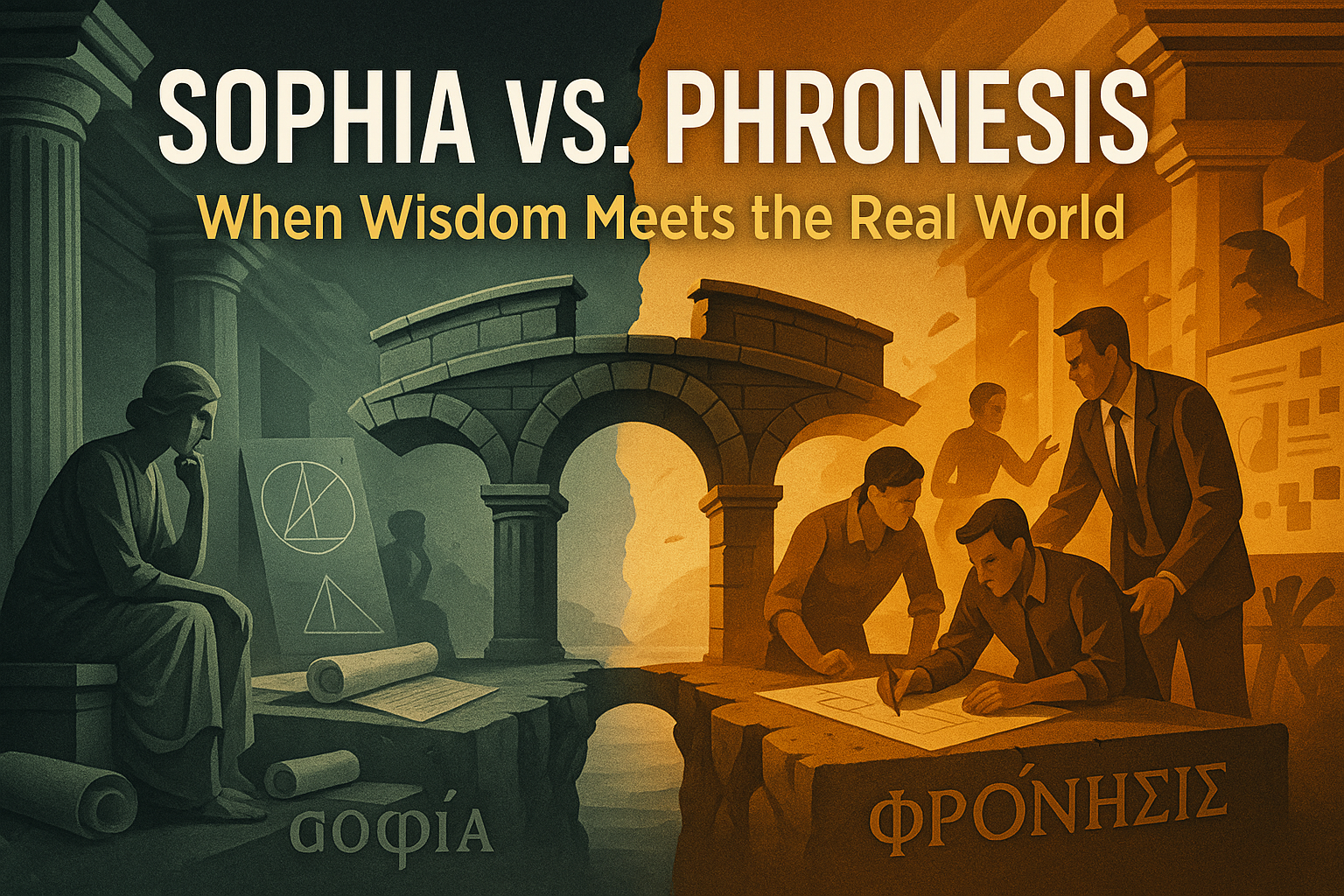
Sophia (σοφία): Meaning, Definition & Modern Application
soh-FEE-ah
Theoretical wisdom. The ability to see clearly, cutting through noise to identify what's actually true and understanding the deeper principles beneath surface patterns.
Etymology
From an ancient root meaning “skilled” or “clever,” sophia originally described expertise in any craft, from carpentry to poetry. The pre-Socratic philosophers claimed the word for a higher purpose: understanding the fundamental nature of reality. Pythagoras reportedly coined philosophia (love of wisdom) because he considered sophia too lofty for mortals to possess. Aristotle placed sophia as the highest intellectual virtue, the knowledge of first causes and principles.
Modern Application
Sophia reveals itself through simplicity, not complexity. When you truly understand something, you can explain it plainly. The person who grasps the structure beneath the surface sees which parts are essential and which are decoration. True wisdom distinguishes what matters from what merely seems to.
How to Practice Sophia
Choose one domain you think you understand well and attempt to explain its core principles to someone with no background in it. Where your explanation stumbles, your understanding has gaps. Read primary sources rather than summaries. Spend thirty minutes daily with material that challenges your existing mental models rather than confirming them. Practice asking “why” five times in succession about any conclusion you reach. The discipline of tracing effects back to causes, and causes back to first principles, builds the kind of deep seeing that sophia demands. Maintain a list of questions you cannot yet answer and revisit them monthly. Study across disciplines to develop the pattern recognition that reveals universal principles operating beneath surface differences. When you encounter a new idea, ask how it connects to what you already know at the deepest level. Sophia grows not through accumulating information but through integrating understanding into a coherent view of how things fundamentally work.
Frequently Asked Questions
What is sophia in Greek philosophy?
Sophia is Aristotle's concept of theoretical wisdom, the highest intellectual virtue. It involves understanding first principles and the fundamental nature of reality. Unlike practical wisdom (phronesis), sophia concerns itself with universal truths that do not change with circumstances. Aristotle placed sophia at the summit of intellectual virtues because it grasps the deepest causes and principles that govern existence itself.
What does sophia mean?
Sophia means wisdom or theoretical knowledge. Originally it described skilled expertise in any craft, but Greek philosophers elevated it to mean deep understanding of reality's fundamental principles and causes. It is the root of the word philosophy, literally "love of wisdom." Pythagoras reportedly coined that term because he believed true sophia was too exalted for any mortal to claim to possess, only to love and pursue.
How do you practice sophia?
You develop sophia by studying primary sources, questioning assumptions, tracing conclusions back to first principles, and seeking to understand why things are the way they are rather than merely what they are. It requires sustained intellectual discipline and genuine curiosity about the nature of reality. Test your understanding by attempting to teach complex ideas simply, because genuine comprehension reveals itself in the ability to distill complexity into clarity.
What is the difference between sophia and phronesis?
Sophia is theoretical wisdom about universal truths and first principles. Phronesis is practical wisdom about particular situations and right action. Sophia asks "what is true?" while phronesis asks "what should I do here?" Both are essential, but they operate in different domains of human understanding. Aristotle noted that young people can become mathematical geniuses (a form of sophia) but cannot possess phronesis, which requires the lived experience that only time provides.