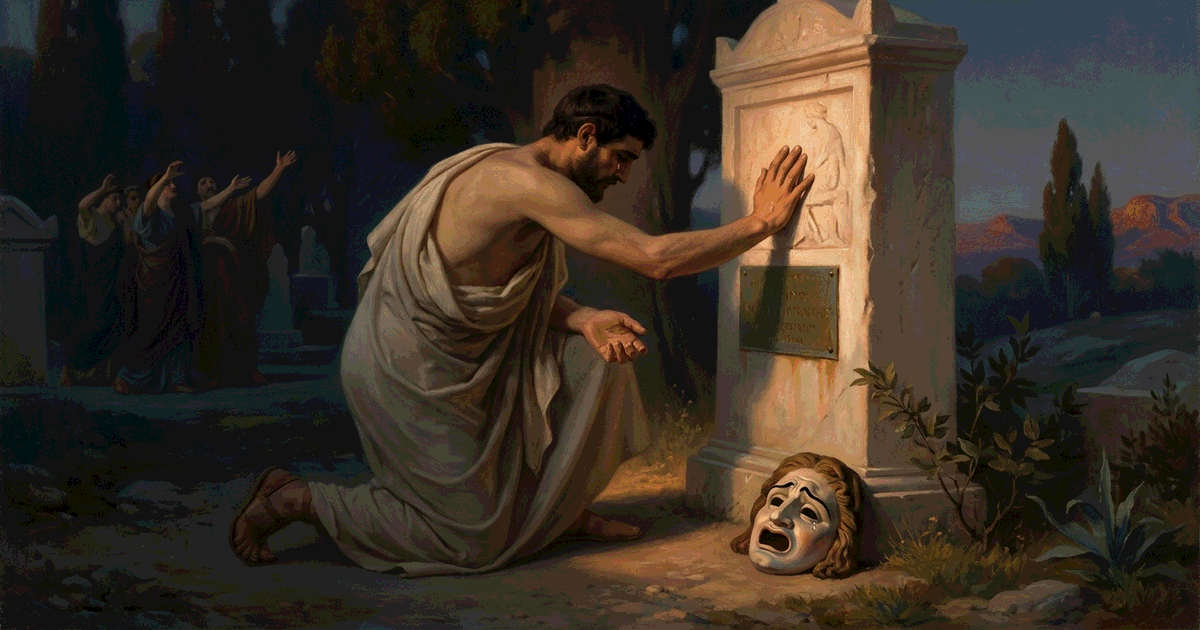
Propatheia (προπάθεια): Meaning, Definition & Modern Application
pro-PAH-thay-ah
Pre-emotions or proto-passions: the involuntary initial movements of the soul before rational assent. In Stoic psychology, these are natural first reactions that precede and differ from full emotional responses.
Etymology
From pro (before, in front of) and pathos (feeling, suffering, experience). The compound propatheia emerged in Stoic technical vocabulary to distinguish automatic physiological and psychological responses from fully formed emotions requiring cognitive assent. The term acknowledges that even the sage experiences initial stirrings, separating involuntary sensation from voluntary judgment.
Deep Analysis
The concept of propatheia represents one of the Stoics’ most psychologically sophisticated contributions, revealing their nuanced understanding of human emotional life that critics have often overlooked. When detractors accused Stoicism of demanding inhuman emotional suppression, they failed to engage with this crucial distinction between involuntary first movements and the passions proper.
Seneca addresses propatheia most directly in De Ira, using vivid examples to illustrate the difference between automatic reactions and culpable emotions. He writes of the mind’s initial response to insult or injury as something that happens even to the wisest person: the blush of shame, the pallor of fear, the tears that spring unbidden. These, he insists, are not anger, grief, or terror in the philosophical sense. They become such only when we add the judgment that we have been genuinely harmed and that retaliation or lamentation is appropriate.
This analysis connects to the broader Stoic theory of phantasia (impression) and sunkatathesis (assent). Every perception arrives as an impression, accompanied by what Epictetus calls a preliminary suggestion about its nature. The impression of a charging lion comes with an automatic assessment of danger. The crucial moment occurs in what we do with this impression. Do we assent to the proposition that this danger threatens something of genuine value, or do we recognize that external circumstances, including bodily harm, lie outside our sphere of choice?
The tension here is productive rather than contradictory. The Stoics did not deny our animal nature or the reality of embodied experience. Propatheia acknowledges that we are not pure intellects but creatures with nervous systems, hormonal responses, and evolutionary inheritances. The Stoic project was never to transcend biology but to prevent biology from determining judgment.
This has implications for the concept of apatheia, often mistranslated as apathy. The sage who achieves apatheia does not become an unfeeling automaton. Propatheia continues to arise. What the sage lacks is not sensation but the assent that transforms sensation into suffering. The Stoic metaphor of the mind as a citadel clarifies this: the walls may shake when battered, but they do not fall. The shaking is propatheia; the collapse would be passion.
Critically, propatheia also illuminates the Stoic understanding of moral progress. The beginner cannot prevent the first movements and also struggles to withhold assent. The prokopton, one making progress, still experiences propatheia but increasingly catches themselves before assent. The sage experiences the same initial movements as the beginner but the gap between impression and assent has widened into an uncrossable space.
This connects to prohairesis, our faculty of choice. Propatheia lies outside prohairesis, beyond our direct control. But what we do in the moment after propatheia arises falls squarely within it. The Stoics thus preserve both our natural human responsiveness and our moral responsibility. We cannot be blamed for the first flutter of fear, but we can be held accountable for fleeing.
The practical application extends to our understanding of habit and character formation. Each time we catch a propatheia and withhold assent, we strengthen the hexis, the stable disposition, of equanimity. Each time we unconsciously assent, we reinforce patterns of reactivity. The stakes of each small moment thus become significant: we are always either building or eroding our capacity for freedom.
Modern neuroscience has vindicated the Stoic insight. The amygdala’s rapid threat assessment operates faster than conscious thought, producing physiological responses before the prefrontal cortex can evaluate the situation. What the Stoics called propatheia, contemporary researchers might call the limbic hijack. The ancient prescription, creating cognitive space for deliberation, aligns remarkably with evidence-based approaches to emotional regulation.
Modern Application
When you feel your pulse quicken before a difficult conversation or your stomach tighten reading critical feedback, you're experiencing propatheia. These first stirrings are not failures of character but biological signals. Your task is not to eliminate these responses but to create space between them and your subsequent choices, using awareness to prevent automatic escalation into destructive emotions.
Historical Examples
Cato the Younger provides a striking example from Plutarch’s account of his death. When Cato realized that Caesar’s victory was certain, he calmly read Plato’s Phaedo on the immortality of the soul before taking his own life. What makes this relevant to propatheia is what happened after his first attempt failed due to an injured hand. His physicians dressed the wound and his friends removed his sword. Upon waking to find himself still alive and disarmed, Plutarch records that Cato’s initial reaction was rage, and he struck the physician who had treated him. This first movement, violent and automatic, was propatheia in its rawest form. But Cato quickly recovered his composure, methodically reopened his wound, and completed his intention. The initial flash of fury did not determine his course; his reasoned commitment did.
Seneca himself offers autobiography as evidence. In his letters to Lucilius, he describes his own experiences with propatheia during a terrifying sea voyage. The ship was caught in a storm, and Seneca reports that he turned pale and felt seasick with fear. He does not present this as failure but as fact. The sage, he argues elsewhere, may turn pale when shown the executioner’s sword. This pallor is not cowardice but physiology. Seneca’s willingness to admit his own pre-emotional responses lent credibility to the distinction he drew.
Marcus Aurelius, in his Meditations, repeatedly catches himself in the grip of propatheia and redirects. In Book 6, he notes his irritation with the people he must work with each day: the meddling, ungrateful, arrogant, dishonest. But he instructs himself that they are kin, that they err through ignorance, and that death will level all. The Meditations function as a record of a man repeatedly experiencing propatheia toward those around him and talking himself back from assent. The irritation was involuntary; the subsequent reframing was chosen.
How to Practice Propatheia
Track your body’s early warning signals for one week. Note physical sensations that precede emotional reactions: jaw tension, shallow breathing, heat in your chest, or cold in your extremities. Keep a simple log with three columns: trigger, physical sensation, and time elapsed before you recognized it.
Practice the pause protocol. When you notice a propatheia arising, mentally name it without judgment: ‘There is a tightening. There is heat rising.’ This naming creates distance between sensation and response. Count three breaths before speaking or acting.
Conduct a morning pre-rehearsal. Before entering situations you know will provoke strong initial reactions, visualize the trigger and your body’s likely response. Mentally rehearse the pause. This Stoic technique of praemeditatio applied to propatheia builds your capacity to remain present rather than reactive.
End each day with a brief review. Identify one moment when you successfully observed a propatheia without being swept into a full emotional response. Also identify one moment when the pre-emotion overtook you. Ask: what was different about the circumstances? What might you do differently tomorrow?
Seek situations that reliably produce propatheia in controlled settings. Public speaking practice, difficult role-play conversations, or physical challenges all offer laboratories for observing your pre-emotional responses and building the muscle of non-attachment.
Application Examples
During a board meeting, a board member unexpectedly criticizes your strategic plan in harsh terms. You feel heat rise to your face, your jaw tighten, and a surge of defensive energy before you can form a thought.
The physical response is propatheia, beyond your control. The decision to defend yourself immediately, attack back, or pause to consider the feedback belongs to you. The board member controls their words; you control your response.
You receive a late-night text from your partner that reads ‘We need to talk tomorrow.’ Your mind immediately generates worst-case scenarios, your chest constricts, and sleep becomes difficult.
The body’s alarm response to ambiguity is propatheia. The subsequent catastrophizing involves active participation, imagination fueled by assent to frightening possibilities. Recognizing the distinction allows you to acknowledge the discomfort without building a narrative around it.
A team member who you’ve invested significant time developing announces their resignation to join a competitor. You feel a flash of betrayal, anger, and disappointment before they’ve finished speaking.
These initial reactions are natural first movements. What defines your leadership is whether you express those reactions immediately or create space to respond with genuine good will and curiosity about their decision.
In a negotiation, the opposing party makes an offer that strikes you as insulting. You notice your body preparing for fight: elevated heartbeat, narrowed focus, muscles tensing.
Propatheia has prepared you for conflict. But conflict may not serve your interests. Recognizing the pre-emotional state as information rather than instruction allows you to negotiate from strategy rather than survival instinct.
Moments before presenting to a thousand people, you experience sweaty palms, rapid heartbeat, and the urge to escape. These sensations intensify as you approach the stage.
The body cannot distinguish between genuine danger and performance pressure. Propatheia here is identical to what our ancestors felt facing predators. Acknowledging this as biology rather than prophecy transforms paralyzing fear into available energy.
Common Misconceptions
Many assume propatheia represents a failure of Stoic practice, evidence that the discipline isn’t working. This reverses the truth. Experiencing propatheia is inevitable; expecting otherwise misunderstands what the Stoics actually taught. The practice lies not in eliminating first movements but in shortening the gap between their arising and your recognition of them.
A related error conflates propatheia with intuition or wisdom. Some interpret their initial emotional reactions as trustworthy signals to be followed rather than examined. While propatheia can contain useful information about our values and concerns, the Stoics were clear that these first movements require evaluation, not automatic obedience. Your body’s alarm response cannot distinguish between genuine threats and perceived slights.
Finally, people sometimes use propatheia as an excuse: ‘I couldn’t help it, it was just a first reaction.’ The Stoic framework explicitly rejects this dodge. While propatheia itself lies outside responsibility, everything after the moment of recognition is chosen. The concept explains our initial reactions; it does not excuse our subsequent behavior.
I spent years believing that my immediate reactions defined me. When someone challenged my ideas in a workshop and I felt that instant heat of defensiveness, I assumed this revealed my ego’s fragility. When I felt the gut-punch of disappointment watching a coaching client revert to old patterns, I treated it as evidence that I wasn’t detached enough, wasn’t professional enough.
Discovering the Stoic concept of propatheia was liberating in a way I didn’t expect. I remember the specific moment it clicked. I was facilitating a retrospective for a team in deep conflict. One developer accused another of sabotage, using language that made my shoulders rise toward my ears involuntarily. I felt myself preparing to intervene, to smooth things over, to protect both people from each other.
But that day I noticed something new. I noticed the noticing. I felt the propatheia, the protective surge, the desire to fix. And instead of acting on it, I watched it. In that space, something different became possible. I let the conflict continue. The accusation hung in the air. And what emerged was something I could never have facilitated: the accused developer started crying and admitted he had been deliberately obstructing because he was terrified of the changes the project would bring to his role.
My propatheia had been screaming ‘Danger! Protect! Fix!’ But assenting to that voice would have shut down the very vulnerability the team needed to access.
Now I teach this to leaders I work with. I tell them their instant reactions are data, not directives. The flash of irritation when a direct report misses a deadline, the surge of anxiety when revenue numbers disappoint, the jolt of excitement when a competitor stumbles: these are propatheia, first movements arising from conditioning and biology. They’re not character flaws or ethical failures. They’re invitations to pause.
What matters is the breath between the sensation and the speech. That’s where leadership lives. Not in having no reactions, which is impossible, but in choosing which reactions to amplify and which to let pass through you like weather.
Frequently Asked Questions
What is propatheia in Stoic philosophy?
Propatheia refers to involuntary preliminary emotional movements that arise before conscious judgment. The Stoics distinguished these automatic reactions from full passions, which require the mind's assent. A racing heart upon hearing bad news is propatheia; the subsequent despair or panic involves your active participation.
How is propatheia different from regular emotions?
Full emotions in Stoic theory require cognitive assent, a judgment that something is truly good or bad. Propatheia are pre-cognitive: they happen to you before you can evaluate the situation. The difference lies in the moment of choice. You cannot prevent the first flutter of fear, but you can refuse to feed it into terror.
Can you eliminate propatheia through Stoic practice?
No, and that was never the Stoic goal. Even Seneca acknowledged that the sage experiences initial physiological and psychological stirrings. The aim is not elimination but non-attachment, letting these first movements arise and pass without granting them the assent that transforms them into disruptive passions.