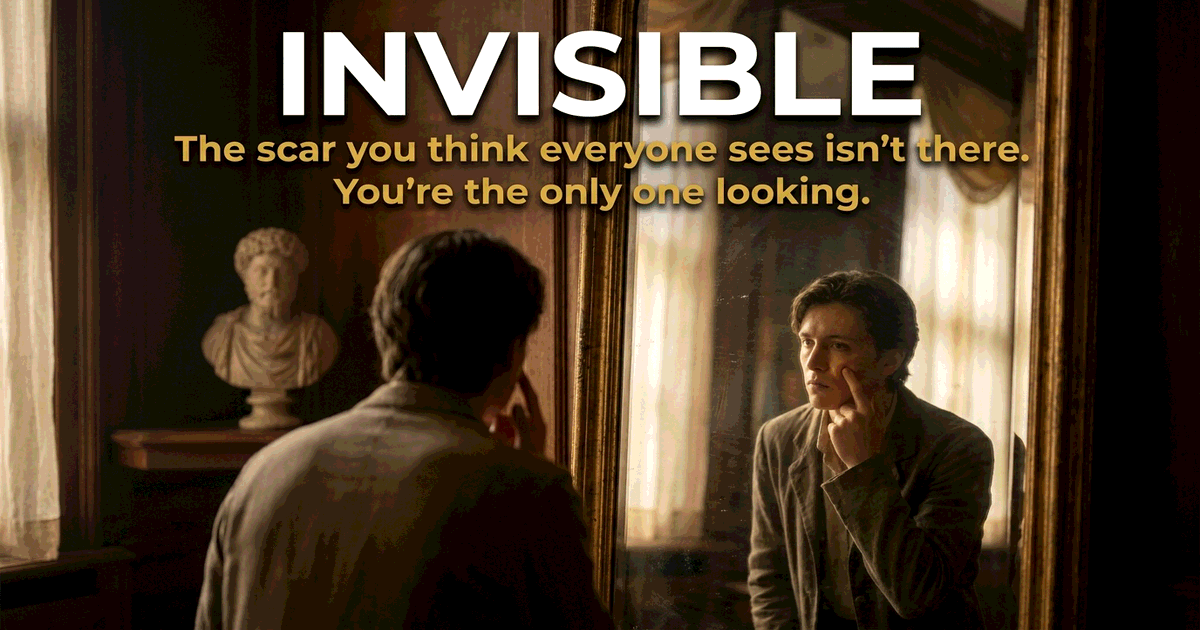
Sunkatathesis (συγκατάθεσις): Meaning, Definition & Modern Application
soon-kah-TAH-theh-sis
The act of assent or agreement to an impression, the decisive mental moment when one accepts a perception or proposition as true and worthy of action. Central to Stoic psychology as the gateway between stimulus and response.
Etymology
Derived from the Greek prefix sun (together, with) combined with katathesis (a placing down, deposit), itself from kata (down) and tithemi (to place or set). The compound literally means ‘placing down together with’ or ‘co-depositing,’ suggesting the mind’s active participation in receiving and accepting an impression. The Stoics, particularly Chrysippus, developed this term into a technical concept describing the voluntary act of mental endorsement.
Deep Analysis
The doctrine of sunkatathesis stands as perhaps the most revolutionary psychological insight of ancient Stoicism, locating human freedom not in external circumstances but in the infinitesimal gap between perception and judgment. To understand its full significance requires grasping how the Stoics conceived the mechanics of the mind.
In Stoic psychology, every experience begins with phantasia, an impression or appearance that presents itself to the ruling faculty (hegemonikon). These impressions arrive unbidden, whether sensory perceptions, memories, or imaginings. A colleague’s sharp tone, a news headline, a remembered failure: these appear to us without our consent. But here the Stoics made their crucial move. The impression itself carries no automatic authority. It proposes; we dispose.
Sunkatathesis is this disposing, the act of saying ‘yes’ to an impression, accepting it as true and allowing it to move us toward desire, aversion, impulse, or action. Epictetus captured this with characteristic directness: ‘It is not things that disturb us, but our judgments about things.’ The judgment is the assent, the moment we transform a mere appearance into an accepted reality.
Chrysippus, the great systematizer of Stoic logic, analyzed the structure of assent with precision. He distinguished between simple impressions, such as ‘there is a person speaking,’ and assertoric impressions, such as ‘this person is insulting me.’ Only the latter type, which makes a claim about reality, requires assent. The Stoic sage practices recognizing when an impression has smuggled in a judgment disguised as a fact.
The relationship between sunkatathesis and prohairesis reveals the architecture of Stoic freedom. Prohairesis, the faculty of choice or moral purpose, is what grants or withholds assent. It is the citadel that cannot be stormed from outside because assent must be given, never taken. Marcus Aurelius returned to this insight repeatedly in his Meditations: ‘Choose not to be harmed, and you won’t feel harmed. Don’t feel harmed, and you haven’t been.’ This is not denial or suppression but the recognition that harm requires your ratification.
Yet the Stoics acknowledged a complication that makes their psychology honest rather than naive. Some impressions arrive with such force that they provoke involuntary preliminary reactions, what the later Stoics called propatheiai or ‘pre-emotions.’ Your heart races at sudden danger; you flinch at an insult. These automatic responses precede assent and lie outside voluntary control. The Stoic position is not that we can eliminate these natural reactions but that we need not ratify them with full assent. The flinch is not the fear; fear requires your agreement that this thing before you truly threatens what matters.
This creates a profound tension that serious practitioners must navigate. Withholding assent is not the same as suppressing emotion or pretending not to have been affected. It is the disciplined refusal to move from ‘this appears threatening’ to ‘this is threatening to what truly matters.’ The first is an observation; the second is a metaphysical claim about the nature of the good. The Stoic withholds assent not from the impression’s existence but from its demand for evaluative acceptance.
The connection to prosoche, or attention, illuminates how assent functions practically. Without sustained attention to our mental processes, assent happens automatically, beneath awareness. Most people live their entire lives granting assent to impressions without recognizing they have any choice. The Stoic practice of prosoche cultivates the alertness necessary to catch impressions before they become accepted judgments.
Critically, sunkatathesis also applies to positive impressions. The discipline of assent requires skepticism toward flattering appearances just as much as disturbing ones. When an impression whispers that you are exceptional, that your success proves your worth, that you deserve special treatment, the same rigorous examination is required. False assents to pleasant impressions corrupt character as surely as false assents to disturbing ones.
The political implications were not lost on ancient practitioners. A population trained to grant automatic assent to impressions, especially collective impressions spread through rhetoric and spectacle, becomes easily manipulated. The person who has mastered sunkatathesis becomes resistant to propaganda, panic, and the contagious emotions of crowds. This is not isolation from society but a different mode of participation, one grounded in examined judgment rather than inherited reaction.
For leadership, sunkatathesis represents the capacity to create rather than merely transmit emotional states. The leader who grants automatic assent to every crisis impression becomes a conduit for panic. The leader who disciplines assent becomes a stabilizing presence, capable of examining situations clearly and responding to what is rather than to the appearance of what seems to be. This is not detachment but engaged discernment, the capacity to act decisively on what has survived scrutiny rather than react compulsively to what has merely appeared.
Modern Application
You hold more power than you realize in the space between stimulus and response. When a colleague's criticism lands, when market panic spreads, when fear whispers its counsel, you choose whether to grant assent. Practice recognizing that moment of choice. Withholding assent from reactive judgments allows you to lead from clarity rather than compulsion, responding to what actually is rather than what your first impression screams.
Historical Examples
Socrates demonstrated the practice of withheld assent throughout his trial, as recorded in Plato’s Apology. When his accusers presented the impression that he had corrupted the youth and denied the gods, he refused to accept this characterization on its own terms. Rather than granting assent to the framing and defending himself within it, he examined the impression itself. His famous response that the unexamined life is not worth living was precisely a claim about assent: that living by unexamined impressions is not truly living. Facing the impression that death was an evil to be feared and avoided at any cost, he withheld assent, noting that no one truly knows whether death is evil, and accepting certain evil of acting against his principles to avoid an uncertain evil of death would be foolish.
Marcus Aurelius recorded his struggles with assent throughout the Meditations, turning the discipline inward with remarkable honesty. In Book 6, he reminds himself: ‘When force of circumstance upsets you, lose no time in recovering your self-control, and do not remain out of tune longer than you can help. Habitual recurrence to the harmony will increase your mastery of it.’ This is explicit work with sunkatathesis, acknowledging that impressions will arrive with force while committing to not ratifying them with continued assent. His repeated injunctions to strip things of their ‘adventitious’ qualities and see them bare were exercises in examining impressions before granting assent to them.
Cato the Younger, as described by Plutarch in his Parallel Lives, exemplified disciplined assent in political crisis. When Caesar crossed the Rubicon and panic seized Rome, the dominant impression was that accommodation with Caesar was necessary for survival. Cato examined this impression and found it wanting. The fact of Caesar’s power did not require assent to the proposition that submission was therefore right or inevitable. His subsequent actions, including his choice to die rather than live under tyranny, followed from a series of examined assents about what genuinely mattered and what constituted genuine harm. Whether one agrees with his conclusions, his method exemplifies the Stoic discipline: impressions about political necessity were treated as proposals to be examined rather than facts to be automatically accepted.
How to Practice Sunkatathesis
Start each morning by identifying one situation where you typically react automatically, such as email notifications, meeting interruptions, or critical feedback. Commit to catching yourself before granting assent.
Track your assents throughout the day. When you notice a strong emotional response, pause and ask: ‘What impression am I accepting as true right now?’ Write it down verbatim. Then ask: ‘Is this impression accurate, or have I added judgment to mere facts?’
Practice the Stoic ‘suspension of assent’ technique. When faced with a disturbing impression, say internally: ‘You are just an impression, not the thing you claim to be.’ Hold the impression at arm’s length for ten seconds before deciding whether it merits your agreement.
Create a nightly review ritual. Examine three moments where you granted assent quickly. For each, ask: Did this impression represent reality? Did my assent serve my character and goals? What would withholding assent have made possible?
Seek one situation weekly that typically triggers automatic assent, perhaps a recurring meeting or a difficult relationship. Before entering, explicitly decide what impressions you will and will not accept. After, evaluate your discipline.
Review your assent patterns monthly. Notice which types of impressions consistently bypass your scrutiny. These reveal where your philosophical work is needed most.
Application Examples
Your company’s stock price drops 15% after an analyst’s negative report. Your inbox floods with panicked messages from board members demanding immediate response. The impression screaming for assent is: ‘We are in crisis, and decisive visible action is required now.’
Disciplined assent reveals that the impression conflates market perception with operational reality. Withholding assent creates space to distinguish between the fact of the price drop and the judgment about what it means for the business.
A close friend cancels plans for the third time in two months. The immediate impression is: ‘They don’t value our friendship. I am being deprioritized.’ This impression arrives complete with emotional charge and a ready narrative of neglect.
The practice of assent requires separating the fact of cancelled plans from the evaluative judgment. Multiple explanations exist; granting assent to the most painful one without examination is a failure of philosophical discipline.
A team member publicly challenges your decision in a meeting. The impression flashes: ‘This is insubordination. My authority is being undermined. I must respond with force to maintain respect.’
Withholding assent to this complex impression allows you to examine its components. Was there disrespect, or merely disagreement? Does your authority actually depend on never being questioned? What does the team need from you in this moment?
During a critical product launch, multiple systems fail simultaneously. Your lead engineer reports with obvious stress that the situation is ‘a complete disaster.’ The collective impression in the room is that everything is lost.
The discipline of assent recognizes that ‘disaster’ is a judgment added to the facts of system failure. Withholding assent to the catastrophic framing allows assessment of what has actually failed, what remains functional, and what responses serve the situation.
Common Misconceptions
Many people confuse withholding assent with suppressing emotions or pretending not to feel what they feel. The Stoics recognized that preliminary reactions occur automatically before any assent is possible. Your heart will race, your face may flush, you may feel the physical signatures of anger or fear. The discipline of assent does not deny these reactions; it refuses to ratify them with the judgment that they represent accurate assessments of reality worthy of further response.
Another error treats sunkatathesis as a technique for becoming passive or unresponsive. In fact, the opposite is true. By withholding assent from reactive impressions, you create the capacity for deliberate, examined response. The person who grants assent automatically is the passive one, operated by impressions rather than operating through considered judgment. Disciplined assent enables more decisive action, not less, because that action flows from examination rather than compulsion.
Some assume that mastering assent means never being wrong or never acting on incomplete information. The Stoics were clear that we must often act with impressions that are probable rather than certain. The discipline lies not in achieving perfect knowledge before assent but in recognizing that our assents are choices for which we bear responsibility, and in remaining willing to withdraw assent when better impressions arrive. Rigid adherence to previous assents in the face of new evidence is not discipline but stubbornness.
I learned about assent the hard way, by discovering how much of my leadership had been unconscious reaction.
Years ago, I was facilitating a retrospective when a team member leveled a critique at me that felt deeply unfair. In that moment, an impression arrived fully formed: ‘This person is attacking me publicly. Everyone is watching to see if I can be pushed around. I need to defend myself.’ I granted assent before I even knew there was a choice, and what followed was not facilitation but combat. I won the argument and lost the trust of that team.
What stayed with me was not the conflict but my complete lack of awareness that anything had happened internally. The impression had arrived, I had accepted it, and the response had flowed automatically. There was no gap, no moment of examination, no choice. I had been operated by my reactions rather than operating them.
Studying the Stoic concept of sunkatathesis gave me language for what I had experienced and, more importantly, a practice for developing what I had lacked. The gap between impression and assent is not naturally wide. For most of us, most of the time, it barely exists. But it can be cultivated.
Now when I coach leaders, I watch for moments when they grant assent without awareness. It shows up as certainty that arrives too quickly, as judgments that feel like facts, as reactions that seem inevitable rather than chosen. I ask them: ‘What impression are you accepting as true right now?’ Usually they cannot answer because they did not notice themselves accepting anything. The impression and the assent had fused.
The practice is not about suppressing reactions or pretending not to have them. I still feel the rush of defensive energy when I perceive attack. What has changed is that I recognize that feeling as the arrival of an impression demanding assent, not as an automatic signal for response. That recognition, brief as it is, creates the possibility of examination.
The leaders who master this become different presences in rooms. They do not react to the room’s dominant impression; they examine it. They do not absorb panic; they assess it. This is not coldness or detachment. It is the capacity to be fully present without being automatically operated by what presents itself.
Frequently Asked Questions
What is sunkatathesis in Stoic philosophy?
Sunkatathesis is the Stoic technical term for mental assent, the voluntary act of agreeing that an impression or appearance (*phantasia*) is true. It represents the moment of choice between receiving a perception and accepting it as reality worthy of emotional and behavioral response.
How do you practice withholding assent?
Practice by creating a pause between impression and acceptance. When you notice a strong appearance, such as 'this person disrespected me,' hold it at a distance and examine it. Ask whether the impression is factually accurate or contains added judgments. Only grant assent to what survives scrutiny.
What is the difference between phantasia and sunkatathesis?
Phantasia is the impression or appearance that presents itself to the mind, arriving without your choice. Sunkatathesis is your voluntary assent to that impression, accepting it as true. You control assent but not the impressions that arise. This distinction is fundamental to Stoic freedom.