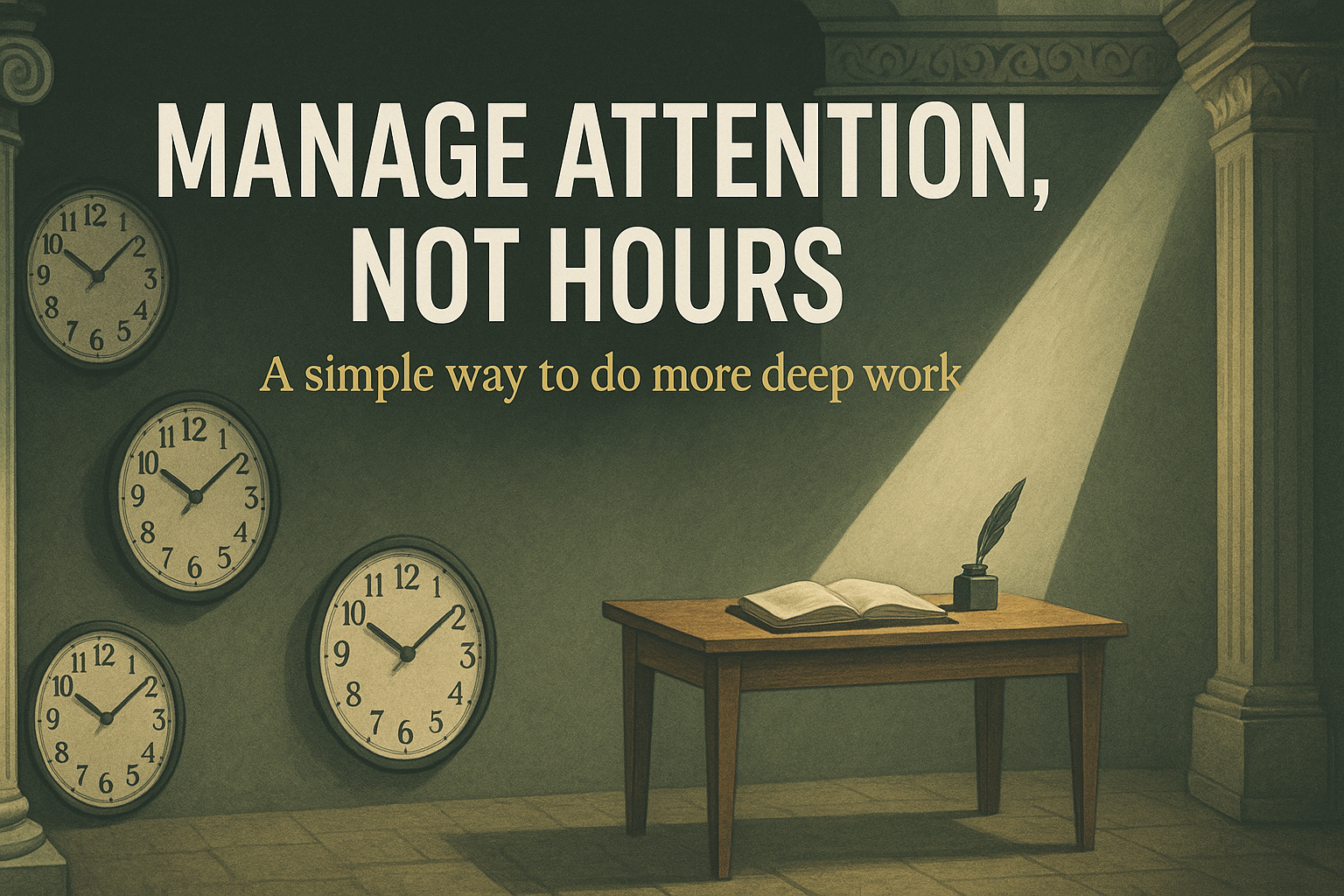
Chronos (χρόνος): Meaning, Definition & Modern Application
KROW-nos
Sequential, quantitative time measured by clocks and calendars. Unlike kairos (the opportune moment), chronos represents arbitrary, mechanical time that passes regardless of meaning or readiness.
Etymology
From the Greek chronos, meaning “time” in its sequential, measurable sense. Often conflated with the Titan Kronos who devoured his children, though the words have different origins. Chronos gave rise to “chronology,” “chronicle,” and “chronic,” all pointing to time as a linear, quantitative progression. The Greeks distinguished this mechanical, indifferent form of time from kairos (the opportune moment), recognizing that not all moments carry equal weight.
Modern Application
Chronos thinking traps you into believing that calendar dates carry inherent power, that January 1st or Monday morning creates transformation. Real change respects kairos, not chronos. Stop waiting for convenient dates and start recognizing when you're actually ready to move.
How to Practice Chronos
Audit how you relate to time this week. Notice every instance where you postpone action to a future date (“I’ll start Monday,” “next quarter”). Write these down. For each one, ask: am I waiting because the timing is genuinely not right, or because I am using the calendar as a shield against discomfort? Reclaim agency over your schedule by blocking time for your most important work first, before obligations fill the space. Practice treating time as a resource to be invested with intention, not a river carrying you passively toward deadlines. Track how many hours each day you spend on activities that move you toward your purpose versus activities that merely fill time. At week’s end, calculate the ratio and make one concrete change to improve it. Examine your relationship with deadlines: do you use them as motivation or as permission to procrastinate until the last moment? Redesign your workflow to front-load effort rather than back-loading it against arbitrary calendar dates.
Frequently Asked Questions
What is chronos in Greek philosophy?
Chronos is the Greek concept of sequential, quantitative time, the kind measured by clocks and calendars. It represents the mechanical passage of moments regardless of their significance or meaning, in contrast to kairos, which captures the quality of a specific moment. The Greeks distinguished chronos from kairos because they recognized that treating all moments as equal blinds you to the moments that actually matter.
What does chronos mean?
Chronos means time in its linear, measurable sense. It is the root of English words like chronology, chronicle, and chronic. It describes time as an indifferent, continuous progression that flows at the same rate regardless of what is happening within it. The word is sometimes conflated with the Titan Kronos who devoured his children, though the two words have different origins.
How do you practice awareness of chronos?
You develop awareness of chronos by noticing when you treat calendar dates as inherently meaningful rather than as arbitrary markers. Audit your relationship with deadlines and schedules. Use time intentionally rather than letting it pass passively, and stop postponing action to future dates that carry no real significance. When you catch yourself saying "I will start on Monday," ask what makes Monday different from today, and if the answer is nothing, start now.
What is the difference between kairos and chronos?
Chronos is mechanical, quantitative time that passes at a constant rate regardless of context. Kairos is the qualitative, opportune moment when conditions align for decisive action. Understanding both helps you stop waiting for the calendar and start recognizing when the moment is genuinely right. Effective leaders navigate both dimensions of time, using chronos for planning and structure while remaining alert to kairos for decisive action.