Autourgia (αὐτουργία): Meaning, Definition & Modern Application
ow-toor-GEE-ah
The practice of working with one's own hands; self-labor that connects the worker directly to productive effort. In ancient thought, it represents dignified self-sufficiency through personal craftsmanship rather than dependence on others' labor.
Etymology
Derived from autos (self) and ergon (work, deed), autourgia literally means ‘self-working.’ The term emerged in classical Greek to describe farmers who worked their own land without slaves, later expanding to encompass any direct engagement with productive labor. It carried connotations of honest independence and practical virtue.
Deep Analysis
The concept of autourgia occupies a fascinating and contested space in ancient Greek thought. While Aristotle and Plato often distinguished between the contemplative life (bios theoretikos) and the life of labor, treating manual work as beneath the truly philosophical citizen, a countercurrent in Greek culture celebrated the self-working farmer as the backbone of civic virtue.
Xenophon’s Oeconomicus provides perhaps the most explicit defense of autourgia as a philosophical practice. Socrates, through his dialogue with Ischomachus, explores estate management and farming not as degrading necessities but as paths to excellence. The gentleman farmer who works his own land develops practical wisdom that pure theorists lack. He understands cause and effect through direct experience. He cannot hide behind abstractions when the harvest fails.
This tension between theory and practice runs throughout Greek ethics. Aristotle, in the Politics, distinguishes between the banausos (mere craftsman) and the autourgos (self-worker), suggesting different moral standings. Yet even Aristotle acknowledges in the Nicomachean Ethics that virtue requires practice, that excellence comes through action (energeia) rather than passive possession. The autourgos embodies this principle by maintaining direct connection to productive work.
Hesiod’s Works and Days presents autourgia as both practical necessity and moral imperative. ‘Work is no disgrace,’ he writes, ‘it is idleness which is a disgrace.’ The self-working farmer who rises before dawn, who knows the seasons by his labor rather than by theory, represents Hesiod’s ideal of honest living. This stands in deliberate contrast to the aristocratic disdain for physical effort.
The Stoics later embraced a version of autourgia in their emphasis on preferred indifferents and self-sufficiency (autarkeia). Epictetus, himself a former slave, understood that dignity lies not in avoiding labor but in approaching any work with the right disposition. Marcus Aurelius, while an emperor, repeatedly exhorted himself to do what was required without complaint, to engage fully with his duties rather than merely delegating them.
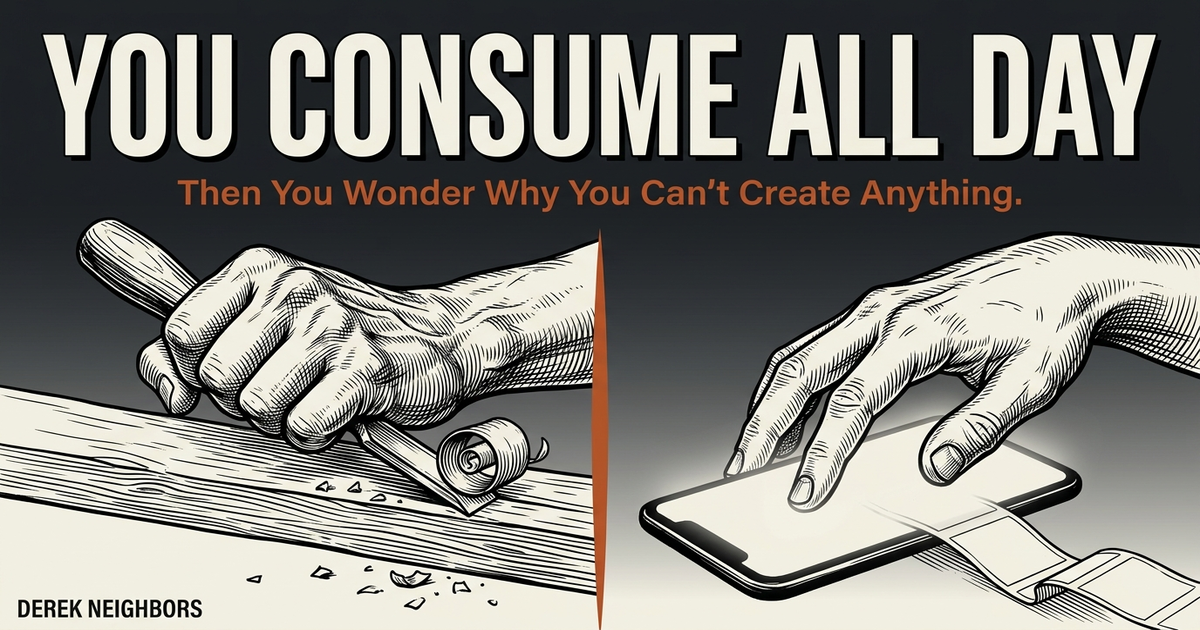
The philosophical significance of autourgia extends beyond mere productivity. It addresses a fundamental problem in knowledge: the gap between theoretical understanding and practical competence. You can read every book on carpentry without being able to build a table. The autourgos closes this gap through direct engagement. This has profound implications for leadership, where distance from execution breeds dangerous illusions about what is actually possible.
Thucydides, in his account of Athenian politics, implicitly contrasts leaders who understood war through personal experience with demagogues who spoke of strategy without having faced battle. The former possessed knowledge born of autourgia, the latter mere opinion (doxa). This distinction between earned understanding and borrowed authority remains central to effective leadership.
The concept also intersects with Greek ideas about techne, skill or craft knowledge. But while techne can be taught theoretically, autourgia insists on embodied practice. The master craftsman who still works alongside apprentices maintains something that the retired expert loses. The hands remember what the mind forgets. This bodily knowledge, what we might call muscle memory or intuition, develops only through sustained autourgia.
Perhaps most provocatively, autourgia challenges modern tendencies toward specialization and delegation. The ‘knowledge worker’ who never produces anything tangible, the executive who has never done the work they oversee, the consultant who advises without experiencing consequences, all represent departures from the autourgos ideal. Greek thought would question whether such individuals possess genuine understanding or merely sophisticated opinion.
Modern Application
You cannot lead effectively what you have never done yourself. When you engage in *autourgia*, you build credibility through demonstrated competence rather than delegated authority. Pick up the shovel before you direct others to dig. This direct involvement keeps you connected to the reality of execution, prevents the arrogance of pure abstraction, and earns the respect that comes only from shared labor.
Historical Examples
Cincinnatus, the Roman dictator of the 5th century BCE, exemplifies autourgia in its purest form. According to Livy’s account, Roman senators found him plowing his own small farm when they came to offer him absolute power during a military crisis. He accepted, defeated Rome’s enemies in sixteen days, immediately resigned his dictatorship, and returned to his plow. His continued self-labor despite former glory demonstrated that productive work and civic virtue were inseparable. The Romans venerated him precisely because power had not corrupted his willingness to work with his own hands.
Cato the Elder, as described by Plutarch in Parallel Lives, made autourgia a deliberate political statement. Despite his wealth and senatorial status, he ate the same food as his slaves, worked in the fields alongside them, and walked to court rather than being carried. His critics called it performance; his admirers recognized it as principled consistency. Cato believed that Roman virtue depended on maintaining connection to labor. His famous censorship targeted luxury precisely because it separated citizens from productive work.
Paul of Tarsus, though later than the classical period, carried Greek autourgia into early Christianity. Despite his education and apostolic authority, he insisted on making tents to support himself, as recorded in Acts and his own letters. ‘These hands have ministered to my necessities,’ he wrote to the Corinthians, establishing a model of spiritual leadership grounded in physical labor. He explicitly connected his self-work to his credibility, arguing that leaders who refused to labor lacked the moral standing to teach.
How to Practice Autourgia
Start each week by identifying one task you typically delegate and do it yourself. If you lead engineers, write code. If you manage a restaurant, work a shift on the floor. Track the gap between your assumptions about the work and its actual demands.
Reserve two hours weekly for hands-on work in your core domain. Protect this time as fiercely as any strategic meeting. Use these sessions not to micromanage but to maintain visceral understanding of what your people face.
Create a monthly ‘shadow day’ where you perform entry-level tasks in your organization. Document what you learn about friction, inefficiency, and unspoken challenges. Share these observations without blame.
Build something tangible each quarter, whether a report, a prototype, a presentation, or a plan, from scratch, without assistants. Notice where your skills have atrophied and address them.
Review your calendar monthly and calculate the ratio of strategic abstraction to direct production. If you spend less than 20% of your time in actual execution, recalibrate. Ask yourself: ‘What have my hands actually built this week?’
Application Examples
A tech company CEO schedules ‘maker days’ where she writes production code alongside her engineering team. She maintains a GitHub profile showing real contributions, not ceremonial commits. When architectural debates arise, she speaks from current experience.
Autourgia maintains technical credibility that no amount of past expertise can sustain. Your opinions carry weight when your hands still know the work.
A father who could easily hire contractors instead spends weekends teaching his children home repairs by doing them together. He fixes leaky faucets, paints rooms, and builds shelving, ensuring his children see him engaged in productive labor.
Autourgia transmits practical capability across generations. Children learn self-sufficiency by witnessing it, not hearing about it.
A hospital administrator works one shift per month as a floor nurse, maintaining her clinical certification. She experiences the staffing pressures, equipment failures, and patient interactions her policies affect. Budget decisions become personal.
Autourgia prevents the abstraction that makes cruel efficiency possible. You cannot casually cut what you have personally struggled to provide.
A general maintains combat fitness standards and qualifies annually on standard infantry weapons, not ceremonially but at competitive levels. When he orders soldiers into difficult conditions, they know he could endure them.
Autourgia earns the moral authority to demand sacrifice. Those who share labor can legitimately share hardship.
A publishing house editor continues writing and submitting her own work under a pseudonym, experiencing rejection and revision like any other author. She reviews manuscripts having recently faced the same struggles.
Autourgia maintains empathy through shared vulnerability. You critique differently when you remain subject to the same standards.
Common Misconceptions
Many assume autourgia means doing everything yourself, rejecting all delegation or collaboration. This misses the point entirely. The ancient autourgos still employed help during harvest and participated in community labor. Autourgia is about maintaining direct productive engagement, not refusing assistance. The goal is connection to work, not isolation in it.
Another error treats autourgia as anti-intellectual, as if valuing manual labor means dismissing contemplation. Greek thought held both in tension. Xenophon’s Socrates discussed farming and philosophy in the same breath. The self-working farmer was expected to think deeply about seasons, soil, and strategy. Autourgia opposes the separation of thinking from doing, not thinking itself.
Some interpret autourgia as mere humility theater, a performance of down-to-earth approachability. This cynical reading ignores the epistemological claim at the concept’s heart: that certain knowledge comes only through direct experience. The leader who maintains productive practice is not performing humility but preserving capability.
I learned the value of autourgia the hard way. Early in my consulting career, I became what I now call a ‘PowerPoint warrior,’ someone who could analyze processes beautifully but hadn’t written production code in years. I walked into a struggling software team, diagnosed their problems with impressive frameworks, and watched my recommendations fail spectacularly. They failed because I had no idea what it actually felt like to work in their codebase, with their tools, under their deadlines.
The turning point came when a frustrated developer looked at me and said, ‘When was the last time you shipped something?’ I had no answer. That question haunted me.
So I changed. I started pairing with developers, not observing but actually coding. I took on small features myself, experienced the frustration of flaky tests and unclear requirements, and felt the pressure of sprint commitments. My advice transformed. Instead of abstract best practices, I could offer specific suggestions grounded in recent experience.
Now, no matter how senior my role becomes, I maintain what I call ‘productive practice.’ I still facilitate actual retrospectives, not just train others to do so. I still coach individual contributors, not just executives. I keep my hands in the work because I have seen what happens when leaders lose that connection.
The teams I work with know I am not asking them to do anything I would not do myself. When I push for shorter meetings, they have seen me end my own meetings early. When I advocate for sustainable pace, they know I have turned down lucrative engagements to preserve my own capacity. Autourgia is not about proving toughness but about maintaining the credibility that comes only from shared labor. You cannot fake having done the work. People know.
Frequently Asked Questions
What is autourgia in Greek philosophy?
Autourgia refers to self-labor or working with one's own hands. In ancient Greece, it described the practice of free citizens who performed their own productive work rather than relying entirely on slaves or hired labor. It was associated with independence, practical wisdom, and moral integrity.
How is autourgia different from modern 'hands-on leadership'?
Modern hands-on leadership often means staying involved in decisions. Autourgia goes further by requiring actual productive labor, not oversight. The ancient concept emphasizes that leaders must genuinely do the work themselves, not merely supervise it closely or understand it theoretically.
Why did ancient Greeks value autourgia for citizens?
Greeks valued autourgia because it preserved self-sufficiency and prevented the corruption that comes from total dependence on others' labor. Those who worked their own land maintained practical wisdom, physical capability, and independence, qualities essential for citizenship and military service.