Apoikia (ἀποικία): Meaning, Definition & Modern Application
ah-poy-KEE-ah
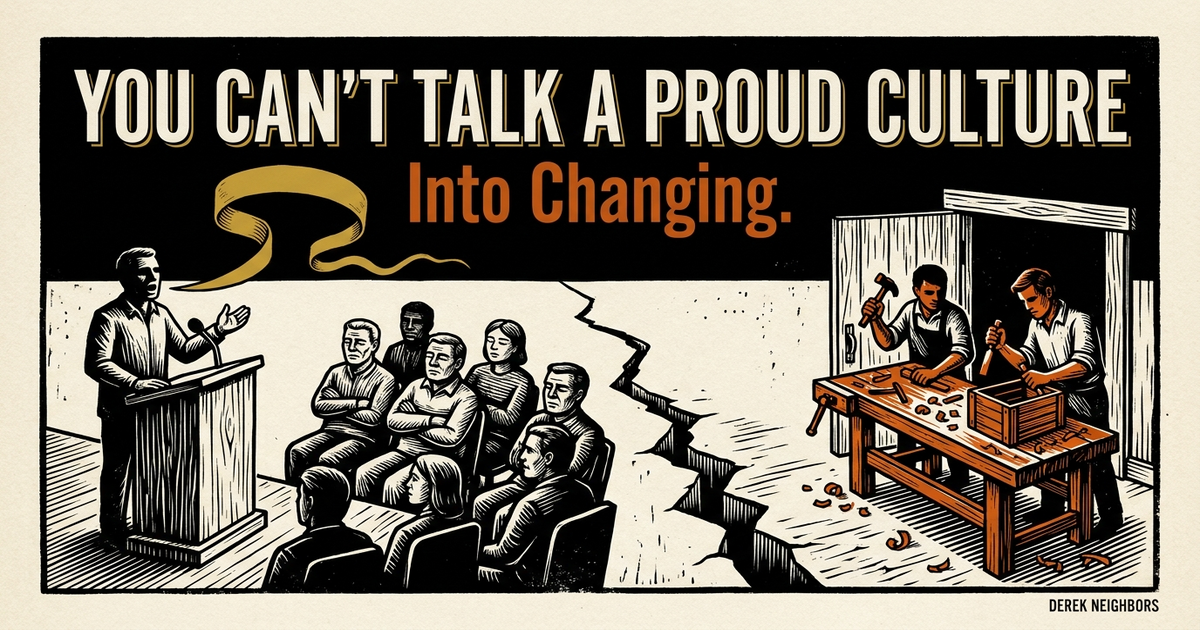
A colony planted away from the mother city. People and custom move onto new ground instead of converting the metropolis by speech.
Etymology
From apo (away from) and oikos (house, household). An apoikia is a settlement sent out from a mother city (metropolis), carrying people and custom onto new ground rather than reforming the home city by debate.
Deep Analysis
Greek colonization was not mainly a speech campaign aimed at the mother city. Cities such as Corinth, Miletus, and Megara sent out apoikiai that carried households, cult, and custom onto new ground. The settlement kept its own laws. It remained related to the metropolis through origin, ritual calendar, and sometimes military aid, without requiring the home city to repent of being itself. The word names a structural alternative to conversion: live the new custom where it can survive, then let the relationship to home do what debate could not.
The philosophical sting is about identity and nomos. A proud polis does not experience a reform speech as information. It experiences it as an insult to the years that worked. Plato’s Syracuse trips in the Seventh Letter show the conversion theory of power at its most romantic and its most expensive: a serious man, a sitting court, proximity, and talk, ending without a converted constitution. What lasted from Plato was the Academy, a protected place with different rules and a curriculum the city did not have to vote into existence every week. The Academy is closer to apoikia than Syracuse is. Syracuse was an attempt to baptize an existing identity. The Academy was a plot of ground the old banquet did not control.
Aristotle’s distinction between energeia and incomplete motion helps explain why conversion calendars feel busy. Building the small office is activity complete in the doing. The third alignment meeting is motion aimed at a future yes. If the yes never comes, the year was travel toward a shut door. Phronesis notices the door. Kairos is the moment a further meeting has become delay. Prohairesis remains even without a title: you still choose whether to reconvene the failed ask or to plant a practice you can hold. Arete here is the quality of work that can exist because someone gave it a room.
The modern failure is loyalty to unity as an aesthetic. Leaders would rather lose inside one process than succeed in a second room they then have to explain. Apoikia is not permission to sulk, to dodge safety, or to collect a rebel identity. The colony stays related to home. It publishes numbers the old culture already respects. It carries an absorption date or a kill date. Exile without a purpose is a hobby. Absorption too early is digestion. The mean is a practice grown in daylight until the parent can use it without pretending it invented the practice in a prior golden year.
Modern Application
When a proud group will not change by argument, stop spending the year on conversion meetings. Plant a small office, team, or practice with different rules, keep it related to home, and let results travel back. The colony is not a sulk and not a forever rebel club. It exists to earn absorption.
Historical Examples
Corinth’s foundation of Syracuse in the 8th century BCE is a textbook apoikia: a mother city sending people and custom onto new ground rather than trying to make Corinth into a different city by debate. The colony kept its own political life while remaining related to Corinth by origin.
Plato’s failed work at the court of Dionysius in Syracuse is the conversion theory under pressure. The Seventh Letter records proximity, speech, and a proud sitting power that did not become a school. The Academy in Athens is the lasting counterpart: a protected institution with different rules, formed by practice, not by winning a banquet vote.
In a modern key, NASA’s Commercial Orbital Transportation Services program (2006) and later commercial crew work used different contracting, including Space Act Agreements, and a protected program structure so partners could fly cargo and then crew without first winning a theological fight about who counted as real aerospace. The flights were the evidence. The old identity did not vanish overnight. The new work got a place to live.
How to Practice Apoikia
This week, write the date of the last conversion meeting that failed the same ask. If you already failed twice, do not schedule a third with the same request.
Charter one small practice on a single page: three permissions the parent process does not grant, one thing you will not dodge (safety, consent, justice), and two numbers the old group already respects.
Run that practice for thirty days without asking the full group to convert. Publish the two numbers weekly.
On day thirty, decide in writing: absorb, extend once with a new score, or kill it. If only you can hold the charter, shrink it until a competent peer could.
Keep a short log of meetings you declined to reconvene. The log is the practice. The colony is the work that replaced the meeting.
Application Examples
A platform committee has twice rejected a simpler checkout. The team that owns conversion cannot get a one-line experiment onto the main path.
Apoikia says run one contained path with the new rules, publish conversion and refunds, and stop asking the committee to convert first.
Extended family fights every holiday about the ‘right’ way to host. You keep bringing the same proposal to the group text.
Host one smaller table on a different day. Let the afternoon be evidence. Stop trying to convert the whole custom by speech.
A hiring task force has met for months. The scorecard that hired the people in the room will not die in minutes.
One team runs a shorter loop on three roles, posts time-to-offer, and leaves the old loop standing until the dates get embarrassing.
A department will not drop a dead unit. Faculty meetings keep restating the same objections.
Teach the replacement in one section with shared exams. Let scores travel. Do not wait for a faculty-wide conversion.
Nursing council tables a shorter handoff. Missed meds continue at shift change.
One night shift runs the new sheet under a written exception and brings missed-med and overtime counts. Policy moves after the night already had.
Common Misconceptions
People treat apoikia as quitting, secession, or a shadow org. The historical pattern is relatedness plus new ground, not a sulk. If you hide the work, dodge a real standard, or refuse absorption forever, you are not planting a colony. You are collecting a rebel identity.
A second error treats every proud culture as the enemy. Some refusals protect safety, consent, and justice. Those walls do not get a side door. Apoikia is for methods that already work in miniature and need a legal place to live.
A third error waits for a title. Prohairesis still sits with a staff engineer, a charge nurse, a parent, a coach. If only you can hold the charter, shrink it until a competent peer could.
I have wasted more years than I want to admit on conversion meetings I had already lost.
The room would nod. The slide was better than last quarter. Then Monday belonged to the process that had already made those people proud. I treated that as a communications failure. It was an identity fact. They were loyal to the method that had paid them in competence.
The turn, when I finally made it, was rude in a smaller way than a mandate. We ring-fenced a service, wrote different rules on one page, and published two numbers the old process already used. People accused us of a shadow org. Some of that accusation was fair until we put an absorption date on the work. The date is what keeps a colony from becoming a club.
I still like a good argument. I no longer confuse winning the argument with changing the custom. If the group has refused twice, my job is to plant something that can live, score it in public, and either bring it home or kill it. Waiting for the mother city to repent is a career.
Frequently Asked Questions
What is apoikia in Greek history?
An *apoikia* is a colony planted away from the mother city. Greek cities moved people and custom onto new ground, kept local laws, and remained related to home without converting the metropolis by speech.
How is apoikia different from secession or a shadow org?
A healthy *apoikia* stays related to home and exists to earn absorption or a clear kill. A shadow org hides work, splits loyalty forever, or dodges a real standard. The colony is a legal place for a method that already works in miniature.
How do you practice apoikia at work without a title?
Charter a small practice you can actually hold: one team, one loop, one night shift, two numbers the old group already uses. Run it for thirty days. Publish the numbers. Do not wait for the full committee to convert first.
When should you not plant an apoikia?
When the parent is refusing a change because the change is reckless. Safety, consent, and justice do not get a side door. Plant a colony for methods that need a legal place to live, not for votes you should have lost.